
Northern Tropical Pewee vs Acadian Flycatcher
Contopus bogotensis versus Empidonax virescens
Play a quiz with Northern Tropical Pewee and Acadian Flycatcher
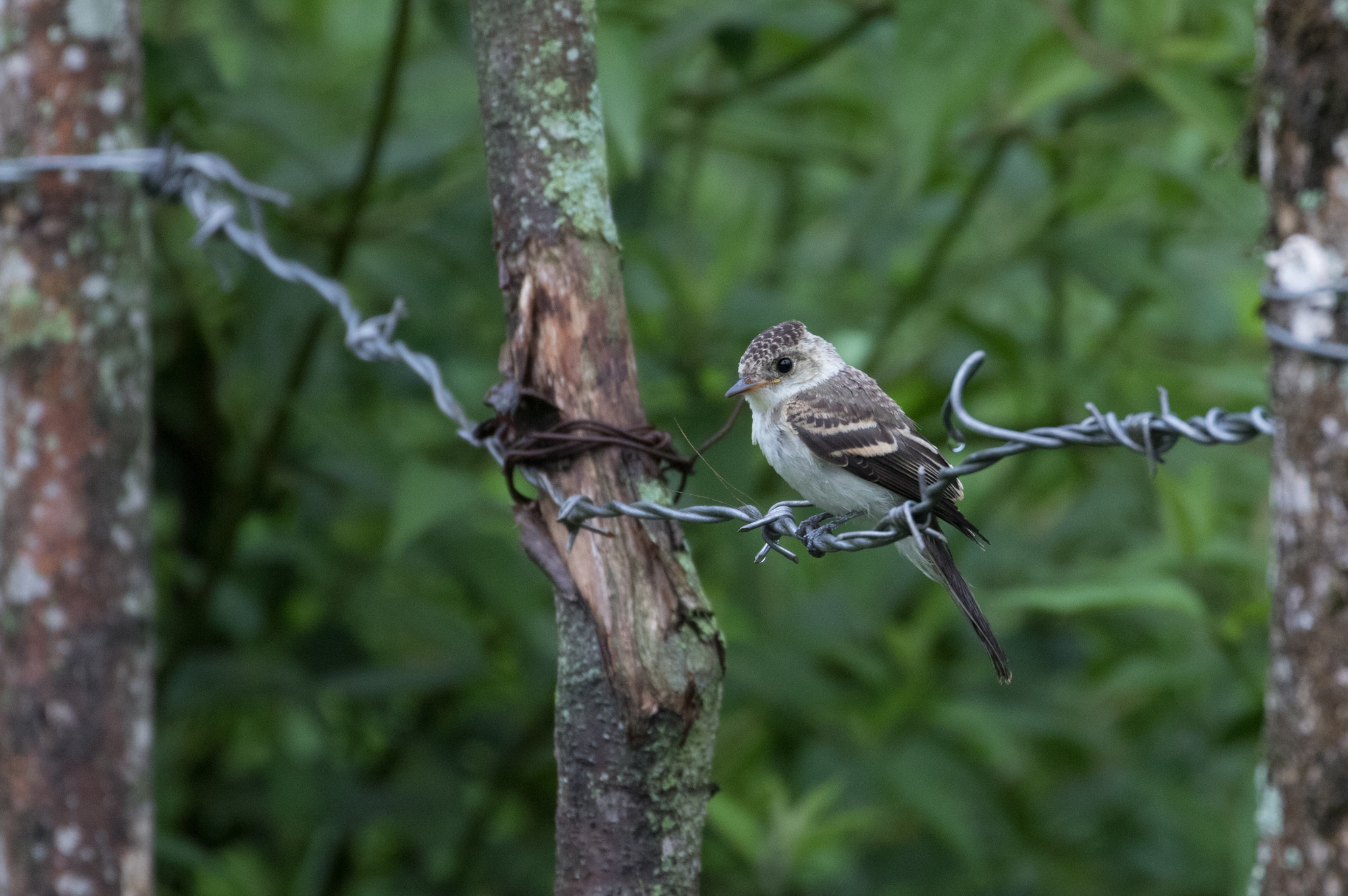 Northern Tropical Pewee
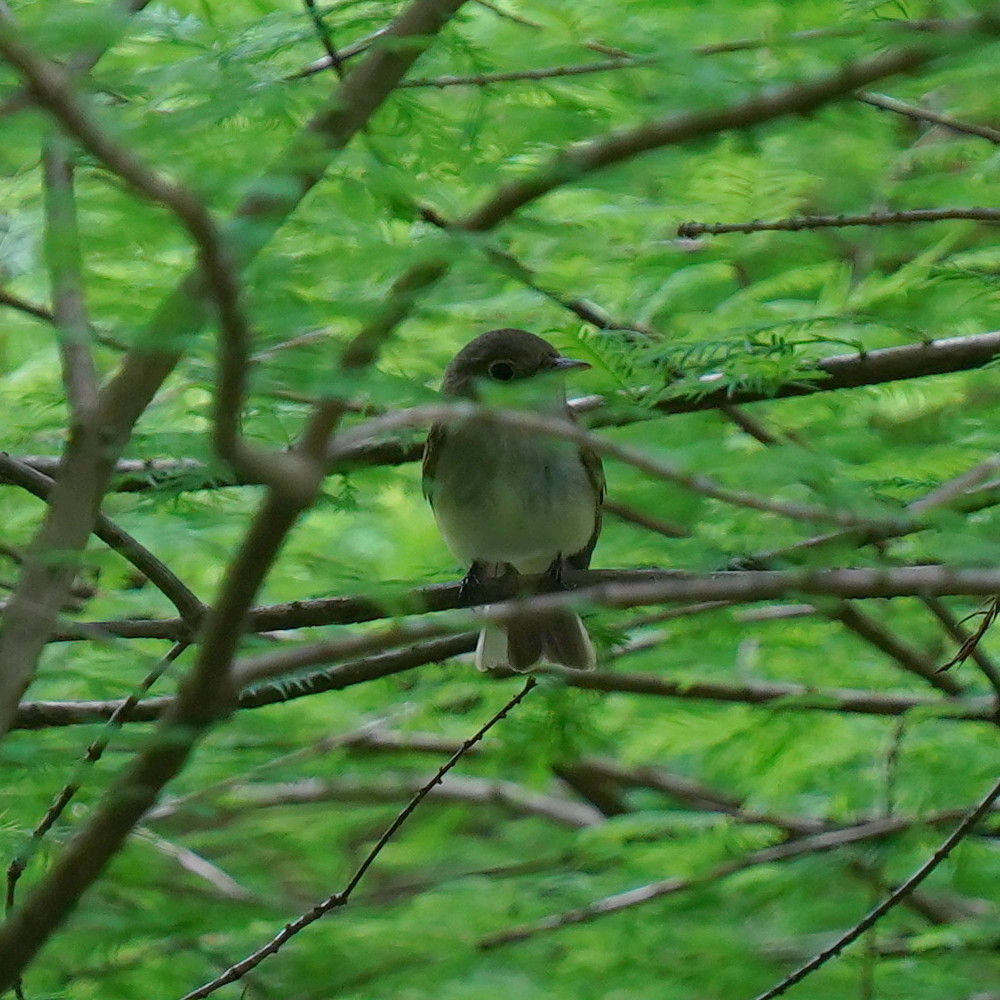 Acadian Flycatcher
In short
The Northern Tropical Pewee and Acadian Flycatcher can be distinguished by their habitat preferences and subtle differences in structure and plumage. The Acadian Flycatcher is typically found in mature deciduous forests in the eastern U.S., while the Northern Tropical Pewee inhabits montane forests in the northern Andes. Structural differences such as bill size and primary projection are key, with the Acadian Flycatcher having a longer bill and primaries.
Identification tips
- Habitat: Check the surrounding environment; Northern Tropical Pewee is in montane forests, Acadian Flycatcher in mature deciduous forests.
- Bill and Primaries: Acadian Flycatcher has a longer bill and primaries.
- Plumage Tone: Look for olive-green tones in Acadian Flycatcher, more uniform grayish-brown in Northern Tropical Pewee.
- Vocalizations: Listen for the Acadian Flycatcher's explosive "peet-sah" song.
Size
Both species are small flycatchers, but the Acadian Flycatcher generally has a slightly larger bill and longer primaries.
Plumage
The Northern Tropical Pewee has a more uniform grayish-brown plumage, while the Acadian Flycatcher often shows a more olive-green tone with a paler belly. Both have indistinct wing bars.
Behaviour
Both species exhibit typical flycatcher behavior, sallying from perches to catch insects. The Acadian Flycatcher is more likely to be seen in the understory of dense forests.
Habitat
The Northern Tropical Pewee is found in montane forests of the northern Andes, usually below 1,500 m, whereas the Acadian Flycatcher prefers mature deciduous forests in the eastern U.S. and is often associated with water.
Voice
The Acadian Flycatcher has a distinctive explosive song, often described as "peet-sah," whereas the Northern Tropical Pewee's vocalizations are less well-documented.
Northern Tropical Pewee · Acadian Flycatcher · My Tricky Birds