
Nuthatch-Vanga vs Crossley's Vanga
Hypositta corallirostris versus Mystacornis crossleyi
Play a quiz with Nuthatch-Vanga and Crossley's Vanga
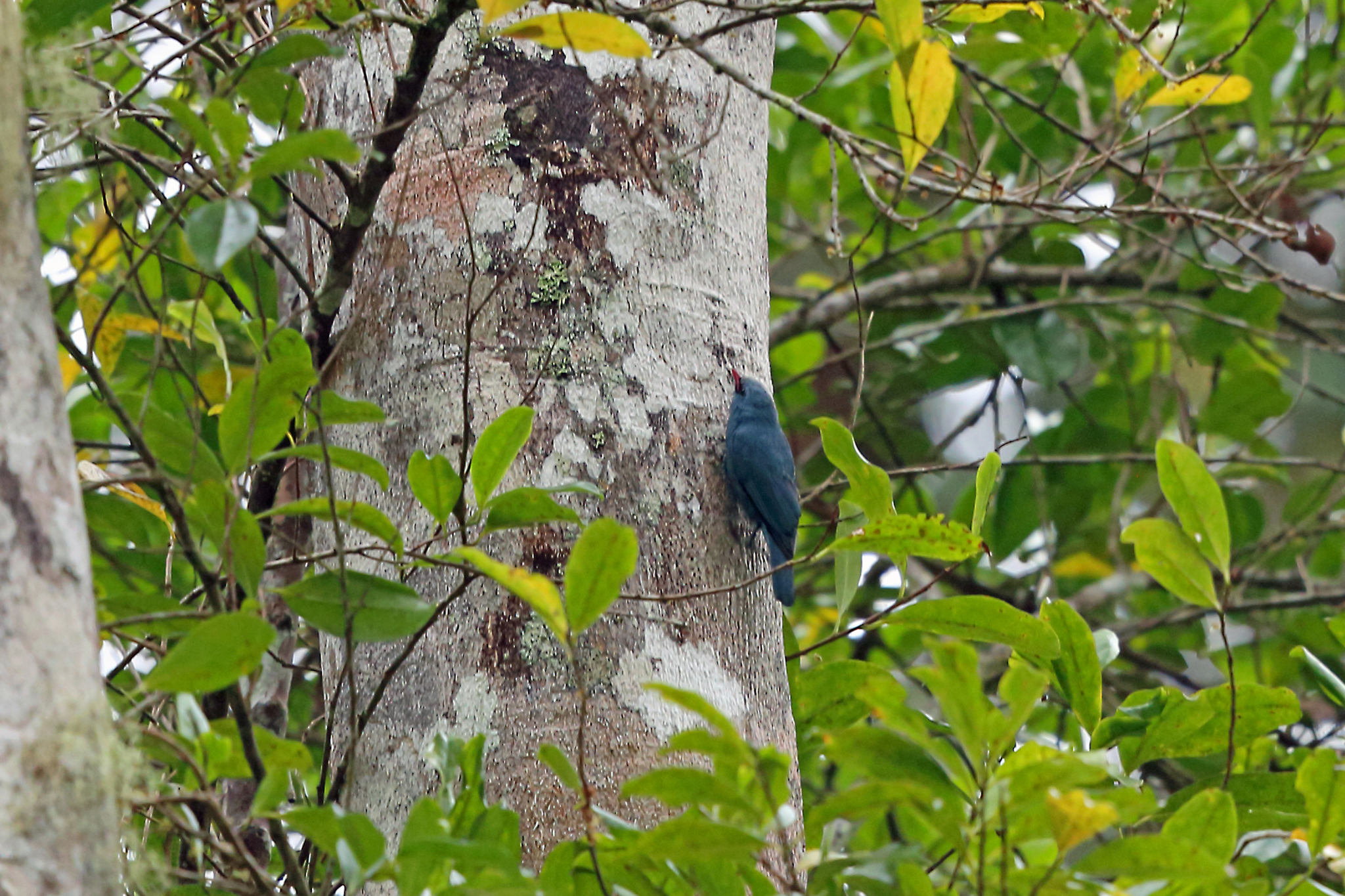 Nuthatch-Vanga
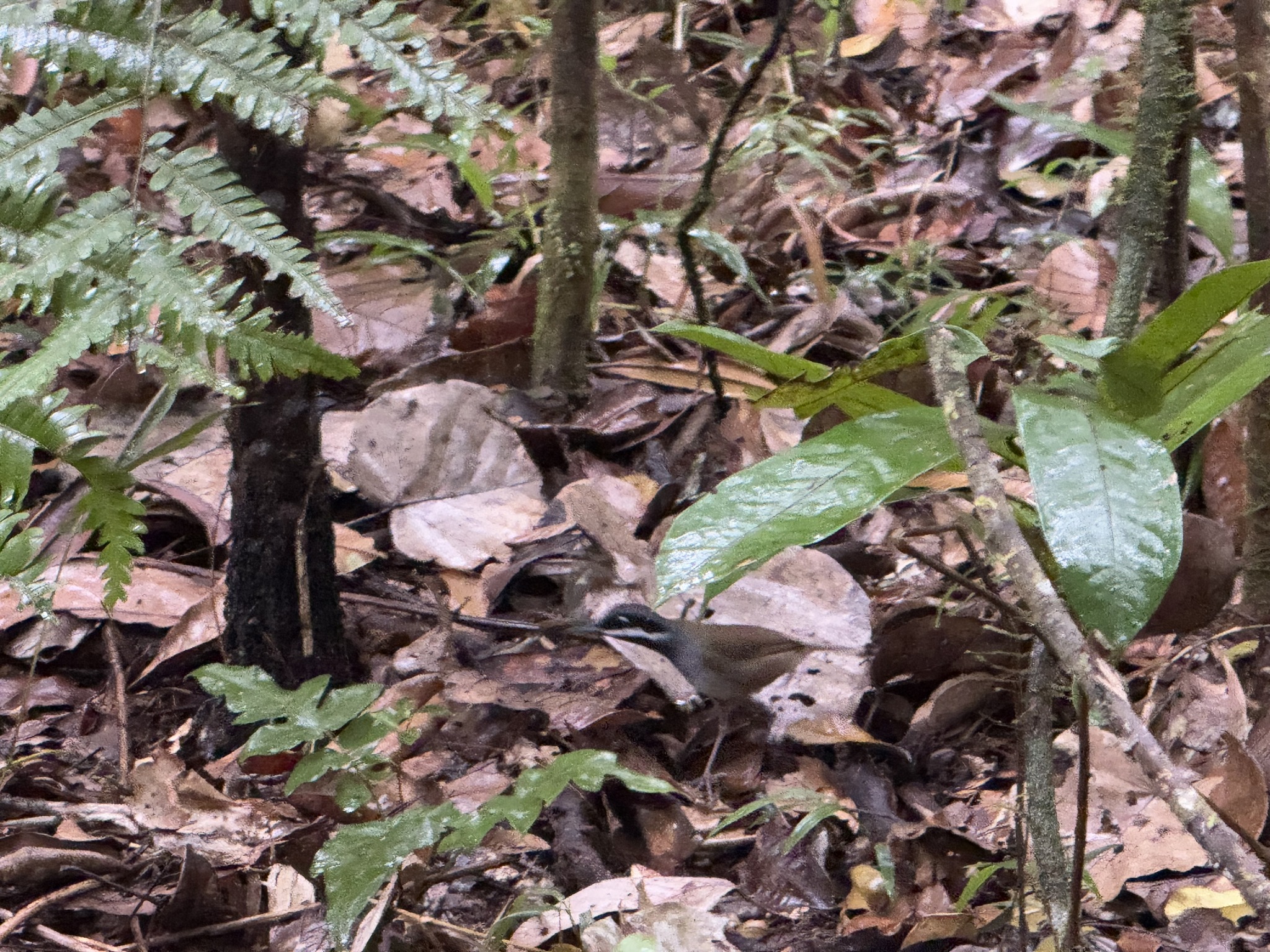 Crossley's Vanga
In short
To distinguish Nuthatch-Vanga from Crossley's Vanga, focus on the bill color and plumage patterns. Nuthatch-Vanga has a bright red or orange-red bill and is mostly grayish blue, while Crossley's Vanga features a striking black and white facial pattern with a broad white submoustachial stripe and a mostly brown body.
Identification tips
- Look for the bright red or orange-red bill of the Nuthatch-Vanga. 2. Note the grayish blue plumage of Nuthatch-Vanga males, contrasting with the brown body and striking facial pattern of Crossley's Vanga. 3. Observe behavior: Nuthatch-Vanga ascends tree trunks like a nuthatch, while Crossley's Vanga forages more solitarily. 4. Listen for Crossley's Vanga's distinctive whistle, as vocalizations for Nuthatch-Vanga are less documented.
Size
Both species are small vangas, but size differences are not prominent for field identification.
Plumage
Nuthatch-Vanga males are almost entirely grayish blue with a narrow black forecrown, while females are duller with buff underparts. Crossley's Vanga has a distinctive black and white facial pattern with a broad white submoustachial stripe and a mostly brown body, with gray in the center of the breast and belly.
Behaviour
Nuthatch-Vanga behaves like a nuthatch, ascending trunks and branches, and often forages in pairs within mixed species flocks. Crossley's Vanga typically forages in pairs or alone and rarely joins mixed flocks.
Habitat
Nuthatch-Vanga is found in humid evergreen forests of eastern Madagascar. Crossley's Vanga also inhabits Madagascar but prefers dense undergrowth in forested areas.
Voice
Crossley's Vanga has a distinctive short, high-pitched, penetrating whistle. Vocalization details for Nuthatch-Vanga are not specified.