Birdr

Papuan Nightjar vs Large-tailed Nightjar

Eurostopodus papuensis versus Caprimulgus macrurus

Play a quiz with Papuan Nightjar and Large-tailed Nightjar

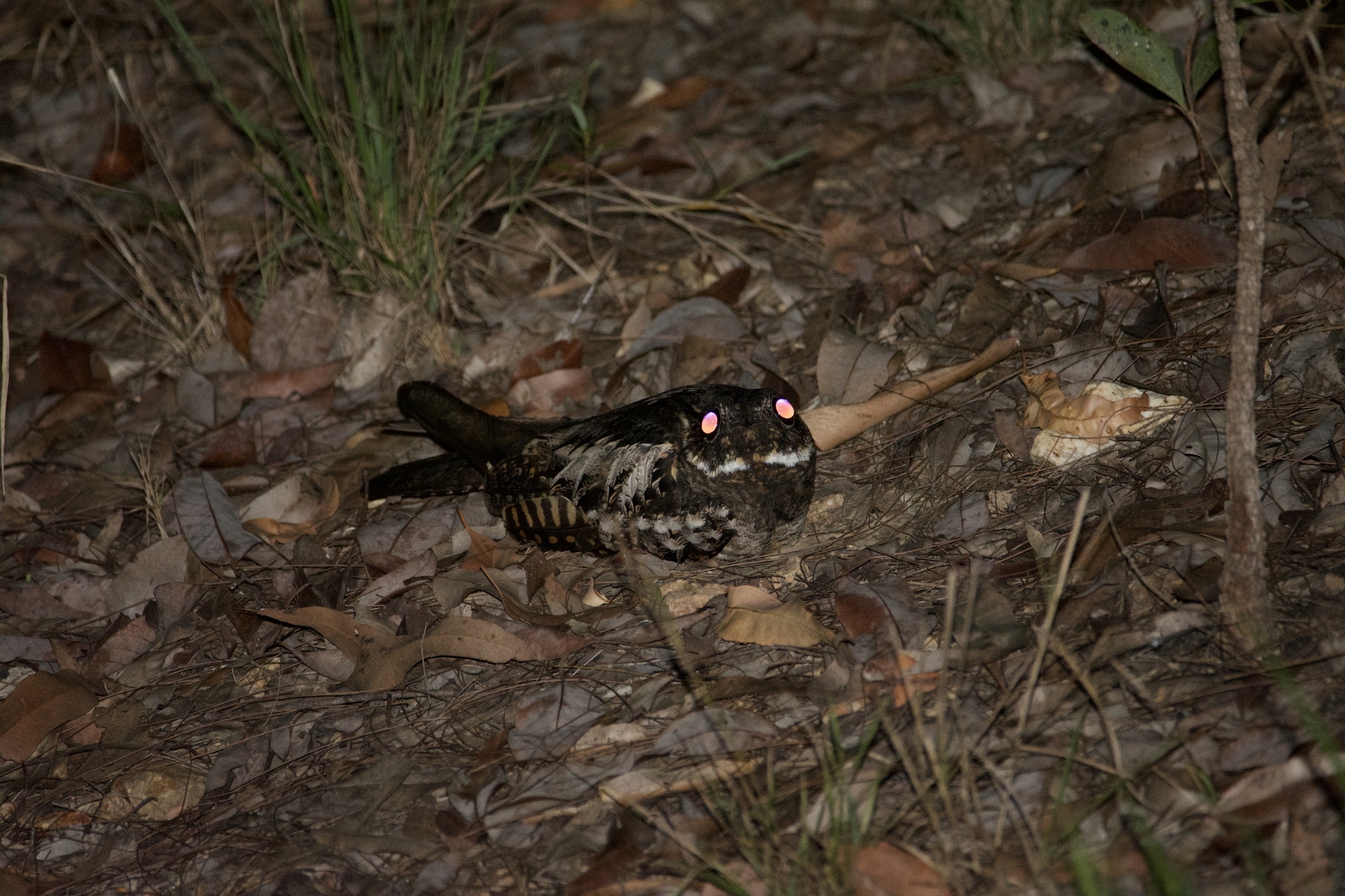
Papuan Nightjar (Eurostopodus papuensis) Papuan Nightjar
Large-tailed Nightjar (Caprimulgus macrurus) Large-tailed Nightjar

Media

Loading…

In short

The Papuan Nightjar and Large-tailed Nightjar can be challenging to distinguish in the field due to their similar nocturnal habits and plumage. However, the Papuan Nightjar is generally larger with a more robust structure, while the Large-tailed Nightjar has a distinctive long tail and more contrasting plumage patterns. Vocalizations are also a key difference, with each species having distinct calls.

Identification tips

  1. Size and Structure: Look for the larger size and more robust build of the Papuan Nightjar. 2. Tail Length: The Large-tailed Nightjar has a notably long tail, which is a key distinguishing feature. 3. Plumage Contrast: Check for more contrasting plumage in the Large-tailed Nightjar, especially the white throat patch. 4. Vocalizations: Listen for the repetitive call of the Large-tailed Nightjar, which is distinct from the Papuan Nightjar.

Size

The Papuan Nightjar is generally larger and more robust compared to the Large-tailed Nightjar, which has a more slender appearance with a notably long tail.

Plumage

The Papuan Nightjar tends to have a more uniform and less contrasting plumage, while the Large-tailed Nightjar often displays more pronounced contrast with a distinct white throat patch and tail markings.

Behaviour

Both species are nocturnal and exhibit similar behaviors such as ground roosting during the day and aerial insect hunting at night.

Habitat

Papuan Nightjars are typically found in forested areas and clearings in New Guinea, while Large-tailed Nightjars are more widespread, inhabiting open woodlands, scrub, and even urban areas across Southeast Asia.

Voice

The Papuan Nightjar's call is less documented, but it is known to differ from the Large-tailed Nightjar, which has a distinctive, repetitive 'chuck-chuck-chuck' call.

Submit a better description

Use the same sections as the comparison. Your text is published immediately.

The Papuan Nightjar and Large-tailed Nightjar can be challenging to distinguish in the field due to their similar nocturnal habits and plumage. However, the Papuan Nightjar is generally larger with a more robust structure, while the Large-tailed Nightjar has a distinctive long tail and more contrasting plumage patterns. Vocalizations are also a key difference, with each species having distinct calls.

  1. Size and Structure: Look for the larger size and more robust build of the Papuan Nightjar. 2. Tail Length: The Large-tailed Nightjar has a notably long tail, which is a key distinguishing feature. 3. Plumage Contrast: Check for more contrasting plumage in the Large-tailed Nightjar, especially the white throat patch. 4. Vocalizations: Listen for the repetitive call of the Large-tailed Nightjar, which is distinct from the Papuan Nightjar.

The Papuan Nightjar is generally larger and more robust compared to the Large-tailed Nightjar, which has a more slender appearance with a notably long tail.

The Papuan Nightjar tends to have a more uniform and less contrasting plumage, while the Large-tailed Nightjar often displays more pronounced contrast with a distinct white throat patch and tail markings.

Both species are nocturnal and exhibit similar behaviors such as ground roosting during the day and aerial insect hunting at night.

Papuan Nightjars are typically found in forested areas and clearings in New Guinea, while Large-tailed Nightjars are more widespread, inhabiting open woodlands, scrub, and even urban areas across Southeast Asia.

The Papuan Nightjar's call is less documented, but it is known to differ from the Large-tailed Nightjar, which has a distinctive, repetitive 'chuck-chuck-chuck' call.

Discard your changes?

You have unsaved edits. If you leave now, those changes will be lost.

Papuan Nightjar · Large-tailed Nightjar · My Tricky Birds