
Pin-tailed Snipe vs Marsh Wren
Gallinago stenura versus Cistothorus palustris
Play a quiz with Pin-tailed Snipe and Marsh Wren
 Pin-tailed Snipe
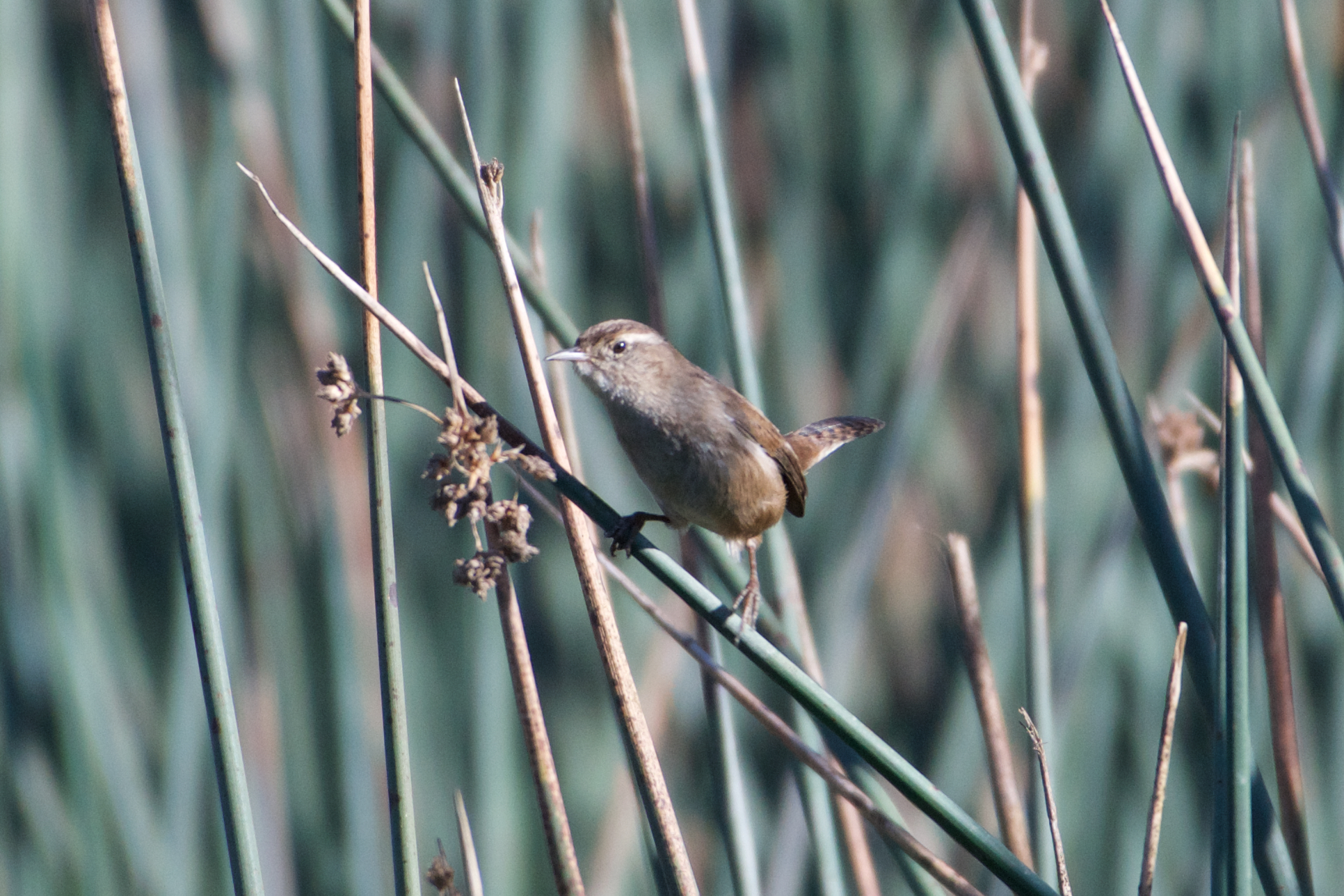 Marsh Wren
In short
The Pin-tailed Snipe and Marsh Wren are distinct in both appearance and behavior. The snipe is a wader with a long bill and cryptic plumage, while the wren is a small, active songbird with complex vocalizations. These differences make them unlikely to be confused in the field.
Identification tips
- Size and shape: Look for the larger size and long bill of the snipe versus the small, compact wren.
- Tail and plumage: Note the snipe's long, pointed tail and mottled plumage compared to the wren's shorter tail and white supercilium.
- Habitat: Observe the habitat; snipes in open, muddy wetlands, wrens in dense marsh vegetation.
- Behavior: Watch for the snipe's probing behavior and the wren's active movement and singing.
Size
The Pin-tailed Snipe is larger, with a more robust body and longer bill compared to the small and compact Marsh Wren.
Plumage
The Pin-tailed Snipe has mottled brown plumage with a distinctive long, pointed tail. In contrast, the Marsh Wren has a more uniform brown coloration with a prominent white supercilium.
Behaviour
Pin-tailed Snipes are often seen probing mud with their long bills, while Marsh Wrens are active and often seen flitting through reeds and singing.
Habitat
Pin-tailed Snipes are typically found in wetland areas with muddy substrates, whereas Marsh Wrens prefer marshes with dense vegetation like cattails.
Voice
The Marsh Wren is known for its complex and continuous singing, often engaging in countersinging duels. The Pin-tailed Snipe's vocalizations are less prominent and not a key identification feature.