
Pine Grosbeak vs Harris's Sparrow
Pinicola enucleator versus Zonotrichia querula
Play a quiz with Pine Grosbeak and Harris's Sparrow
 Pine Grosbeak
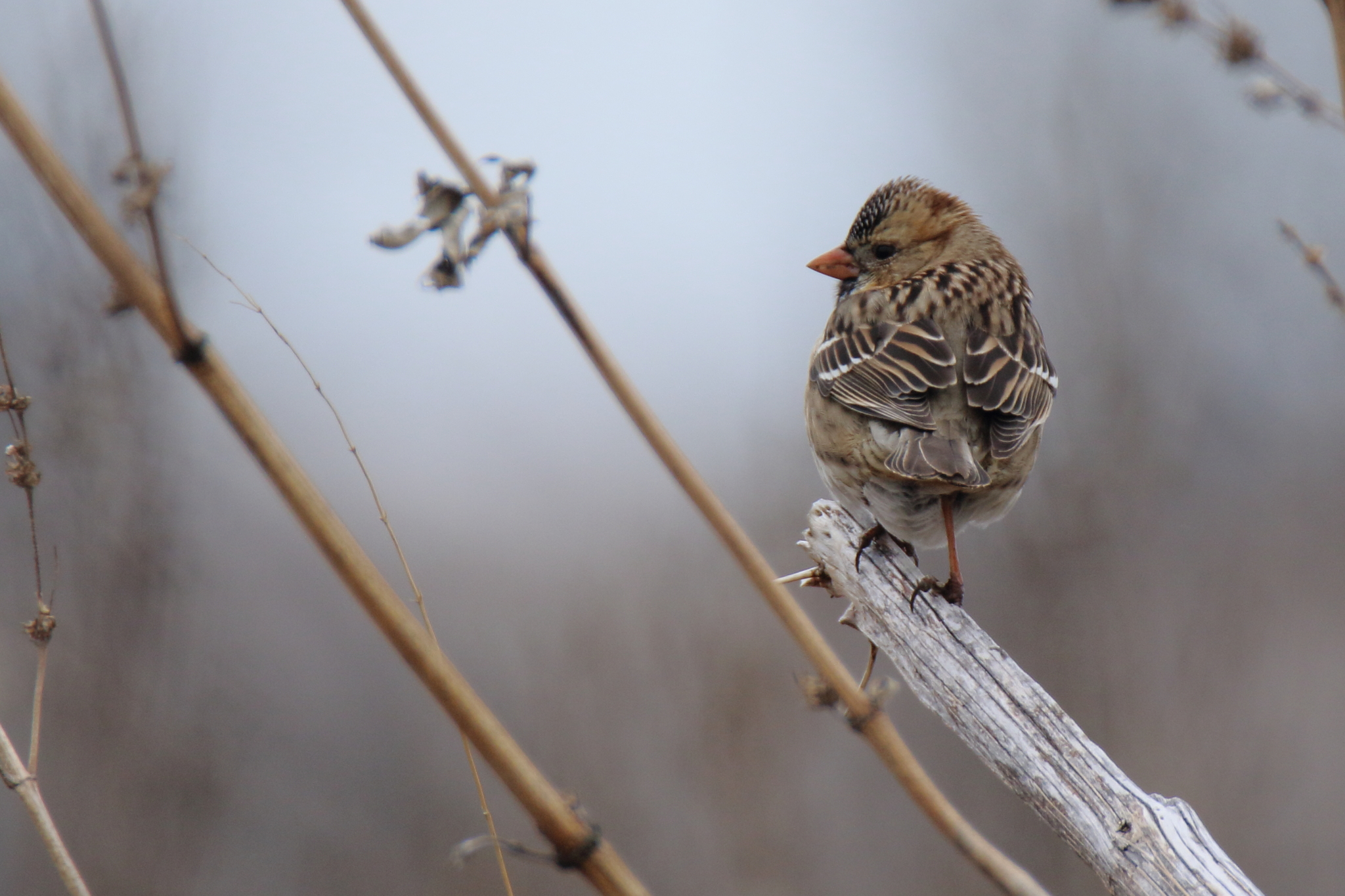 Harris's Sparrow
In short
Pine Grosbeaks and Harris's Sparrows are distinct in both appearance and habitat preferences. The Pine Grosbeak is a large, colorful finch often found in coniferous forests, while the Harris's Sparrow is a large, ground-dwelling sparrow with a distinctive black crown and throat, typically seen in open areas during migration and winter.
Identification tips
1. Bill Shape: Pine Grosbeaks have a thick, conical bill typical of finches, while Harris's Sparrows have a more slender, pink bill. 2. Plumage: Look for the bright red or pinkish plumage of male Pine Grosbeaks versus the black crown and throat of Harris's Sparrows. 3. Habitat: Consider the habitat; Pine Grosbeaks are in coniferous forests, Harris's Sparrows in open fields or edges. 4. Behavior: Pine Grosbeaks are often in trees, Harris's Sparrows on the ground. 5. Vocalization: Listen for the flute-like calls of Pine Grosbeaks compared to the clear whistles of Harris's Sparrows.
Size
Pine Grosbeaks are larger and more robust than Harris's Sparrows, with a bulkier build and thicker bill.
Plumage
Pine Grosbeaks have a striking plumage with males showing bright red or pinkish hues, while females and immatures are more subdued with yellowish or gray tones. Harris's Sparrows have a distinctive black crown and throat, with a pink bill and brownish body, showing more variation in black spotting on the breast.
Behaviour
Pine Grosbeaks are often seen feeding in trees, especially on fruits and buds, while Harris's Sparrows are ground foragers, often seen in flocks during migration and winter.
Habitat
Pine Grosbeaks inhabit coniferous forests, especially in boreal and montane regions. Harris's Sparrows prefer open areas with scattered shrubs during migration and winter, breeding in the boreal forest.
Voice
Pine Grosbeaks have a soft, musical call, often described as flute-like, while Harris's Sparrows have a distinctive, clear whistle that is often heard during migration.