Birdr

Polynesian Starling vs Samoan Starling

Aplonis tabuensis versus Aplonis atrifusca

Play a quiz with Polynesian Starling and Samoan Starling
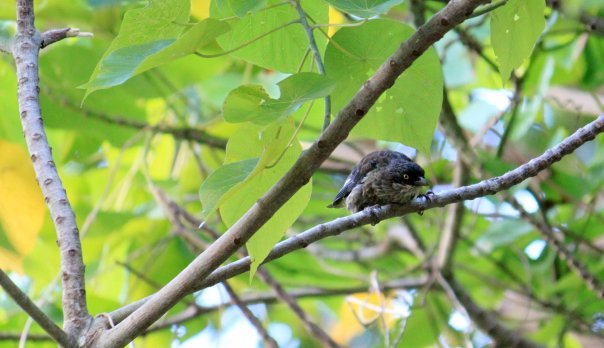
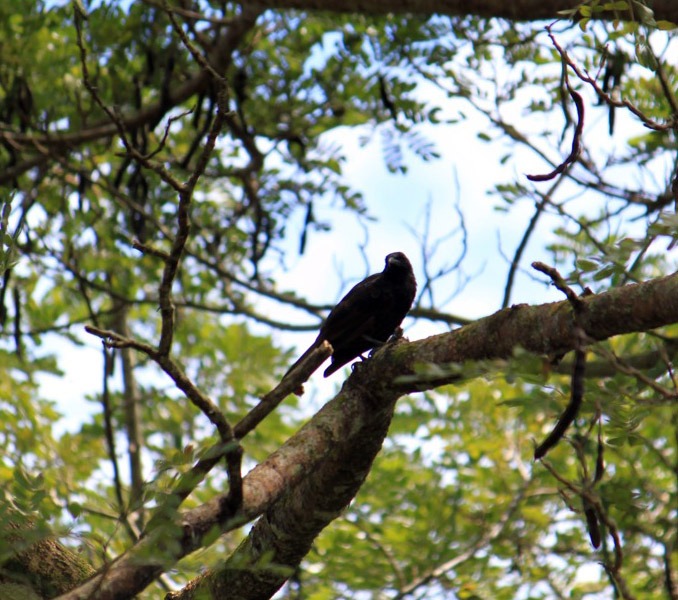
Polynesian Starling (Aplonis tabuensis) Polynesian Starling
Samoan Starling (Aplonis atrifusca) Samoan Starling

Media

Loading…

In short

The Polynesian Starling and Samoan Starling are both medium-sized starlings with similar overall shapes, but they can be distinguished by plumage and habitat preferences. The Polynesian Starling often shows a more varied plumage with iridescent tones, while the Samoan Starling is generally more uniformly dark. Habitat and vocalizations can also help in differentiation.

Identification tips

  1. Look for iridescent plumage in the Polynesian Starling, especially in good lighting conditions. 2. Consider the habitat: Polynesian Starlings are more widespread across Pacific islands, while Samoan Starlings are restricted to Samoa. 3. Listen for vocalizations if possible, though this may be challenging due to limited documentation.

Size

Both species are similar in size, typical of medium-sized starlings.

Plumage

The Polynesian Starling often exhibits a more varied plumage with iridescent greens and purples, especially in good light. In contrast, the Samoan Starling is generally more uniformly dark brown to black, lacking the iridescent sheen.

Behaviour

Both species are known for their active foraging behavior, often seen in pairs or small groups. They can be observed foraging in the canopy or on the ground.

Habitat

The Polynesian Starling is more commonly found in forested areas across various islands, while the Samoan Starling is more restricted to the Samoan islands, often seen in both forest and open habitats.

Voice

Vocalizations are not well-documented for both species, but the Polynesian Starling is known to have a varied repertoire of calls. The Samoan Starling may have simpler calls, but detailed comparisons are limited.

Submit a better description

Use the same sections as the comparison. Your text is published immediately.

The Polynesian Starling and Samoan Starling are both medium-sized starlings with similar overall shapes, but they can be distinguished by plumage and habitat preferences. The Polynesian Starling often shows a more varied plumage with iridescent tones, while the Samoan Starling is generally more uniformly dark. Habitat and vocalizations can also help in differentiation.

  1. Look for iridescent plumage in the Polynesian Starling, especially in good lighting conditions. 2. Consider the habitat: Polynesian Starlings are more widespread across Pacific islands, while Samoan Starlings are restricted to Samoa. 3. Listen for vocalizations if possible, though this may be challenging due to limited documentation.

Both species are similar in size, typical of medium-sized starlings.

The Polynesian Starling often exhibits a more varied plumage with iridescent greens and purples, especially in good light. In contrast, the Samoan Starling is generally more uniformly dark brown to black, lacking the iridescent sheen.

Both species are known for their active foraging behavior, often seen in pairs or small groups. They can be observed foraging in the canopy or on the ground.

The Polynesian Starling is more commonly found in forested areas across various islands, while the Samoan Starling is more restricted to the Samoan islands, often seen in both forest and open habitats.

Vocalizations are not well-documented for both species, but the Polynesian Starling is known to have a varied repertoire of calls. The Samoan Starling may have simpler calls, but detailed comparisons are limited.

Discard your changes?

You have unsaved edits. If you leave now, those changes will be lost.

Polynesian Starling · Samoan Starling · My Tricky Birds