
Purple-throated Euphonia vs Chestnut-bellied Euphonia
Euphonia chlorotica versus Euphonia pectoralis
Play a quiz with Purple-throated Euphonia and Chestnut-bellied Euphonia
 Purple-throated Euphonia
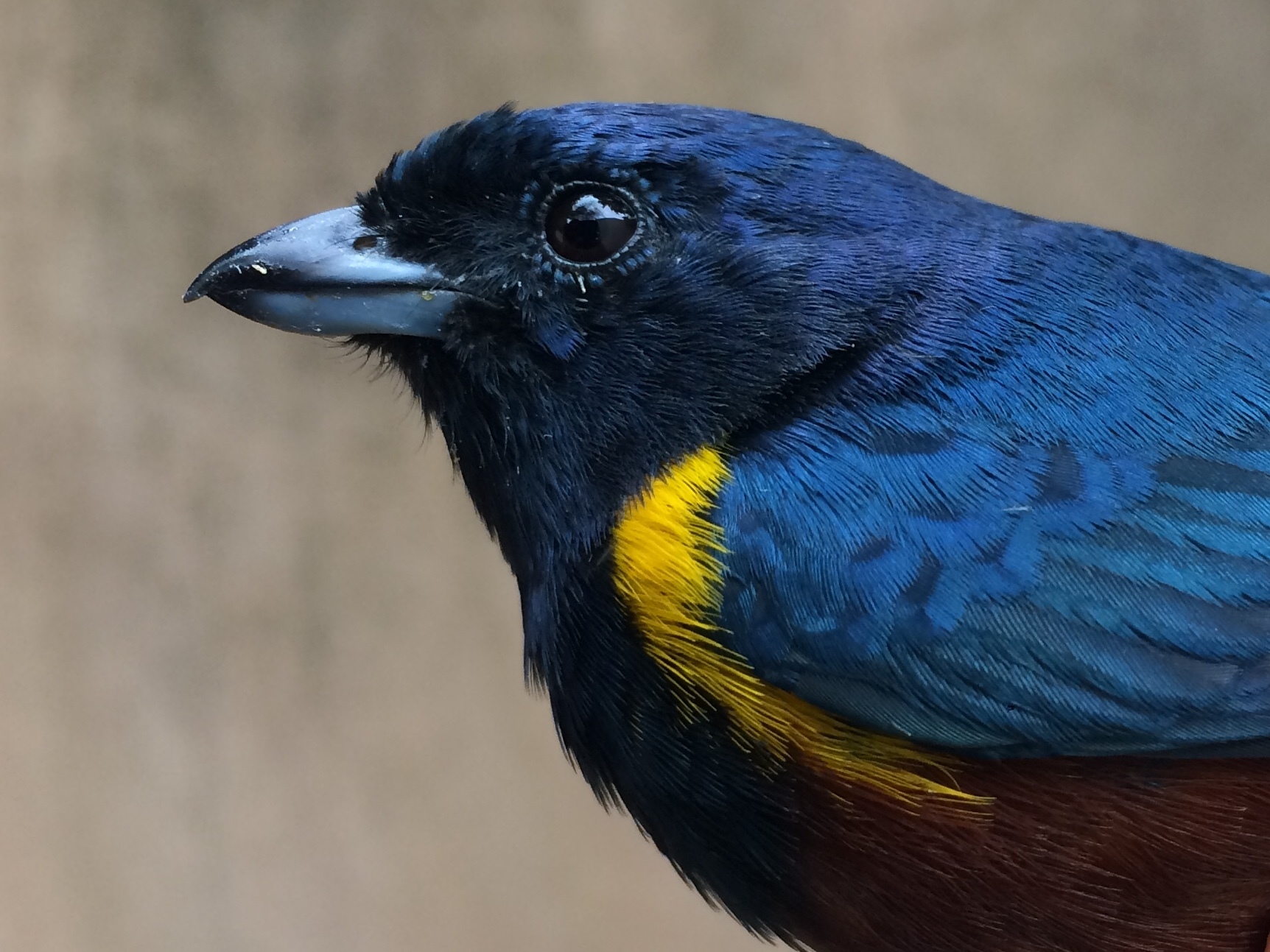 Chestnut-bellied Euphonia
In short
The Purple-throated Euphonia and Chestnut-bellied Euphonia can be distinguished primarily by their underparts: the Purple-throated Euphonia has a yellow belly, while the Chestnut-bellied Euphonia features a distinctive chestnut belly. Both species share similar habitats but differ in their specific range and subtle plumage details.
Identification tips
- Look for the belly color: Yellow in Purple-throated, chestnut in Chestnut-bellied.
- Check the throat: Purple-throated has a purple throat in males.
- Consider the location: Purple-throated has a broader range, while Chestnut-bellied is more localized to southeastern Brazil.
- Observe the company: Both species may be found in mixed-species flocks, but the habitat context can help.
Size
Both species are similar in size, typical of euphonias, with no significant structural differences noted.
Plumage
The male Purple-throated Euphonia has a bright yellow belly and a purple throat, whereas the male Chestnut-bellied Euphonia has a chestnut-colored belly and lacks the purple throat. Females of both species are less distinct, generally olive above and paler below, but the chestnut belly is a key differentiator in males.
Behaviour
Both species exhibit similar behaviors typical of euphonias, such as foraging in pairs or small groups and feeding on fruits.
Habitat
The Purple-throated Euphonia is found in gallery forests and edges of humid lowland forests, often near rivers in Amazonia. The Chestnut-bellied Euphonia also inhabits forest edges but is more restricted to southeastern Brazil.
Voice
Vocalizations are not well-documented for differentiation, but both species have typical euphonia calls, which are high-pitched and musical.
Purple-throated Euphonia · Chestnut-bellied Euphonia · My Tricky Birds