
Red-cheeked Wattle-eye vs Jameson's Wattle-eye
Platysteira blissetti versus Platysteira jamesoni
Play a quiz with Red-cheeked Wattle-eye and Jameson's Wattle-eye
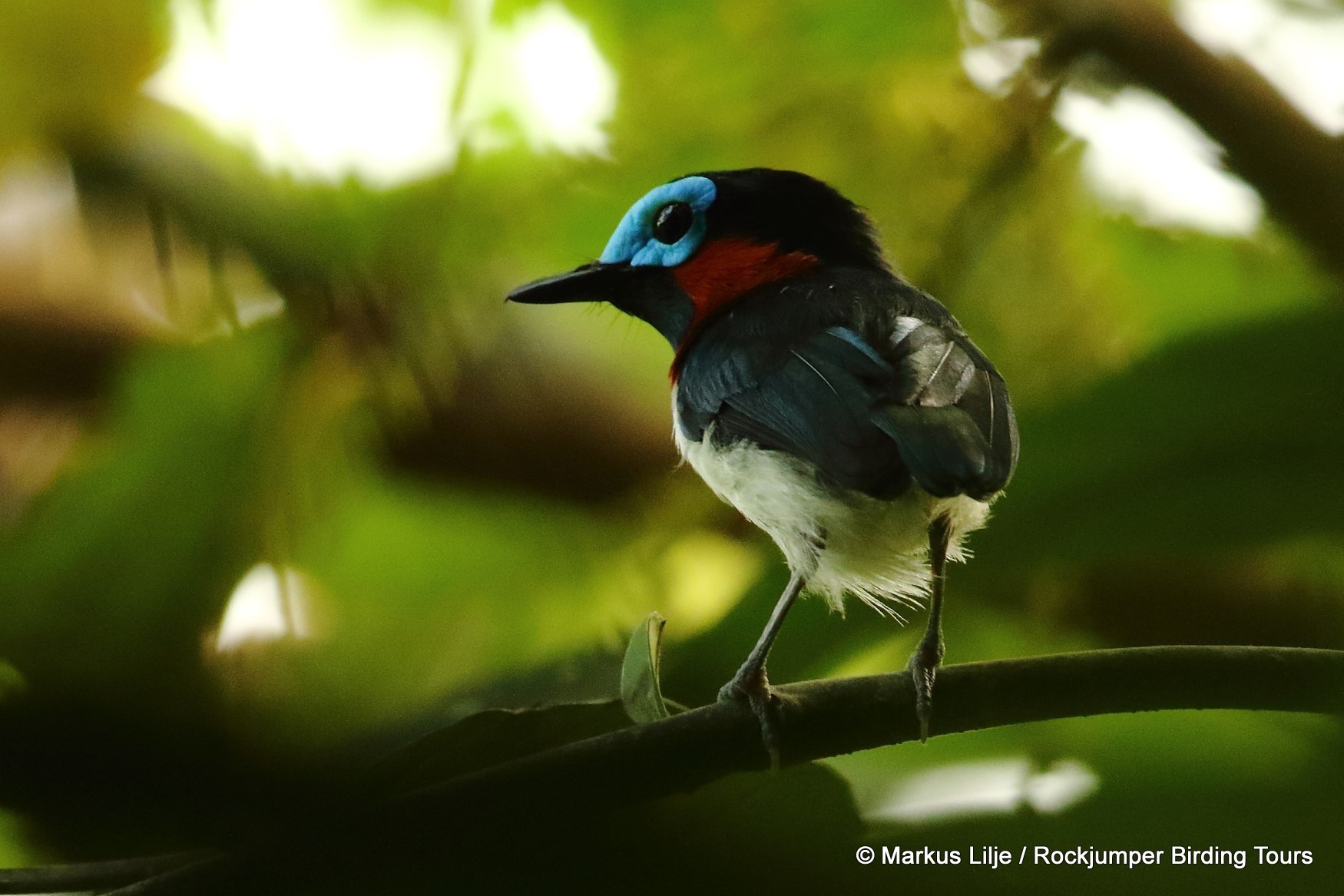 Red-cheeked Wattle-eye
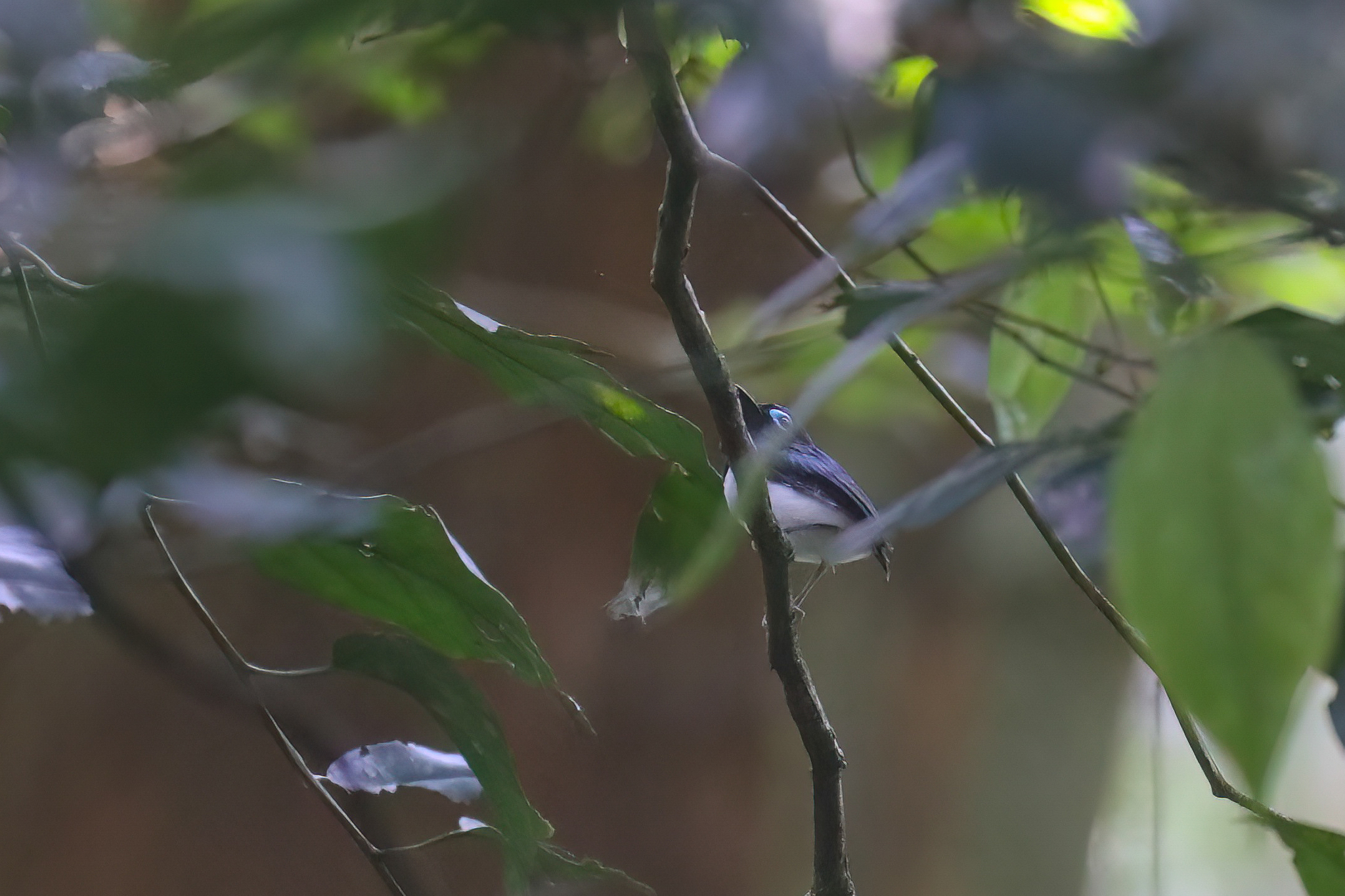 Jameson's Wattle-eye
In short
The Red-cheeked Wattle-eye and Jameson's Wattle-eye are similar in appearance but can be distinguished by the male's cheek color: red in the former and black in the latter. Both species share a similar structure and are part of the same family, making color the most reliable field mark.
Identification tips
- Focus on the cheek color of males: red for Red-cheeked Wattle-eye, black for Jameson's Wattle-eye. 2. Note that females are less distinct, so rely more on male identification when possible. 3. Habitat and behavior are not reliable for differentiation due to overlap.
Size
Both species are similar in size, typical of wattle-eyes, with no significant differences in structure that are easily observable in the field.
Plumage
The male Red-cheeked Wattle-eye has a distinctive red cheek patch, while the male Jameson's Wattle-eye has a black cheek patch. Females of both species are less distinct, but the cheek color remains a key differentiator.
Behaviour
Both species exhibit similar behaviors typical of wattle-eyes, such as active foraging and frequent movement through the canopy.
Habitat
Both species inhabit similar forested environments, often overlapping in range, which makes habitat a less reliable differentiator.
Voice
Vocalizations are not well-documented for field differentiation, and both species have similar calls typical of wattle-eyes.
Red-cheeked Wattle-eye · Jameson's Wattle-eye · My Tricky Birds