Birdr

Red-legged Brushturkey vs Malleefowl

Talegalla jobiensis versus Leipoa ocellata

Play a quiz with Red-legged Brushturkey and Malleefowl

Red-legged Brushturkey (Talegalla jobiensis) Red-legged Brushturkey
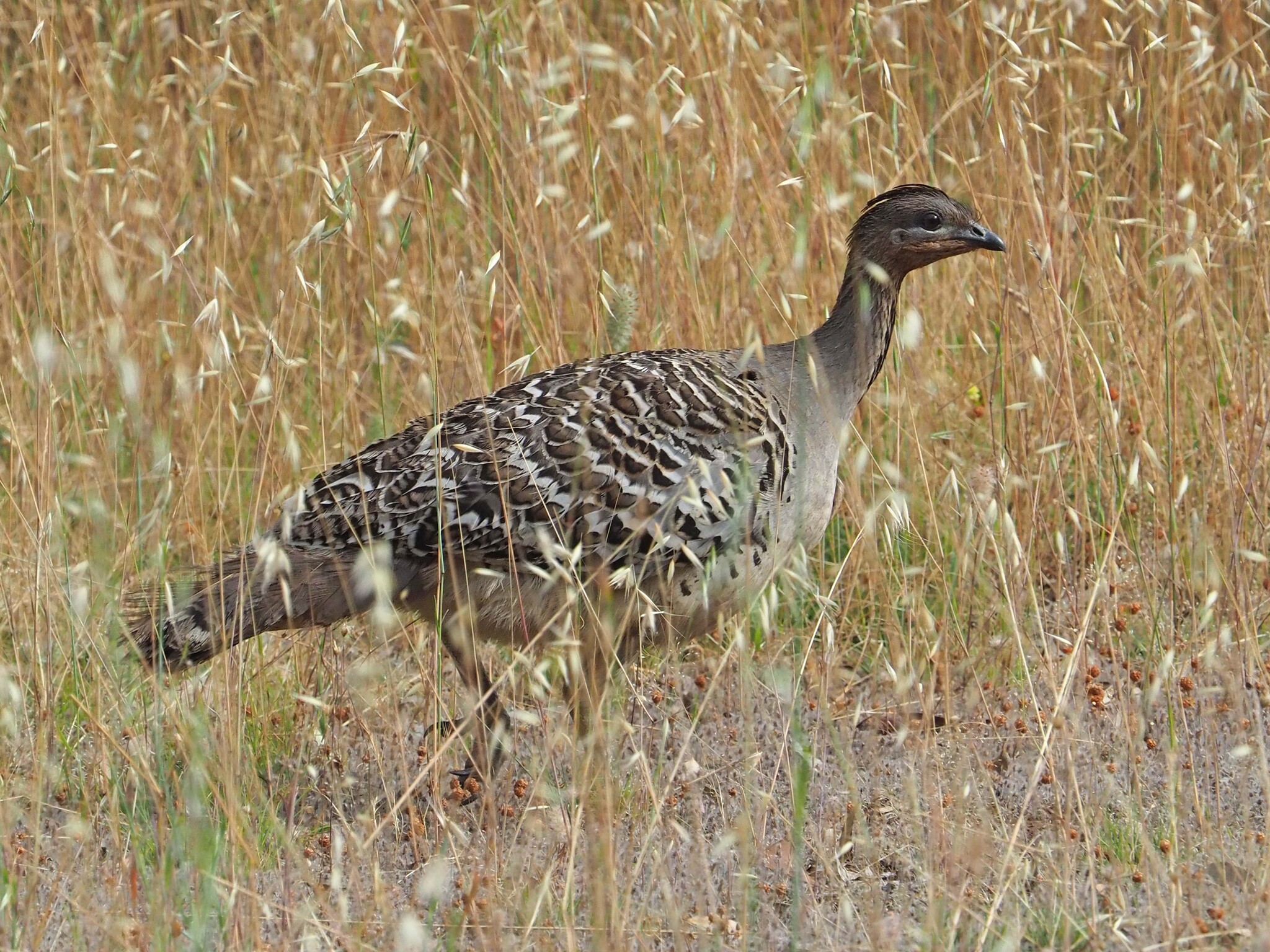
Malleefowl (Leipoa ocellata) Malleefowl

Media

Loading…

In short

The Red-legged Brushturkey and Malleefowl are both megapodes but differ significantly in appearance and behavior. The Red-legged Brushturkey has a distinctive red leg coloration and is generally found in forested habitats, while the Malleefowl is known for its cryptic plumage and inhabits arid scrublands.

Identification tips

  1. Leg Color: Look for the distinctive red legs of the Red-legged Brushturkey. 2. Plumage: Note the cryptic, mottled plumage of the Malleefowl, which helps it blend into arid environments. 3. Habitat: Consider the habitat; forested areas suggest Red-legged Brushturkey, while arid scrublands indicate Malleefowl. 4. Behavior: Observe social behavior; groups suggest Red-legged Brushturkey, solitary or pairs suggest Malleefowl.

Size

Both species are similar in size, typical of large ground-dwelling birds, but the Malleefowl may appear slightly bulkier.

Plumage

The Red-legged Brushturkey has a mostly dark plumage with a bare red face and legs, while the Malleefowl has a more cryptic, mottled brown and white plumage that blends into its arid habitat.

Behaviour

Both species are known for their mound-building behavior, but the Malleefowl is more often seen alone or in pairs, whereas the Red-legged Brushturkey can be found in small groups.

Habitat

Red-legged Brushturkeys are typically found in dense forested areas, whereas Malleefowl inhabit dry, open scrublands and mallee ecosystems.

Voice

The vocalizations of both species are not well-documented in the sources, but the Red-legged Brushturkey is known to be more vocal, with calls that can be heard in its forest habitat.

Submit a better description

Use the same sections as the comparison. Your text is published immediately.

The Red-legged Brushturkey and Malleefowl are both megapodes but differ significantly in appearance and behavior. The Red-legged Brushturkey has a distinctive red leg coloration and is generally found in forested habitats, while the Malleefowl is known for its cryptic plumage and inhabits arid scrublands.

  1. Leg Color: Look for the distinctive red legs of the Red-legged Brushturkey. 2. Plumage: Note the cryptic, mottled plumage of the Malleefowl, which helps it blend into arid environments. 3. Habitat: Consider the habitat; forested areas suggest Red-legged Brushturkey, while arid scrublands indicate Malleefowl. 4. Behavior: Observe social behavior; groups suggest Red-legged Brushturkey, solitary or pairs suggest Malleefowl.

Both species are similar in size, typical of large ground-dwelling birds, but the Malleefowl may appear slightly bulkier.

The Red-legged Brushturkey has a mostly dark plumage with a bare red face and legs, while the Malleefowl has a more cryptic, mottled brown and white plumage that blends into its arid habitat.

Both species are known for their mound-building behavior, but the Malleefowl is more often seen alone or in pairs, whereas the Red-legged Brushturkey can be found in small groups.

Red-legged Brushturkeys are typically found in dense forested areas, whereas Malleefowl inhabit dry, open scrublands and mallee ecosystems.

The vocalizations of both species are not well-documented in the sources, but the Red-legged Brushturkey is known to be more vocal, with calls that can be heard in its forest habitat.

Discard your changes?

You have unsaved edits. If you leave now, those changes will be lost.

Red-legged Brushturkey · Malleefowl · My Tricky Birds