Birdr

Red-rumped Swallow vs Capped Wheatear

Cecropis daurica versus Oenanthe pileata

Play a quiz with Red-rumped Swallow and Capped Wheatear

Red-rumped Swallow (Cecropis daurica) Red-rumped Swallow
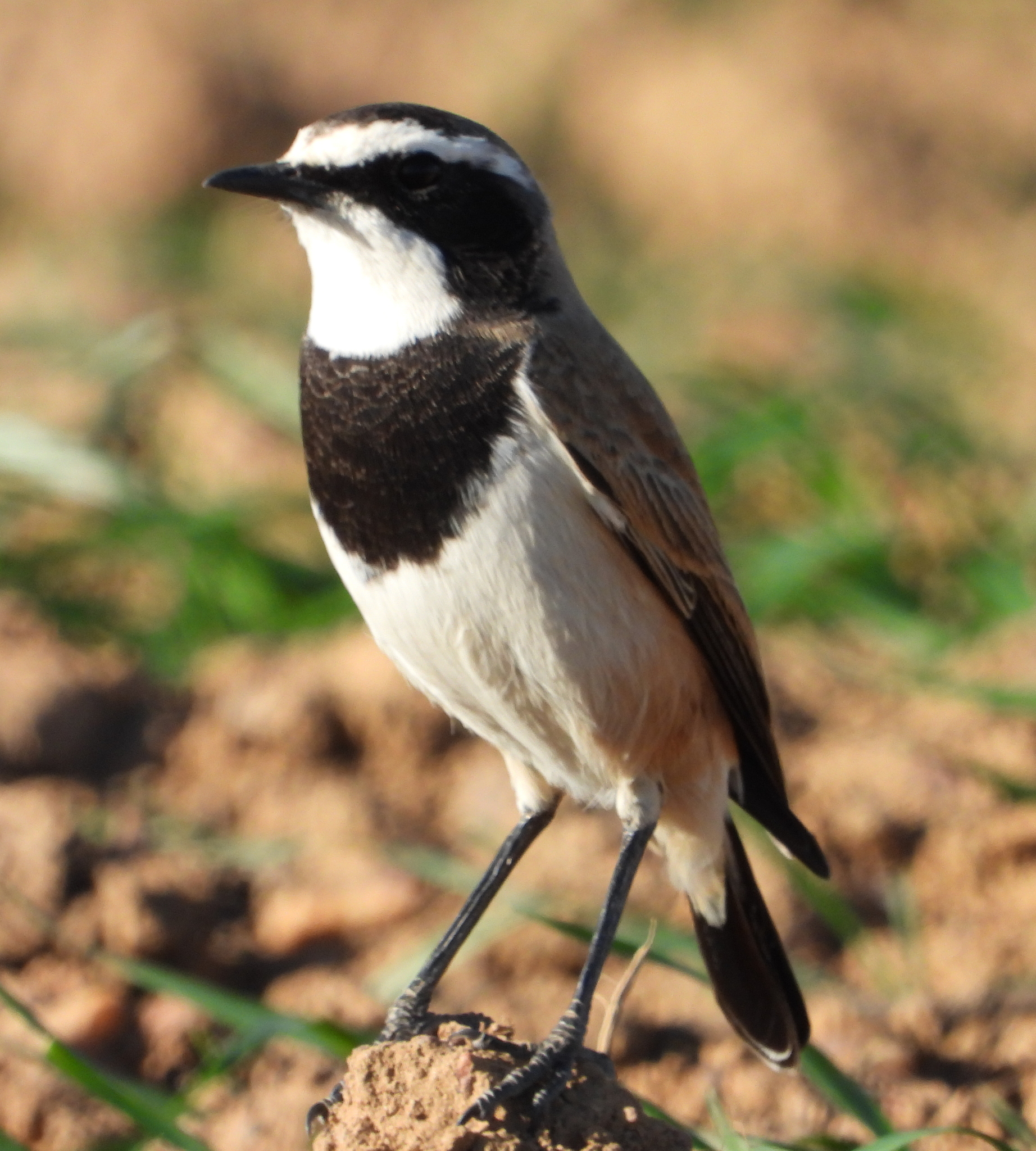
Capped Wheatear (Oenanthe pileata) Capped Wheatear

Media

Loading…

In short

The Red-rumped Swallow and Capped Wheatear are distinct in both appearance and behavior, making them relatively easy to differentiate in the field. The swallow is a small, agile bird with a distinctive red rump and long, forked tail, while the wheatear is a larger, ground-dwelling bird with a striking black cap and white underparts.

Identification tips

1. Tail Shape: Look for the swallow's long, forked tail versus the wheatear's shorter, square tail. 2. Head Markings: Note the wheatear's distinctive black cap. 3. Flight Pattern: Observe the swallow's agile, swooping flight compared to the wheatear's terrestrial movement. 4. Habitat: Consider the environment; swallows are often near water or cliffs, while wheatears are in open, dry areas.

Size

The Red-rumped Swallow is smaller and more slender than the Capped Wheatear, with a more streamlined body adapted for aerial feeding.

Plumage

The swallow has a glossy blue-black upper body with a reddish-brown rump and a pale underbody, while the wheatear features a bold black cap, white underparts, and a contrasting brown back.

Behaviour

Red-rumped Swallows are often seen flying high in the sky, catching insects on the wing, whereas Capped Wheatears are typically found on the ground, hopping or running in open areas.

Habitat

Red-rumped Swallows are usually found near open fields, water bodies, or cliffs where they can nest, while Capped Wheatears prefer open grasslands or semi-arid regions.

Voice

The Red-rumped Swallow has a soft, twittering song, whereas the Capped Wheatear's call is more varied and includes whistles and chatters.

Submit a better description

Use the same sections as the comparison. Your text is published immediately.

The Red-rumped Swallow and Capped Wheatear are distinct in both appearance and behavior, making them relatively easy to differentiate in the field. The swallow is a small, agile bird with a distinctive red rump and long, forked tail, while the wheatear is a larger, ground-dwelling bird with a striking black cap and white underparts.

1. Tail Shape: Look for the swallow's long, forked tail versus the wheatear's shorter, square tail. 2. Head Markings: Note the wheatear's distinctive black cap. 3. Flight Pattern: Observe the swallow's agile, swooping flight compared to the wheatear's terrestrial movement. 4. Habitat: Consider the environment; swallows are often near water or cliffs, while wheatears are in open, dry areas.

The Red-rumped Swallow is smaller and more slender than the Capped Wheatear, with a more streamlined body adapted for aerial feeding.

The swallow has a glossy blue-black upper body with a reddish-brown rump and a pale underbody, while the wheatear features a bold black cap, white underparts, and a contrasting brown back.

Red-rumped Swallows are often seen flying high in the sky, catching insects on the wing, whereas Capped Wheatears are typically found on the ground, hopping or running in open areas.

Red-rumped Swallows are usually found near open fields, water bodies, or cliffs where they can nest, while Capped Wheatears prefer open grasslands or semi-arid regions.

The Red-rumped Swallow has a soft, twittering song, whereas the Capped Wheatear's call is more varied and includes whistles and chatters.

Discard your changes?

You have unsaved edits. If you leave now, those changes will be lost.

Red-rumped Swallow · Capped Wheatear · My Tricky Birds