
Reichard's Seedeater vs Cape Canary
Crithagra reichardi versus Serinus canicollis
Play a quiz with Reichard's Seedeater and Cape Canary
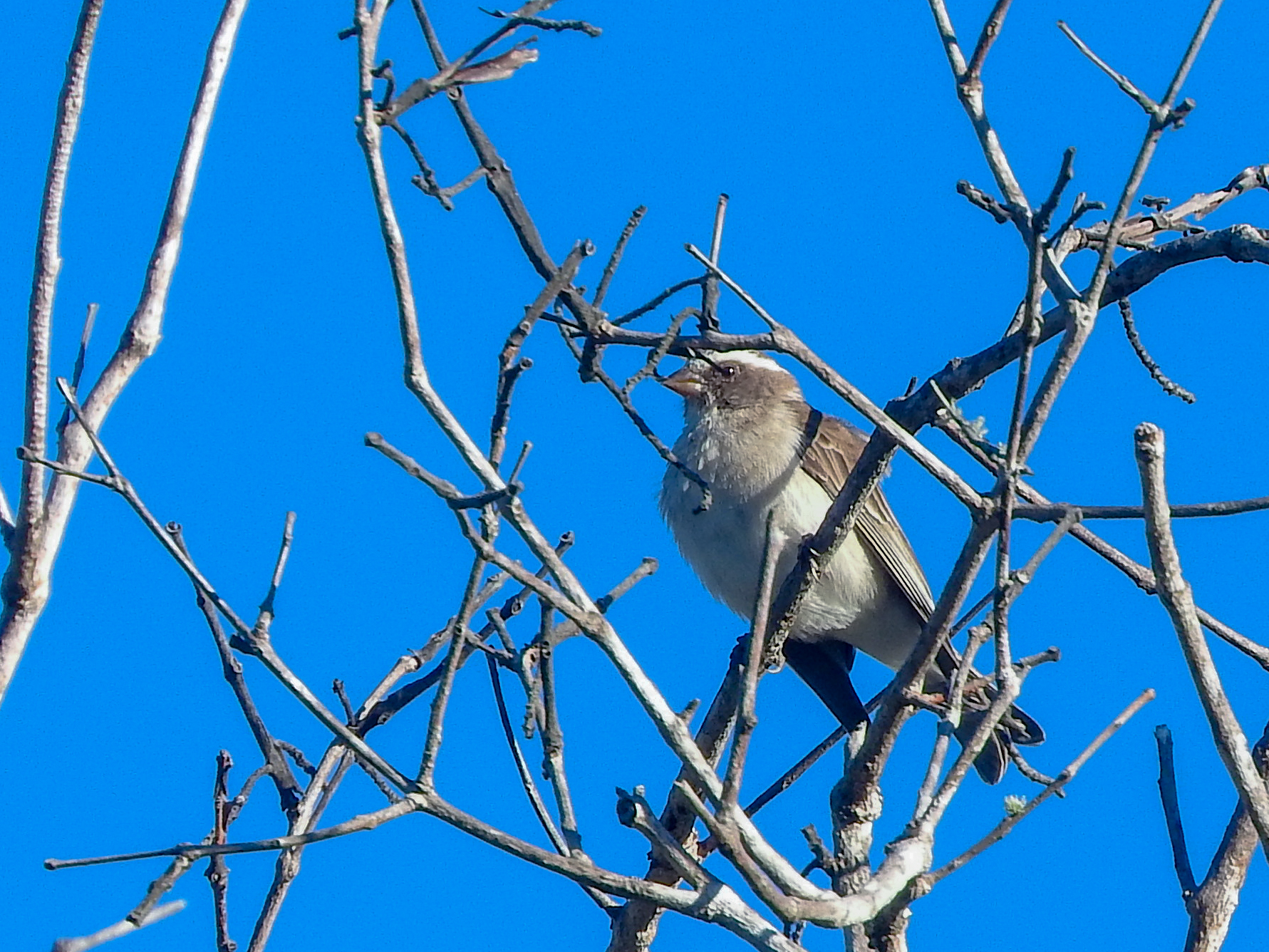 Reichard's Seedeater
 Cape Canary
In short
Reichard's Seedeater and the Cape Canary can be distinguished by their bill shape and plumage coloration. Reichard's Seedeater typically has a more conical bill, while the Cape Canary shows a slender, more pointed bill. Plumage differences are subtle but notable in the head and underparts coloration.
Identification tips
- Bill shape: Look for the more conical bill of Reichard's Seedeater versus the slender bill of the Cape Canary. 2. Plumage: Note the brighter yellow underparts and grey nape of the Cape Canary. 3. Song: Listen for the Cape Canary's melodious whistles compared to the simpler song of Reichard's Seedeater. 4. Habitat: Consider the likelihood of each species based on the surrounding environment, but be cautious of overlap.
Size
Both species are similar in size, typical of small finches, making size an unreliable differentiator.
Plumage
Reichard's Seedeater generally has a more uniform brownish or olive tone on the upperparts, while the Cape Canary often displays a brighter yellow underpart and a more distinct grey nape and back. The Cape Canary may also show more contrast between the head and body.
Behaviour
Both species exhibit similar finch-like behaviors, such as hopping on the ground and feeding in small flocks, making behavior a less reliable field mark.
Habitat
Reichard's Seedeater is often found in open woodlands and savannas, whereas the Cape Canary prefers more open grasslands and edges of forests. Overlapping habitats can occur, so habitat alone may not be definitive.
Voice
The Cape Canary's song is a series of melodious whistles, while Reichard's Seedeater has a simpler, less varied song. Calls can be similar, so listening for song differences is more reliable.