
Birdr

Rose-crowned Fruit-Dove vs Olive Whistler

Ptilinopus regina versus Pachycephala olivacea

Play a quiz with Rose-crowned Fruit-Dove and Olive Whistler
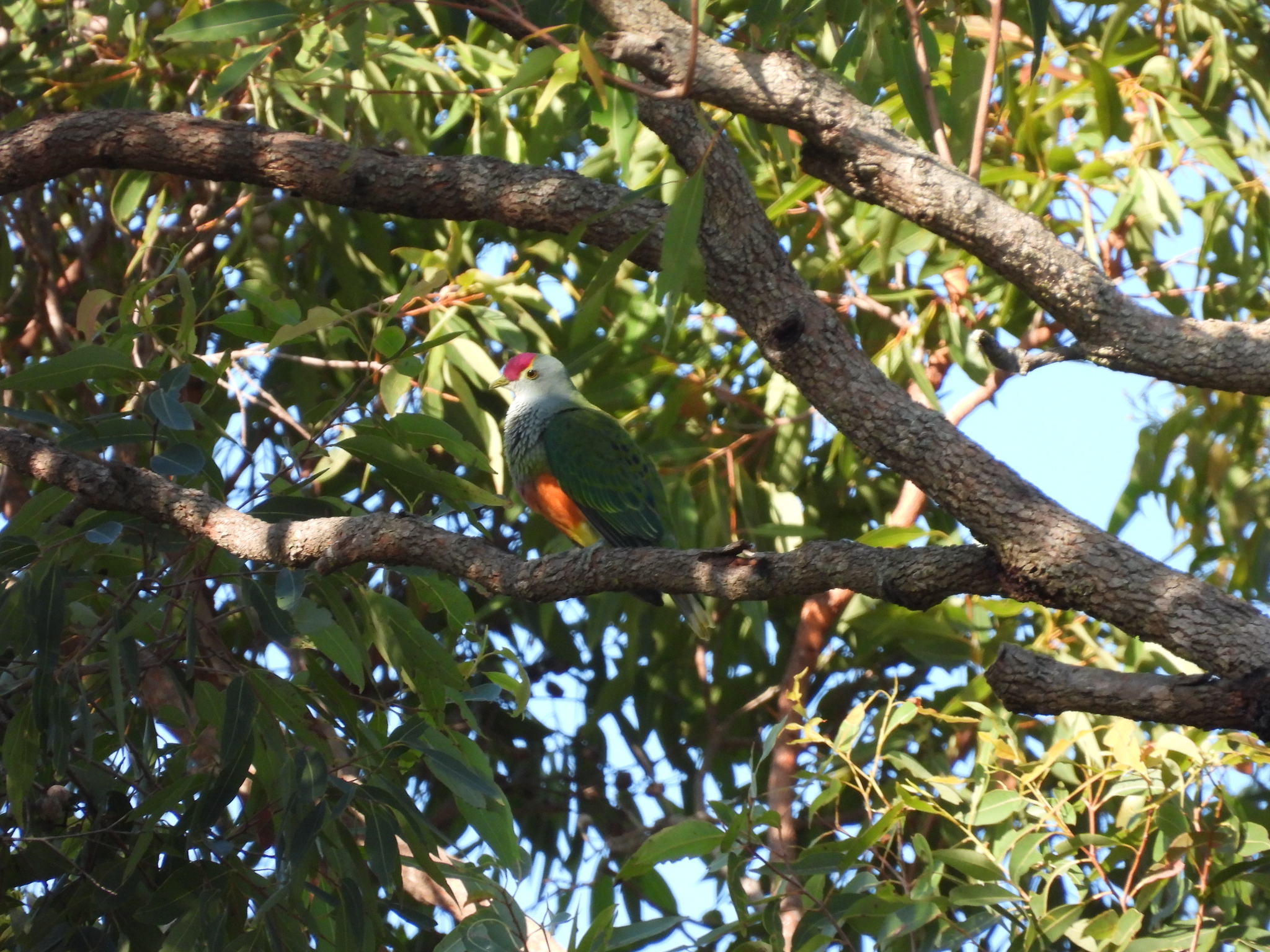
Rose-crowned Fruit-Dove (Ptilinopus regina) Rose-crowned Fruit-Dove
Olive Whistler (Pachycephala olivacea) Olive Whistler

Media

Loading…

In short

The Rose-crowned Fruit-Dove and Olive Whistler are distinct in both appearance and habitat. The Fruit-Dove is a colorful pigeon with a striking rose crown, while the Whistler is a more subdued, olive-toned songbird. They occupy different ecological niches, with the Fruit-Dove favoring tropical forests and the Whistler found in temperate woodlands.

Identification tips

1. Look for the rose crown: The Fruit-Dove's rose crown is a key identifier. 2. Observe plumage colors: Bright greens and yellows indicate the Fruit-Dove, while olive tones suggest the Whistler. 3. Note habitat: Tropical settings favor the Fruit-Dove; temperate woodlands suggest the Whistler. 4. Listen for song: A complex song points to the Whistler, whereas simpler calls are typical of the Fruit-Dove.

Size

The Rose-crowned Fruit-Dove is generally smaller and more compact than the Olive Whistler, which has a more elongated body typical of passerines.

Plumage

The Rose-crowned Fruit-Dove has a distinctive rose-colored crown and a mix of green and yellow plumage, making it quite vibrant. In contrast, the Olive Whistler is more uniformly olive-brown with subtle variations, lacking any bright crown coloration.

Behaviour

The Fruit-Dove is often seen feeding on fruits high in the canopy, while the Whistler is more likely to be observed foraging for insects and other small prey in the mid to lower levels of forests.

Habitat

Rose-crowned Fruit-Doves are typically found in tropical and subtropical forests, particularly in areas with abundant fruiting trees. Olive Whistlers prefer temperate forests and woodlands, often in cooler, higher elevation areas.

Voice

The Olive Whistler is known for its melodious and varied song, which is more complex than the simpler calls of the Rose-crowned Fruit-Dove.

Submit a better description

Use the same sections as the comparison. Your text is published immediately.

The Rose-crowned Fruit-Dove and Olive Whistler are distinct in both appearance and habitat. The Fruit-Dove is a colorful pigeon with a striking rose crown, while the Whistler is a more subdued, olive-toned songbird. They occupy different ecological niches, with the Fruit-Dove favoring tropical forests and the Whistler found in temperate woodlands.

1. Look for the rose crown: The Fruit-Dove's rose crown is a key identifier. 2. Observe plumage colors: Bright greens and yellows indicate the Fruit-Dove, while olive tones suggest the Whistler. 3. Note habitat: Tropical settings favor the Fruit-Dove; temperate woodlands suggest the Whistler. 4. Listen for song: A complex song points to the Whistler, whereas simpler calls are typical of the Fruit-Dove.

The Rose-crowned Fruit-Dove is generally smaller and more compact than the Olive Whistler, which has a more elongated body typical of passerines.

The Rose-crowned Fruit-Dove has a distinctive rose-colored crown and a mix of green and yellow plumage, making it quite vibrant. In contrast, the Olive Whistler is more uniformly olive-brown with subtle variations, lacking any bright crown coloration.

The Fruit-Dove is often seen feeding on fruits high in the canopy, while the Whistler is more likely to be observed foraging for insects and other small prey in the mid to lower levels of forests.

Rose-crowned Fruit-Doves are typically found in tropical and subtropical forests, particularly in areas with abundant fruiting trees. Olive Whistlers prefer temperate forests and woodlands, often in cooler, higher elevation areas.

The Olive Whistler is known for its melodious and varied song, which is more complex than the simpler calls of the Rose-crowned Fruit-Dove.

Discard your changes?

You have unsaved edits. If you leave now, those changes will be lost.

Rose-crowned Fruit-Dove · Olive Whistler · My Tricky Birds