
Ruby-throated Hummingbird vs Willow Flycatcher
Archilochus colubris versus Empidonax traillii
Play a quiz with Ruby-throated Hummingbird and Willow Flycatcher
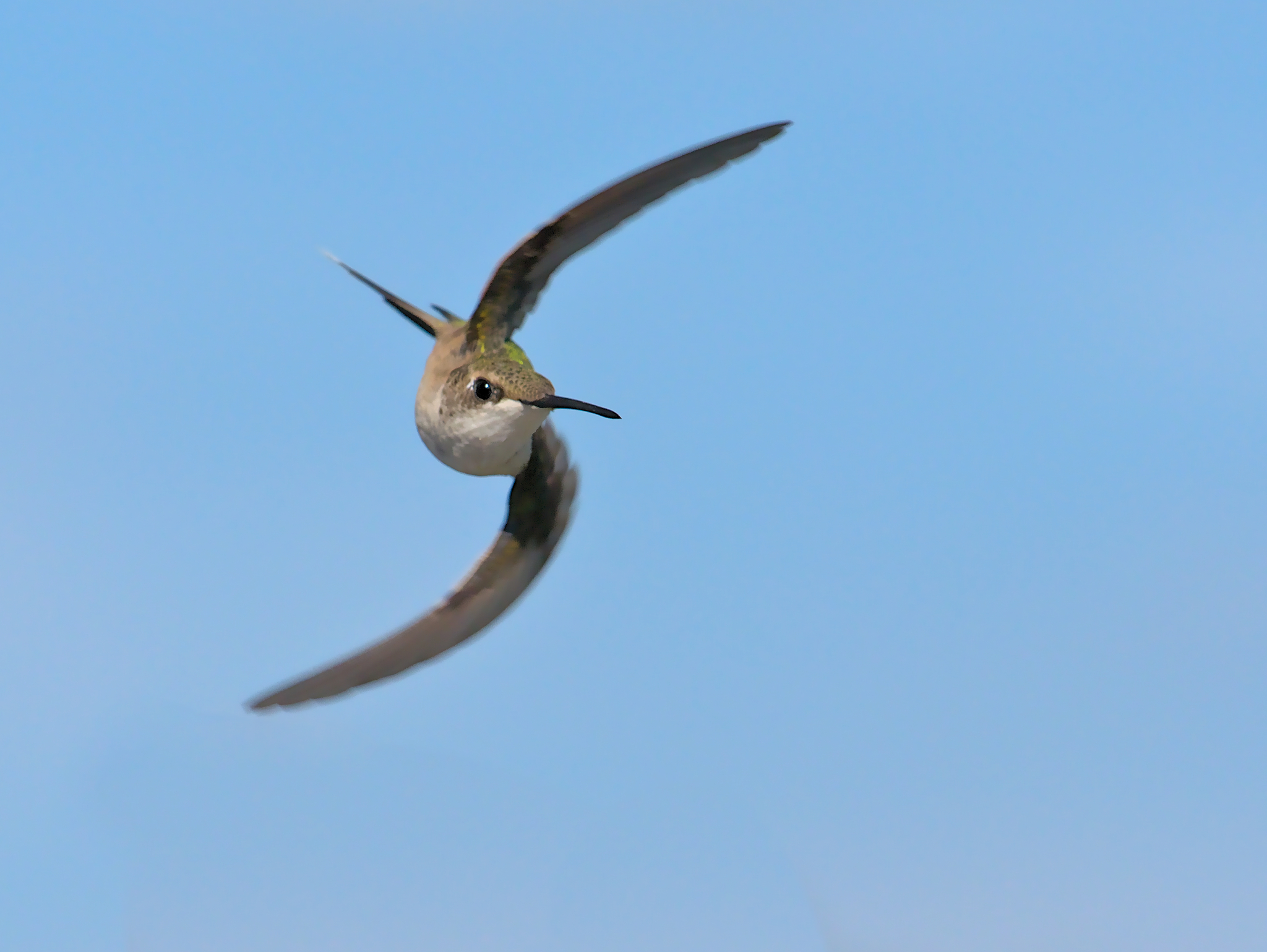 Ruby-throated Hummingbird
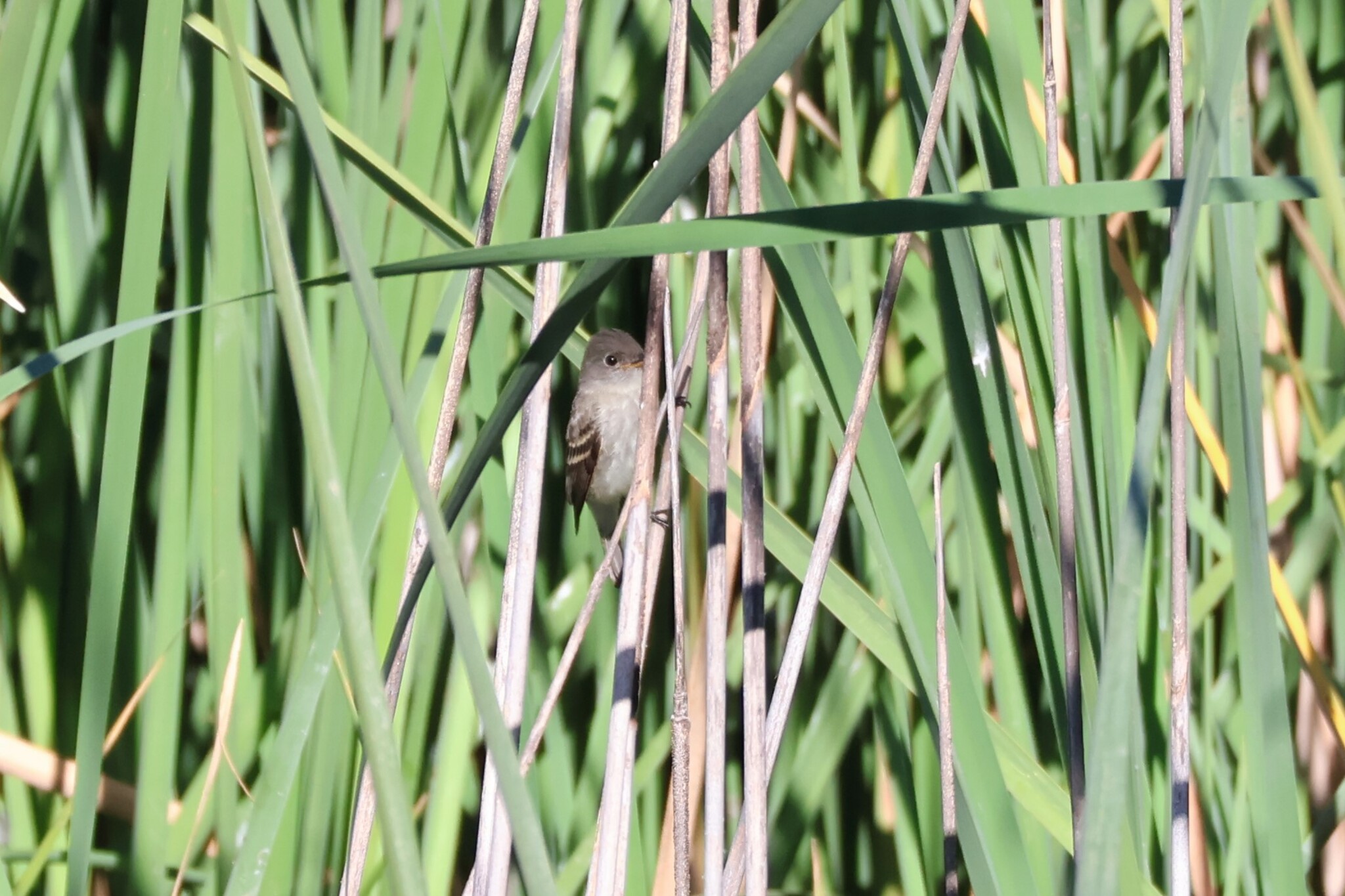 Willow Flycatcher
In short
The Ruby-throated Hummingbird is a small, iridescent bird with a distinctive ruby-red throat in males, while the Willow Flycatcher is a larger, drab bird with a more subdued plumage. These species differ significantly in size, habitat, and behavior, making them easy to distinguish in the field.
Identification tips
- Size: Note the much smaller size of the Ruby-throated Hummingbird.
- Plumage: Look for the iridescent green and ruby-red throat of the male hummingbird.
- Behavior: Observe feeding behavior; hummingbirds hover at flowers, flycatchers perch and sally for insects.
- Habitat: Consider the habitat; hummingbirds are often in gardens, flycatchers near water.
- Vocalization: Listen for the Willow Flycatcher's 'fitz-bew' song, absent in hummingbirds.
Size
The Ruby-throated Hummingbird is much smaller than the Willow Flycatcher, with a more compact body and shorter wings.
Plumage
Ruby-throated Hummingbirds have iridescent green upperparts and a brilliant ruby-red throat in males, while females and immatures have a white throat. Willow Flycatchers have olive-gray upperparts and a pale, unstreaked belly, lacking any iridescent colors.
Behaviour
Ruby-throated Hummingbirds hover while feeding on nectar from flowers, whereas Willow Flycatchers are primarily aerial insectivores, often seen sallying from perches to catch insects.
Habitat
Ruby-throated Hummingbirds are found in gardens and woodlands, often near flowers. Willow Flycatchers prefer riparian habitats, such as river corridors and wet thickets.
Voice
Ruby-throated Hummingbirds produce a series of rapid, high-pitched chips, while Willow Flycatchers have a distinctive 'fitz-bew' song.
Ruby-throated Hummingbird · Willow Flycatcher · My Tricky Birds