Birdr

Russet Sparrow vs Eurasian Tree Sparrow

Passer cinnamomeus versus Passer montanus

Play a quiz with Russet Sparrow and Eurasian Tree Sparrow
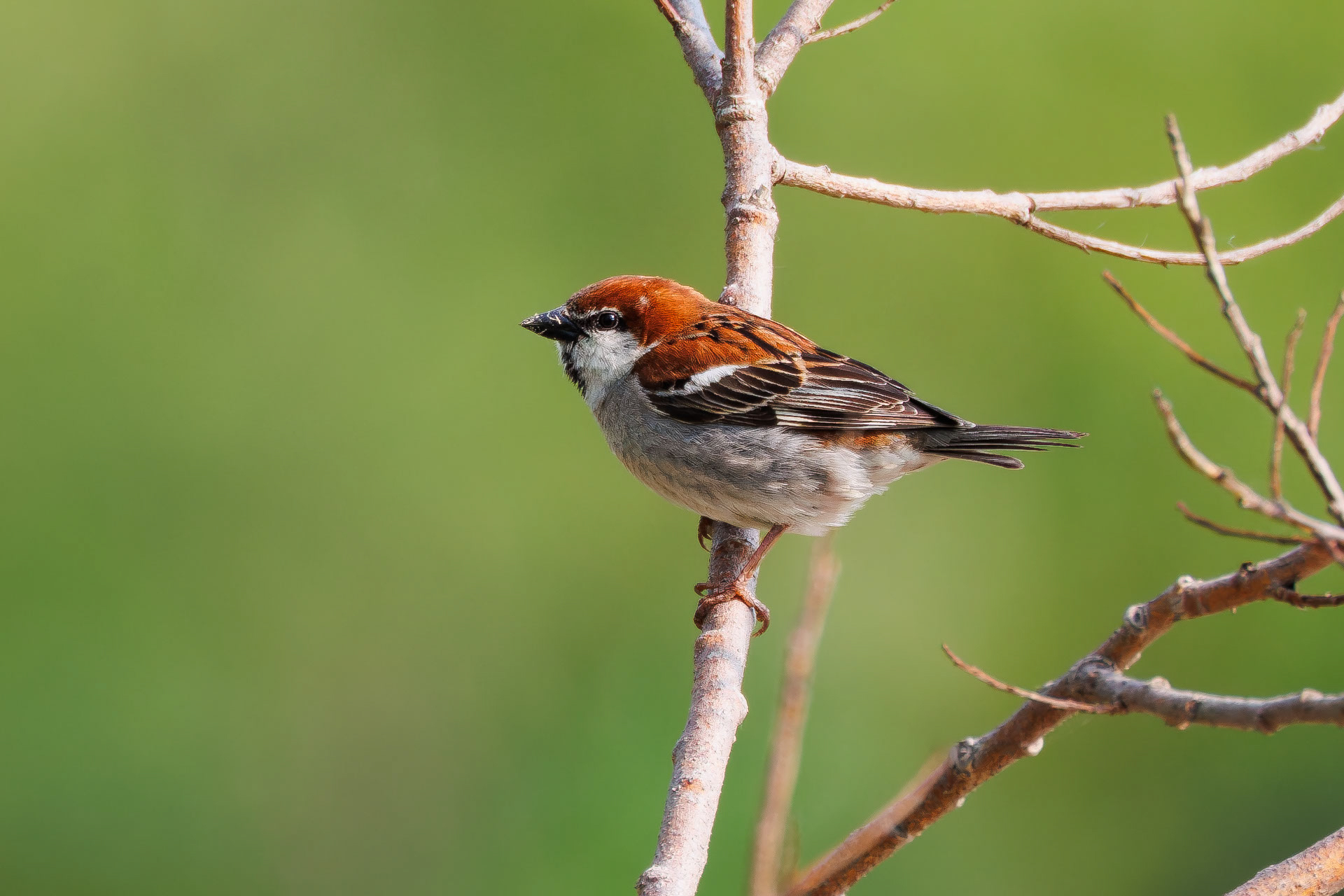
Russet Sparrow (Passer cinnamomeus) Russet Sparrow
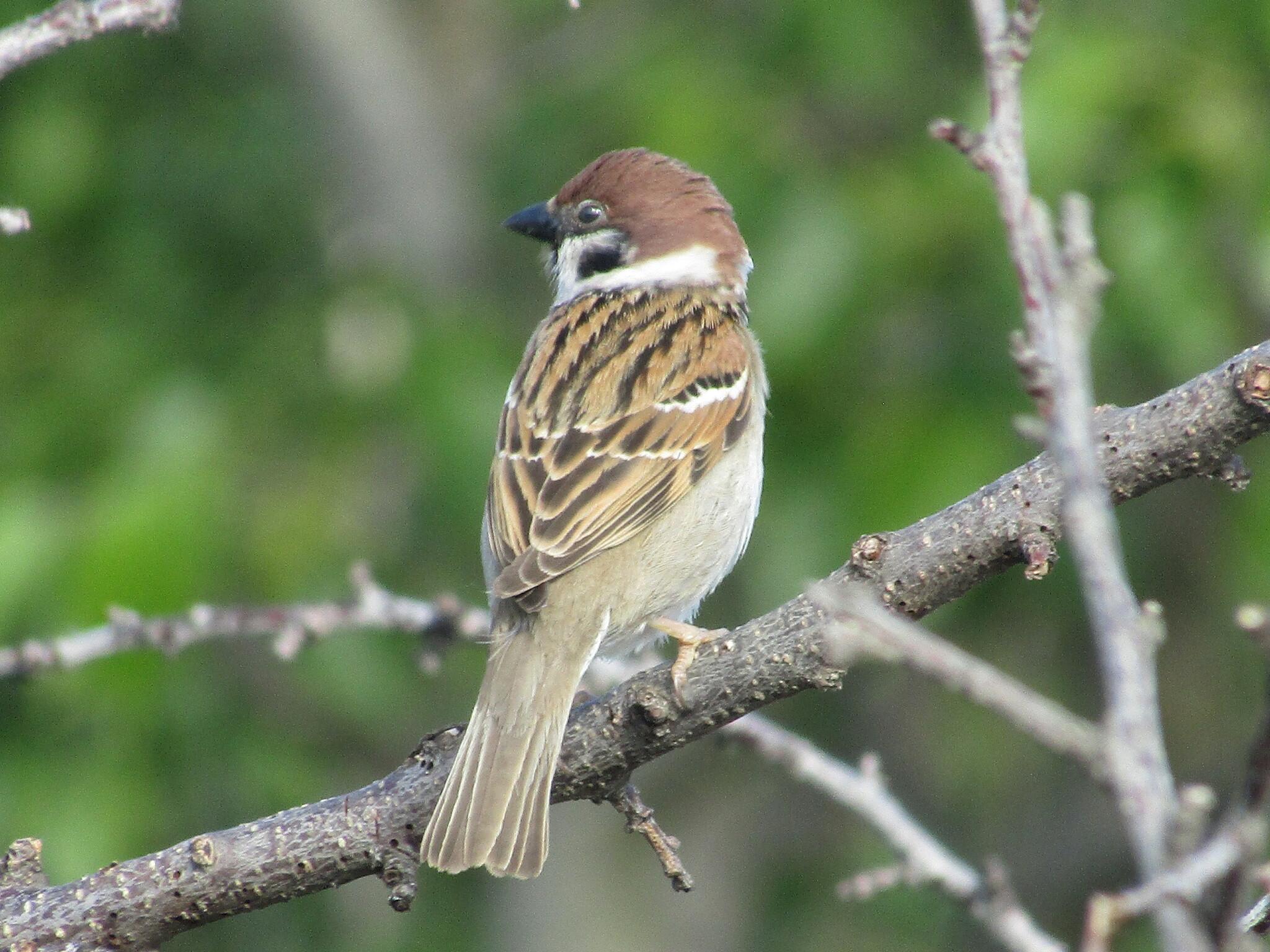
Eurasian Tree Sparrow (Passer montanus) Eurasian Tree Sparrow

Media

Loading…

In short

The Russet Sparrow and the Eurasian Tree Sparrow are both small, brown sparrows often found in similar habitats, but they can be distinguished by key plumage differences. The Russet Sparrow has a more uniform russet or cinnamon-colored back, while the Eurasian Tree Sparrow features a distinctive black cheek spot and a more contrasting head pattern.

Identification tips

  1. Look for the black cheek spot on the Eurasian Tree Sparrow; the Russet Sparrow lacks this feature. 2. Note the uniform russet back of the Russet Sparrow compared to the more contrasting head pattern of the Eurasian Tree Sparrow. 3. Observe the chestnut crown of the Eurasian Tree Sparrow, which is more pronounced than in the Russet Sparrow.

Size

Both species are similar in size, typical of small sparrows.

Plumage

The Russet Sparrow has a more uniform russet or cinnamon coloration on its back and lacks the black cheek spot found on the Eurasian Tree Sparrow. The Eurasian Tree Sparrow has a chestnut crown and a distinctive black cheek spot on a white face, which is absent in the Russet Sparrow.

Behaviour

Both species exhibit typical sparrow behavior, often seen foraging on the ground or in low vegetation.

Habitat

Both species can be found in open and semi-open habitats, including urban areas, but the Eurasian Tree Sparrow is more widespread in urban settings.

Voice

Vocalizations are similar, consisting of chirps and calls typical of sparrows, but specific differences are subtle and not always reliable for identification.

Submit a better description

Use the same sections as the comparison. Your text is published immediately.

The Russet Sparrow and the Eurasian Tree Sparrow are both small, brown sparrows often found in similar habitats, but they can be distinguished by key plumage differences. The Russet Sparrow has a more uniform russet or cinnamon-colored back, while the Eurasian Tree Sparrow features a distinctive black cheek spot and a more contrasting head pattern.

  1. Look for the black cheek spot on the Eurasian Tree Sparrow; the Russet Sparrow lacks this feature. 2. Note the uniform russet back of the Russet Sparrow compared to the more contrasting head pattern of the Eurasian Tree Sparrow. 3. Observe the chestnut crown of the Eurasian Tree Sparrow, which is more pronounced than in the Russet Sparrow.

Both species are similar in size, typical of small sparrows.

The Russet Sparrow has a more uniform russet or cinnamon coloration on its back and lacks the black cheek spot found on the Eurasian Tree Sparrow. The Eurasian Tree Sparrow has a chestnut crown and a distinctive black cheek spot on a white face, which is absent in the Russet Sparrow.

Both species exhibit typical sparrow behavior, often seen foraging on the ground or in low vegetation.

Both species can be found in open and semi-open habitats, including urban areas, but the Eurasian Tree Sparrow is more widespread in urban settings.

Vocalizations are similar, consisting of chirps and calls typical of sparrows, but specific differences are subtle and not always reliable for identification.

Discard your changes?

You have unsaved edits. If you leave now, those changes will be lost.

Russet Sparrow · Eurasian Tree Sparrow · My Tricky Birds