
Rusty-fronted Tody-Flycatcher vs Southern Beardless-Tyrannulet
Poecilotriccus latirostris versus Camptostoma obsoletum
Play a quiz with Rusty-fronted Tody-Flycatcher and Southern Beardless-Tyrannulet
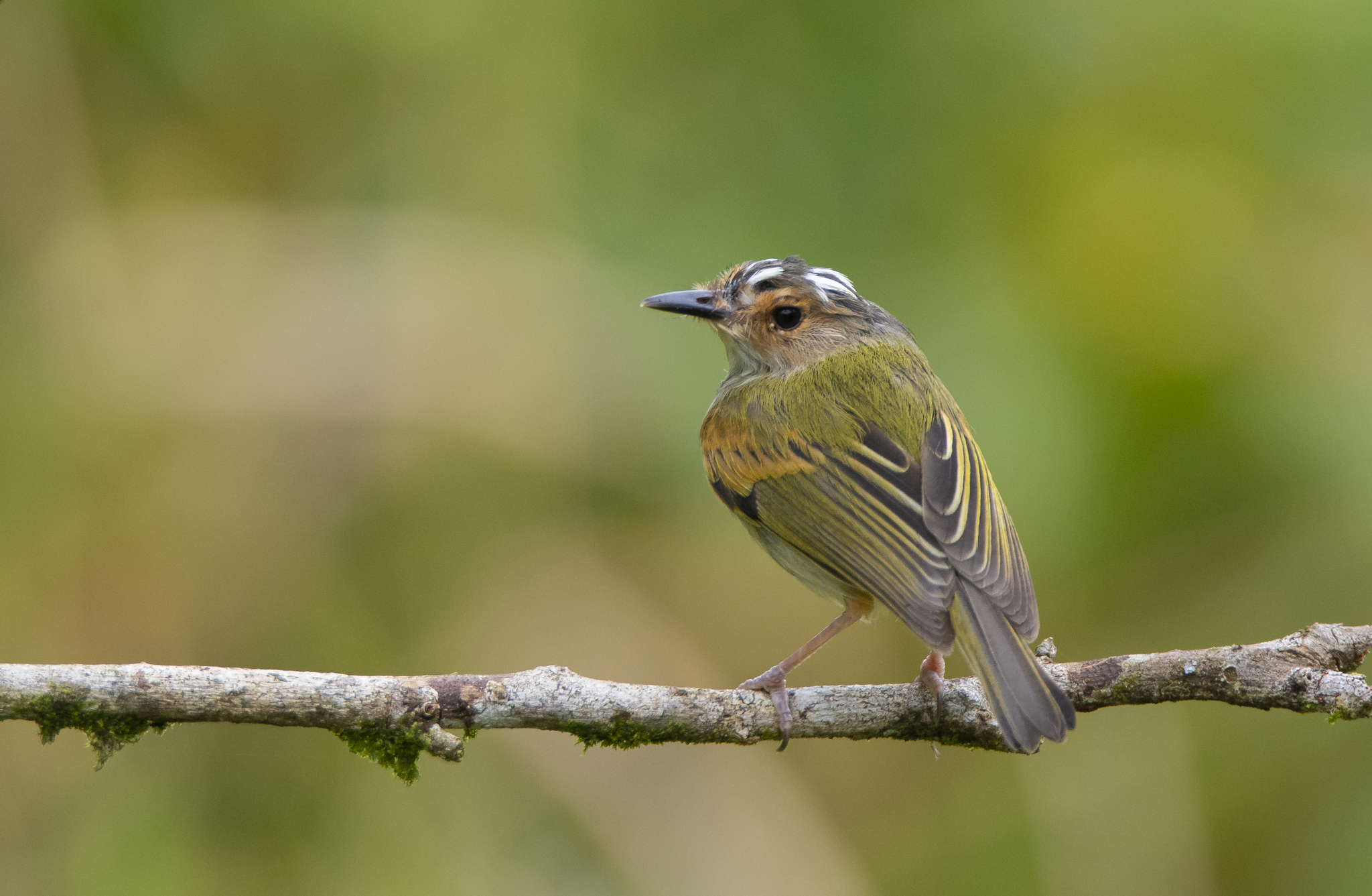 Rusty-fronted Tody-Flycatcher
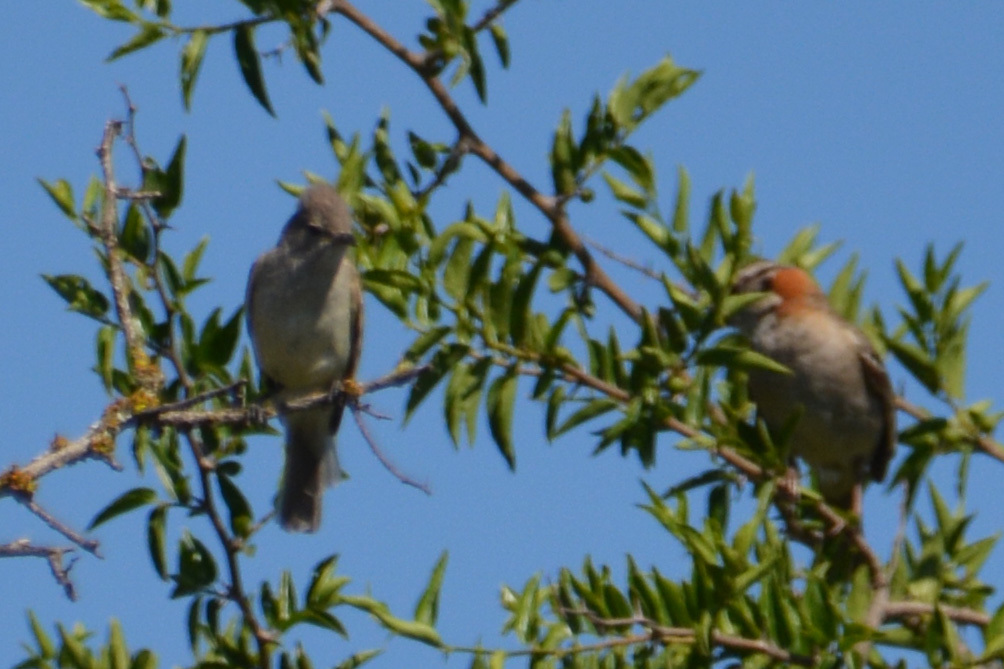 Southern Beardless-Tyrannulet
In short
The Rusty-fronted Tody-Flycatcher and Southern Beardless-Tyrannulet can be differentiated primarily by their facial markings and overall structure. The Rusty-fronted Tody-Flycatcher has a distinctive rufous wash over the lores and face, while the Southern Beardless-Tyrannulet is noted for its bushy crest and plain face. Both species share similar habitats and behaviors, often foraging alone or in pairs.
Identification tips
- Look for the rufous wash: The Rusty-fronted Tody-Flycatcher has a rufous wash over the lores and face.
- Check for a bushy crest: The Southern Beardless-Tyrannulet has a bushy crest and a plain face.
- Size and structure: Note the smaller size and more compact build of the Southern Beardless-Tyrannulet.
- Listen carefully: With experience, you may distinguish their vocalizations, though they are generally similar.
Size
The Southern Beardless-Tyrannulet is generally smaller with a more compact build compared to the Rusty-fronted Tody-Flycatcher.
Plumage
The Rusty-fronted Tody-Flycatcher features an obvious rufous wash over the lores and face, as well as rufous wingbars. In contrast, the Southern Beardless-Tyrannulet has a plain face and lacks the rufous coloration, instead having a bushy crest.
Behaviour
Both species typically forage alone or in pairs and rarely join mixed-species flocks, exhibiting similar foraging behaviors.
Habitat
Both species share similar habitat preferences, often found in the same regions and environments.
Voice
The vocalizations of the two species are similar, though they can be distinguished with experience. Specific differences are not detailed in the sources.
Rusty-fronted Tody-Flycatcher · Southern Beardless-Tyrannulet · My Tricky Birds