Birdr

Sagebrush Sparrow vs LeConte's Sparrow

Artemisiospiza nevadensis versus Ammospiza leconteii

Play a quiz with Sagebrush Sparrow and LeConte's Sparrow
Sagebrush Sparrow (Artemisiospiza nevadensis) Sagebrush Sparrow
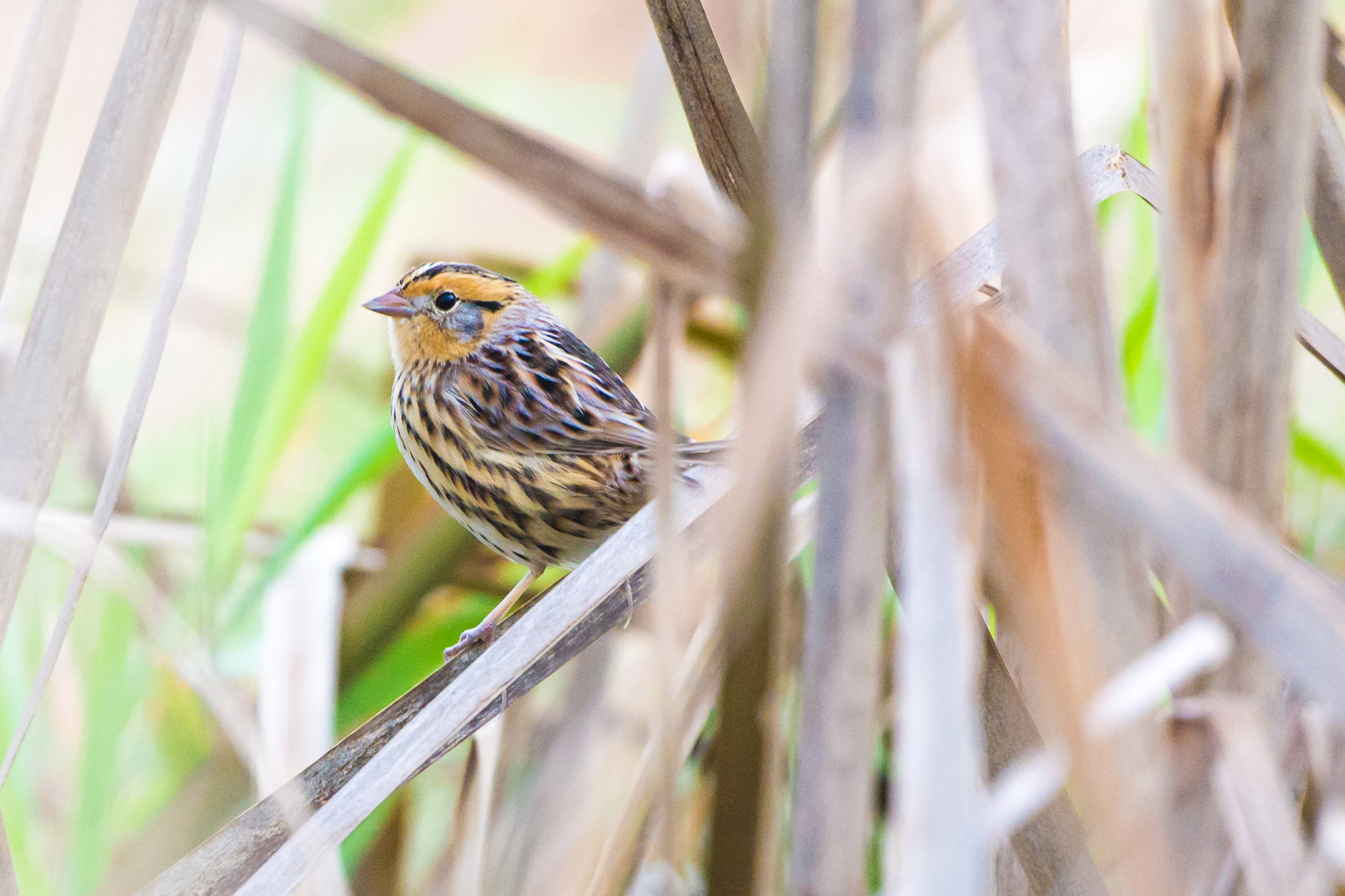
LeConte's Sparrow (Ammospiza leconteii) LeConte's Sparrow

Media

Loading…

In short

The Sagebrush Sparrow and LeConte's Sparrow can be distinguished by habitat and behavior, with Sagebrush Sparrows favoring arid shrublands and LeConte's Sparrows preferring wet grasslands. Sagebrush Sparrows are generally more robust and have a distinct white eye-ring, while LeConte's Sparrows are smaller with a more delicate appearance and a buffy supercilium.

Identification tips

  1. Look for the white eye-ring on Sagebrush Sparrow. 2. Note the buffy supercilium and orange face on LeConte's Sparrow. 3. Consider habitat: Sagebrush Sparrow in arid shrublands, LeConte's Sparrow in wet grasslands. 4. Listen for song differences: buzzy notes for Sagebrush, insect-like for LeConte's.

Size

Sagebrush Sparrow is slightly larger and more robust compared to the smaller, more delicate LeConte's Sparrow.

Plumage

Sagebrush Sparrow has a grayish head with a distinct white eye-ring and a streaked back. LeConte's Sparrow features a buffy supercilium, orange face, and finely streaked back.

Behaviour

Sagebrush Sparrows often run on the ground between shrubs, while LeConte's Sparrows are more secretive, often staying low in dense grass.

Habitat

Sagebrush Sparrow is found in arid shrublands, particularly sagebrush areas. LeConte's Sparrow inhabits wet grasslands and marshy areas.

Voice

Sagebrush Sparrow's song is a series of buzzy notes, while LeConte's Sparrow has a high, insect-like song. Calls are not typically diagnostic.

Submit a better description

Use the same sections as the comparison. Your text is published immediately.

The Sagebrush Sparrow and LeConte's Sparrow can be distinguished by habitat and behavior, with Sagebrush Sparrows favoring arid shrublands and LeConte's Sparrows preferring wet grasslands. Sagebrush Sparrows are generally more robust and have a distinct white eye-ring, while LeConte's Sparrows are smaller with a more delicate appearance and a buffy supercilium.

  1. Look for the white eye-ring on Sagebrush Sparrow. 2. Note the buffy supercilium and orange face on LeConte's Sparrow. 3. Consider habitat: Sagebrush Sparrow in arid shrublands, LeConte's Sparrow in wet grasslands. 4. Listen for song differences: buzzy notes for Sagebrush, insect-like for LeConte's.

Sagebrush Sparrow is slightly larger and more robust compared to the smaller, more delicate LeConte's Sparrow.

Sagebrush Sparrow has a grayish head with a distinct white eye-ring and a streaked back. LeConte's Sparrow features a buffy supercilium, orange face, and finely streaked back.

Sagebrush Sparrows often run on the ground between shrubs, while LeConte's Sparrows are more secretive, often staying low in dense grass.

Sagebrush Sparrow is found in arid shrublands, particularly sagebrush areas. LeConte's Sparrow inhabits wet grasslands and marshy areas.

Sagebrush Sparrow's song is a series of buzzy notes, while LeConte's Sparrow has a high, insect-like song. Calls are not typically diagnostic.

Discard your changes?

You have unsaved edits. If you leave now, those changes will be lost.

Sagebrush Sparrow · LeConte's Sparrow · My Tricky Birds