
Samoan Myzomela vs Eastern Wattled-Honeyeater
Myzomela nigriventris versus Foulehaio carunculatus
Play a quiz with Samoan Myzomela and Eastern Wattled-Honeyeater
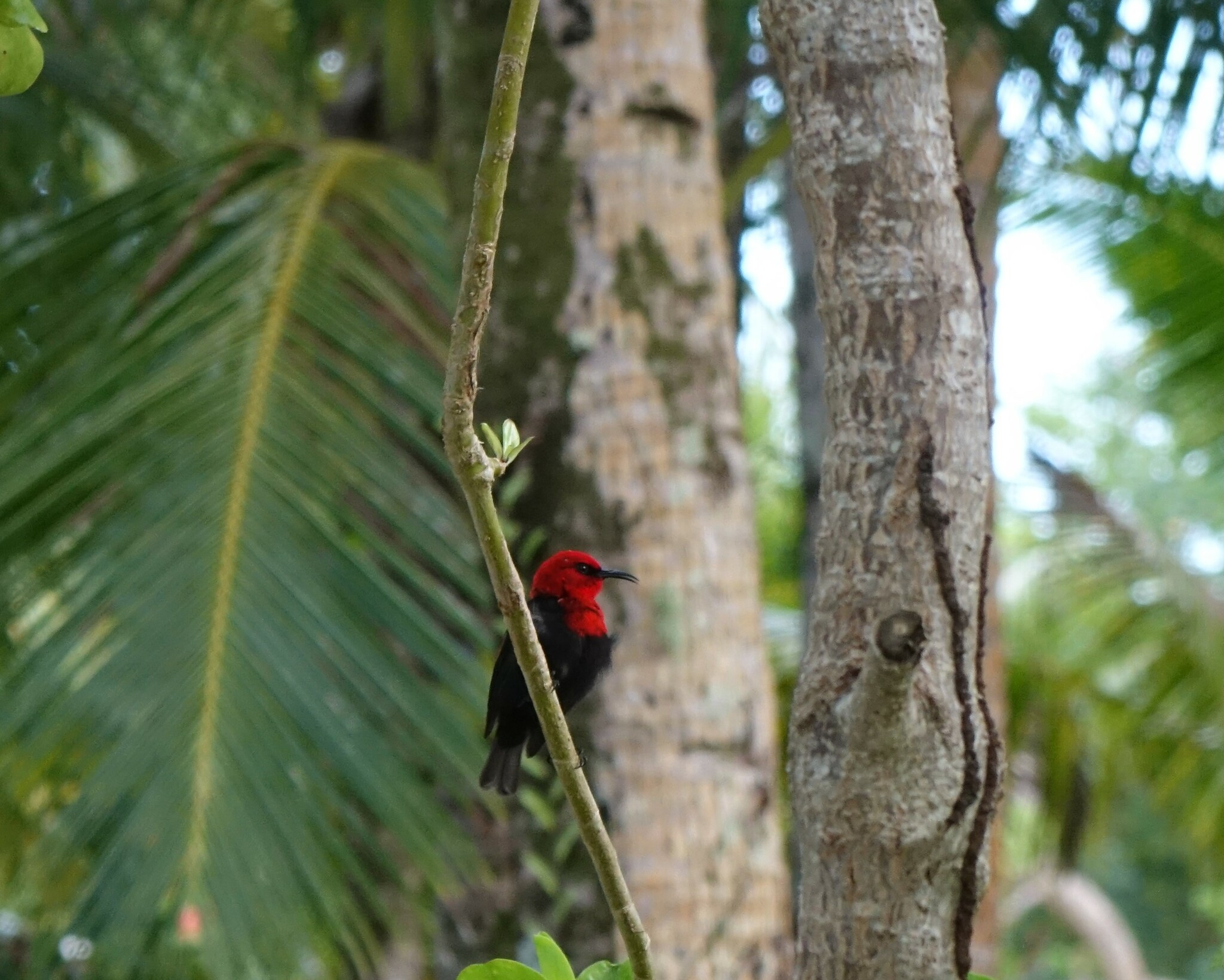 Samoan Myzomela
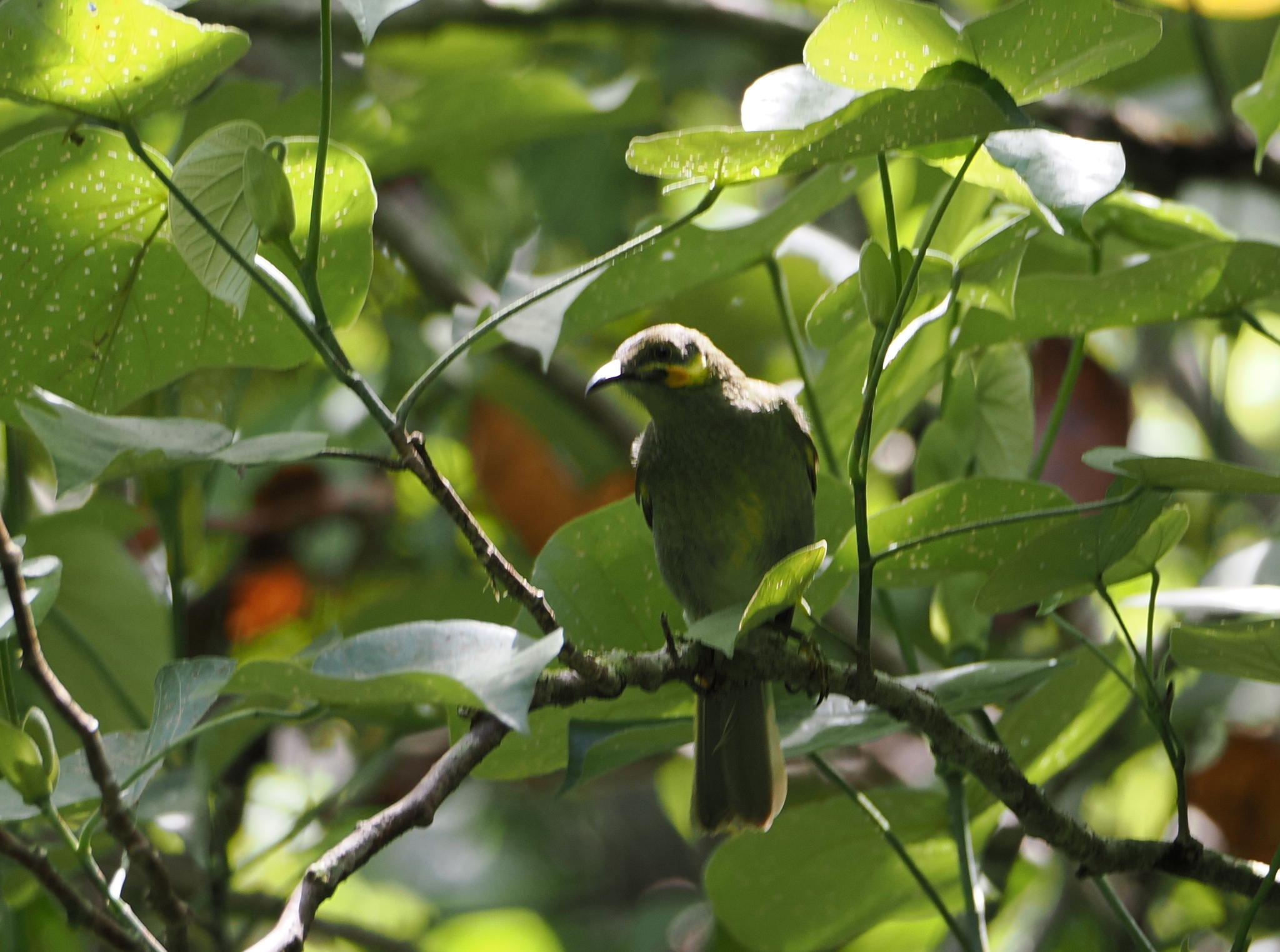 Eastern Wattled-Honeyeater
In short
The Samoan Myzomela and Eastern Wattled-Honeyeater are both honeyeaters found in Samoa, but they can be distinguished by size and facial features. The Samoan Myzomela is smaller with a more slender bill, while the Eastern Wattled-Honeyeater is larger and has distinctive wattles at the base of its bill.
Identification tips
- Size and Structure: Look for the smaller size and slender bill of the Samoan Myzomela. 2. Facial Features: Check for the presence of wattles on the Eastern Wattled-Honeyeater. 3. Plumage: Note the more uniform dark plumage of the Samoan Myzomela versus the varied pattern of the Eastern Wattled-Honeyeater. 4. Behavior: Observe the social behavior and habitat preference, with the Eastern Wattled-Honeyeater potentially being more adaptable to different environments.
Size
The Samoan Myzomela is smaller and more delicate compared to the larger and more robust Eastern Wattled-Honeyeater.
Plumage
The Samoan Myzomela has a predominantly dark plumage with a more uniform appearance, while the Eastern Wattled-Honeyeater has wattles and a more varied plumage pattern.
Behaviour
Both species are active and often seen foraging in the canopy, but the Eastern Wattled-Honeyeater may be more conspicuous due to its larger size and social behavior.
Habitat
Both species inhabit similar forested areas in Samoa, but the Eastern Wattled-Honeyeater might be found in a wider range of habitats including gardens and plantations.
Voice
The vocalizations of these species are not well-documented in the sources, but honeyeaters generally have varied and complex calls.
Samoan Myzomela · Eastern Wattled-Honeyeater · My Tricky Birds