Birdr

Sand Martin vs Violet-green Swallow

Riparia riparia versus Tachycineta thalassina

Play a quiz with Sand Martin and Violet-green Swallow

Sand Martin (Riparia riparia) Sand Martin
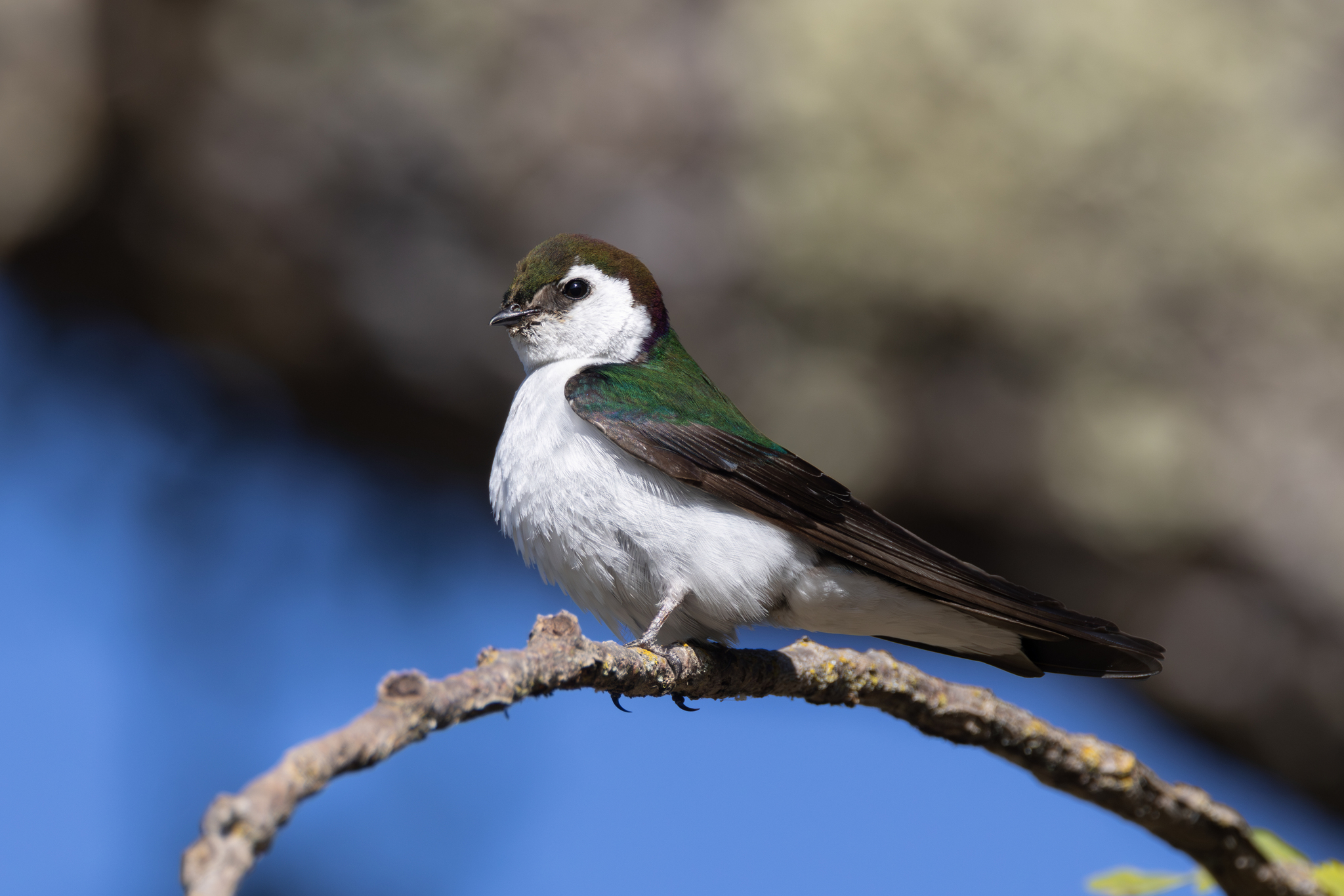
Violet-green Swallow (Tachycineta thalassina) Violet-green Swallow

Media

Loading…

In short

The Sand Martin (Riparia riparia) and Violet-green Swallow (Tachycineta thalassina) can be distinguished by their plumage and habitat preferences. Sand Martins are brown and white with a distinct breast band, while Violet-green Swallows have a striking iridescent green and purple back with white cheeks and flanks.

Identification tips

  1. Plumage: Look for the Sand Martin's brown breast band versus the Violet-green Swallow's iridescent green and purple back. 2. Habitat: Note the environment; Sand Martins are near sandy banks, while Violet-green Swallows are in forested areas. 3. Flight: Observe group size; Sand Martins often form larger colonies.

Size

Both species are small swallows, but the Violet-green Swallow is slightly larger with a more robust build.

Plumage

Sand Martins have a brown back, white underparts, and a distinct brown breast band. In contrast, Violet-green Swallows display iridescent green and purple upperparts, with white cheeks and flanks that extend onto the sides of the rump.

Behaviour

Both species are aerial insectivores and are often seen in flight. However, Sand Martins are more likely to be seen in large colonies, while Violet-green Swallows can be solitary or in small groups.

Habitat

Sand Martins prefer open areas near water with sandy banks for nesting, while Violet-green Swallows are found in montane coniferous forests, often nesting in tree cavities.

Voice

Both species have similar calls, consisting of twittering and chirping sounds, but specific differences are subtle and not the most reliable field marks.

Submit a better description

Use the same sections as the comparison. Your text is published immediately.

The Sand Martin (Riparia riparia) and Violet-green Swallow (Tachycineta thalassina) can be distinguished by their plumage and habitat preferences. Sand Martins are brown and white with a distinct breast band, while Violet-green Swallows have a striking iridescent green and purple back with white cheeks and flanks.

  1. Plumage: Look for the Sand Martin's brown breast band versus the Violet-green Swallow's iridescent green and purple back. 2. Habitat: Note the environment; Sand Martins are near sandy banks, while Violet-green Swallows are in forested areas. 3. Flight: Observe group size; Sand Martins often form larger colonies.

Both species are small swallows, but the Violet-green Swallow is slightly larger with a more robust build.

Sand Martins have a brown back, white underparts, and a distinct brown breast band. In contrast, Violet-green Swallows display iridescent green and purple upperparts, with white cheeks and flanks that extend onto the sides of the rump.

Both species are aerial insectivores and are often seen in flight. However, Sand Martins are more likely to be seen in large colonies, while Violet-green Swallows can be solitary or in small groups.

Sand Martins prefer open areas near water with sandy banks for nesting, while Violet-green Swallows are found in montane coniferous forests, often nesting in tree cavities.

Both species have similar calls, consisting of twittering and chirping sounds, but specific differences are subtle and not the most reliable field marks.

Discard your changes?

You have unsaved edits. If you leave now, those changes will be lost.

Sand Martin · Violet-green Swallow · My Tricky Birds