Birdr

Scott's Oriole vs Connecticut Warbler

Icterus parisorum versus Oporornis agilis

Play a quiz with Scott's Oriole and Connecticut Warbler

Scott's Oriole (Icterus parisorum) Scott's Oriole
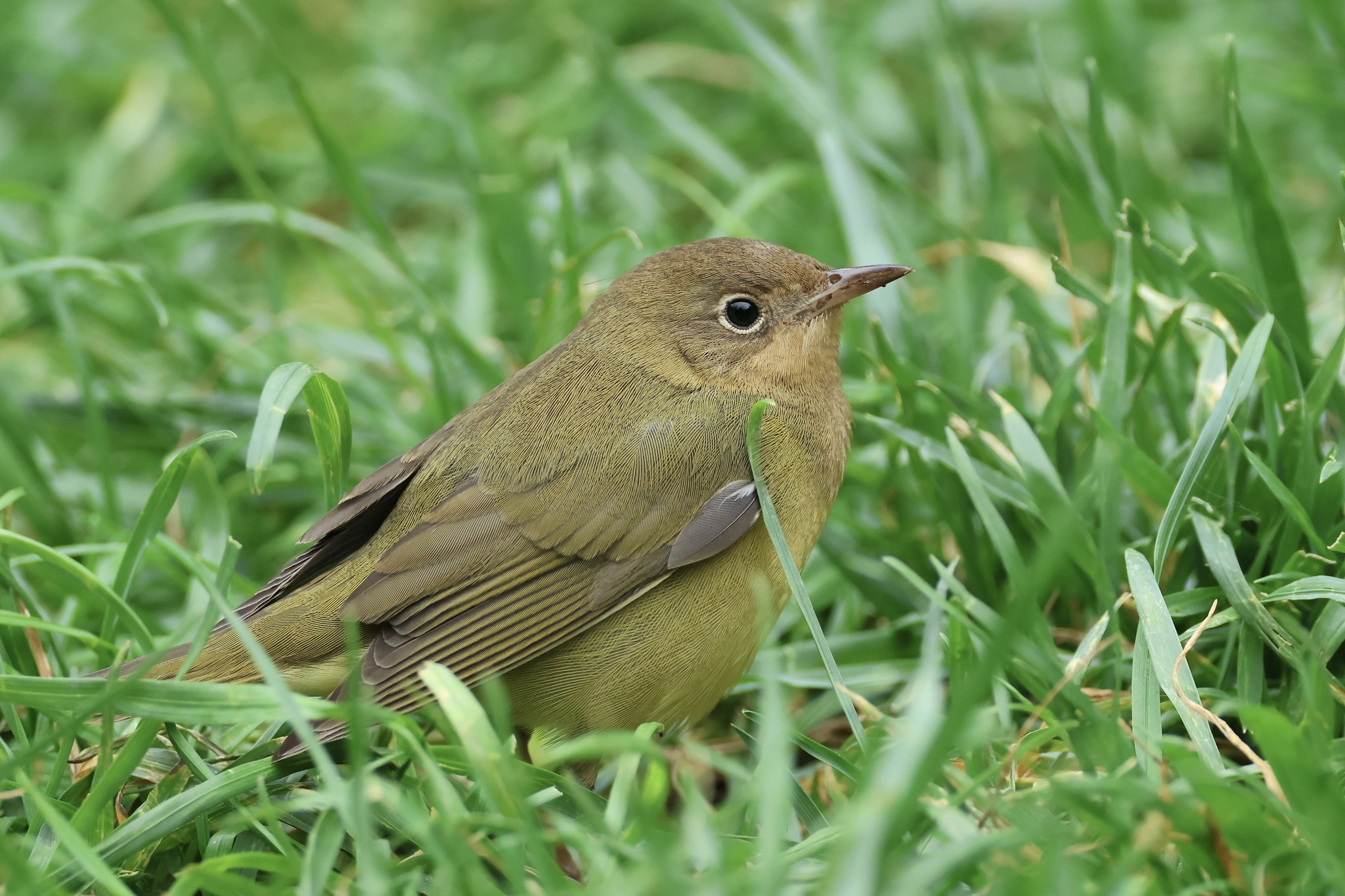
Connecticut Warbler (Oporornis agilis) Connecticut Warbler

Media

Loading…

In short

Scott's Oriole and Connecticut Warbler are distinct in both appearance and behavior, but can be confused due to their overlapping ranges during migration. Scott's Oriole is larger and more strikingly colored, while the Connecticut Warbler is smaller and more subdued. Their habitats and vocalizations also differ significantly.

Identification tips

1. Size and Shape: Scott's Oriole is larger and more robust, while the Connecticut Warbler is smaller and more compact. 2. Plumage: Look for the oriole's bold black and yellow coloration versus the warbler's olive and gray tones. 3. Habitat: Consider the environment; orioles are in open deserts, warblers in dense forests. 4. Behavior: Orioles are more conspicuous, warblers are secretive. 5. Vocalization: Listen for the oriole's musical song compared to the warbler's ringing notes.

Size

Scott's Oriole is larger and more robust compared to the smaller, more delicate Connecticut Warbler.

Plumage

Scott's Oriole has a striking black and yellow plumage, with males showing a black head and back. In contrast, the Connecticut Warbler has a more subdued appearance with olive upperparts, a gray hood, and a yellow underbelly.

Behaviour

Scott's Oriole is often seen foraging openly in desert habitats, while the Connecticut Warbler is more secretive, often skulking in dense underbrush.

Habitat

Scott's Oriole prefers arid desert regions, while the Connecticut Warbler is found in boreal forests and dense thickets during migration.

Voice

Scott's Oriole has a rich, musical song, while the Connecticut Warbler's song is a series of loud, ringing notes. Their calls are also distinct, with the oriole having a more melodious tone.

Submit a better description

Use the same sections as the comparison. Your text is published immediately.

Scott's Oriole and Connecticut Warbler are distinct in both appearance and behavior, but can be confused due to their overlapping ranges during migration. Scott's Oriole is larger and more strikingly colored, while the Connecticut Warbler is smaller and more subdued. Their habitats and vocalizations also differ significantly.

1. Size and Shape: Scott's Oriole is larger and more robust, while the Connecticut Warbler is smaller and more compact. 2. Plumage: Look for the oriole's bold black and yellow coloration versus the warbler's olive and gray tones. 3. Habitat: Consider the environment; orioles are in open deserts, warblers in dense forests. 4. Behavior: Orioles are more conspicuous, warblers are secretive. 5. Vocalization: Listen for the oriole's musical song compared to the warbler's ringing notes.

Scott's Oriole is larger and more robust compared to the smaller, more delicate Connecticut Warbler.

Scott's Oriole has a striking black and yellow plumage, with males showing a black head and back. In contrast, the Connecticut Warbler has a more subdued appearance with olive upperparts, a gray hood, and a yellow underbelly.

Scott's Oriole is often seen foraging openly in desert habitats, while the Connecticut Warbler is more secretive, often skulking in dense underbrush.

Scott's Oriole prefers arid desert regions, while the Connecticut Warbler is found in boreal forests and dense thickets during migration.

Scott's Oriole has a rich, musical song, while the Connecticut Warbler's song is a series of loud, ringing notes. Their calls are also distinct, with the oriole having a more melodious tone.

Discard your changes?

You have unsaved edits. If you leave now, those changes will be lost.

Scott's Oriole · Connecticut Warbler · My Tricky Birds