
Sharp-tailed Sandpiper vs Bimaculated Lark
Calidris acuminata versus Melanocorypha bimaculata
Play a quiz with Sharp-tailed Sandpiper and Bimaculated Lark
 Sharp-tailed Sandpiper
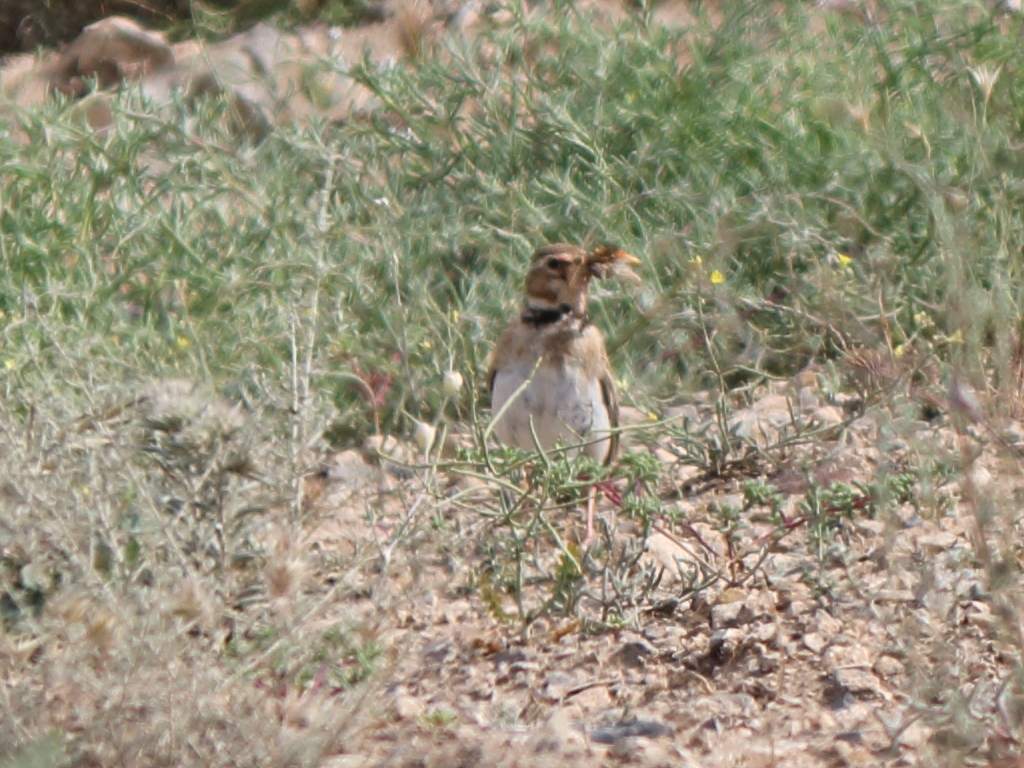 Bimaculated Lark
In short
The Sharp-tailed Sandpiper and Bimaculated Lark are distinct both in appearance and habitat. The sandpiper is a wader with a distinctive sharp tail and rufous crown, while the lark is a terrestrial bird with a robust body and a distinctive black patch on its throat. Their habitats rarely overlap, with the sandpiper favoring wetlands and the lark preferring dry, open areas.
Identification tips
1. Look for the habitat: wetlands for Sharp-tailed Sandpiper, open dry areas for Bimaculated Lark. 2. Note the plumage: rufous crown and sharp tail for the sandpiper, black throat patch for the lark. 3. Observe behavior: wading and probing for the sandpiper, walking or running on the ground for the lark. 4. Listen for vocalizations: distinct calls and songs typical of their respective families.
Size
The Sharp-tailed Sandpiper is a medium-sized wader, while the Bimaculated Lark is a larger, more robust passerine.
Plumage
Sharp-tailed Sandpiper has a rufous crown and a sharp tail, with a generally brown and white plumage. Bimaculated Lark features a sandy brown plumage with a distinctive black patch on its throat and a white supercilium.
Behaviour
Sharp-tailed Sandpipers are often seen probing in mudflats or shallow water, while Bimaculated Larks are ground-dwelling, often seen walking or running in open fields.
Habitat
Sharp-tailed Sandpipers are typically found in wetlands, mudflats, and coastal areas. Bimaculated Larks inhabit dry, open areas such as steppes and semi-deserts.
Voice
The vocalizations of these species are quite different, with the Sharp-tailed Sandpiper having a typical sandpiper call, while the Bimaculated Lark has a more complex song typical of larks.