
Short-billed Gull vs Yellow-bellied Flycatcher
Larus brachyrhynchus versus Empidonax flaviventris
Play a quiz with Short-billed Gull and Yellow-bellied Flycatcher
 Short-billed Gull
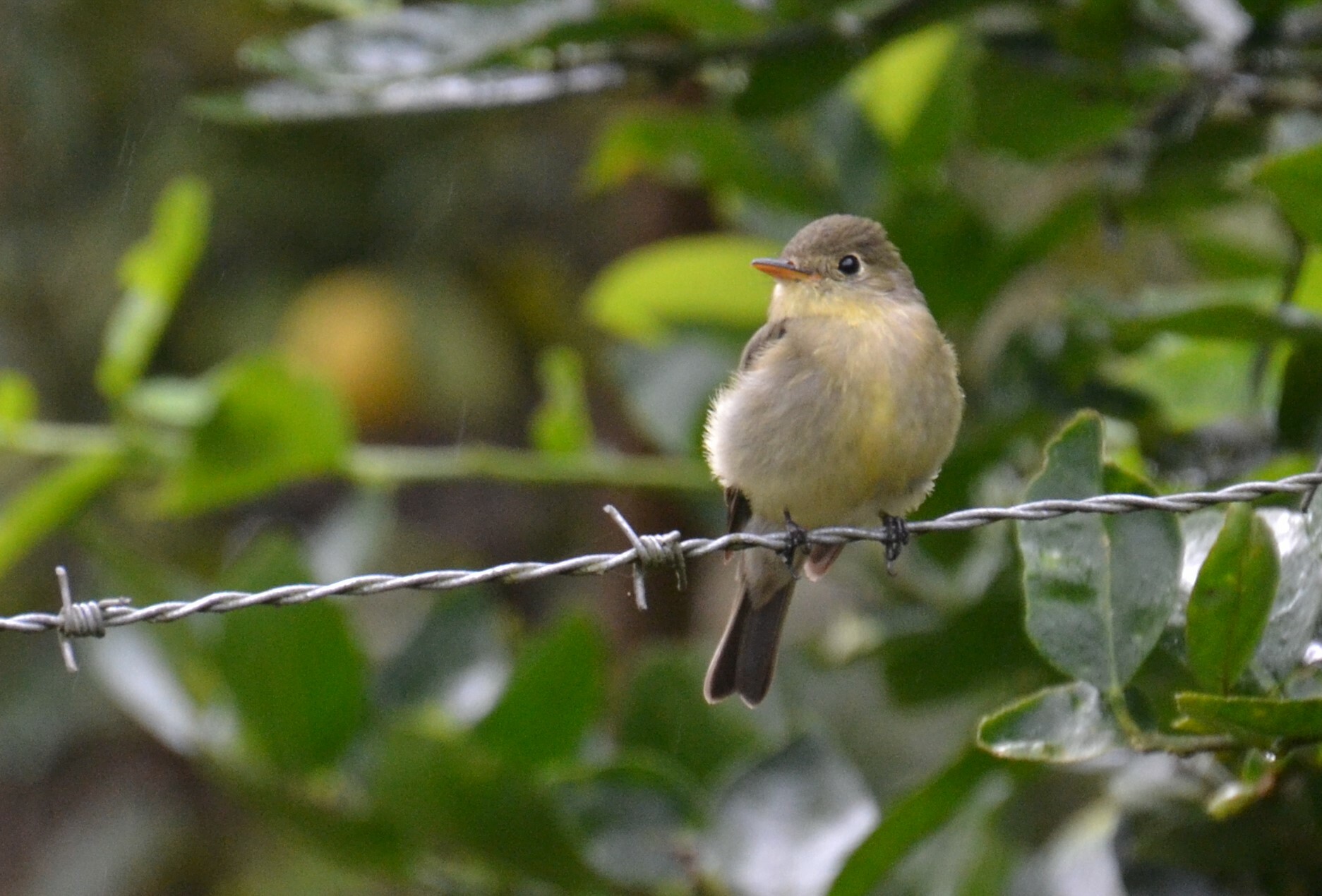 Yellow-bellied Flycatcher
In short
The Short-billed Gull and Yellow-bellied Flycatcher are distinct in appearance and habitat, with the former being a coastal gull and the latter a forest-dwelling flycatcher. They are unlikely to be confused in the field due to their different sizes, behaviors, and environments.
Identification tips
1. Size and Shape: Look for the larger, robust body of the Short-billed Gull compared to the small, delicate Yellow-bellied Flycatcher. 2. Habitat: Note the environment; gulls are coastal, while flycatchers are in dense forests. 3. Plumage: Observe the white and gray plumage of the gull versus the olive and yellow tones of the flycatcher. 4. Behavior: Gulls are often in groups and near water, flycatchers are solitary and in forested areas.
Size
The Short-billed Gull is significantly larger, being a medium-sized gull, while the Yellow-bellied Flycatcher is a small passerine.
Plumage
Short-billed Gull has a white head and body with gray wings, whereas the Yellow-bellied Flycatcher has olive-green upperparts and a yellowish belly, blending well with mossy forest environments.
Behaviour
Short-billed Gulls are often seen in flocks along coasts and are known for kleptoparasitism, while Yellow-bellied Flycatchers are solitary, reclusive, and actively catch insects in flight.
Habitat
Short-billed Gulls are found along beaches, river estuaries, and coastal areas, primarily in the Pacific region. Yellow-bellied Flycatchers inhabit cool, moist coniferous forests and bogs in the boreal regions.
Voice
The Short-billed Gull's calls are typical of gulls, whereas the Yellow-bellied Flycatcher has a soft, often overlooked voice that blends with its forest environment.
Short-billed Gull · Yellow-bellied Flycatcher · My Tricky Birds