Birdr

Short-eared Owl vs Northern Saw-whet Owl

Asio flammeus versus Aegolius acadicus

Play a quiz with Short-eared Owl and Northern Saw-whet Owl
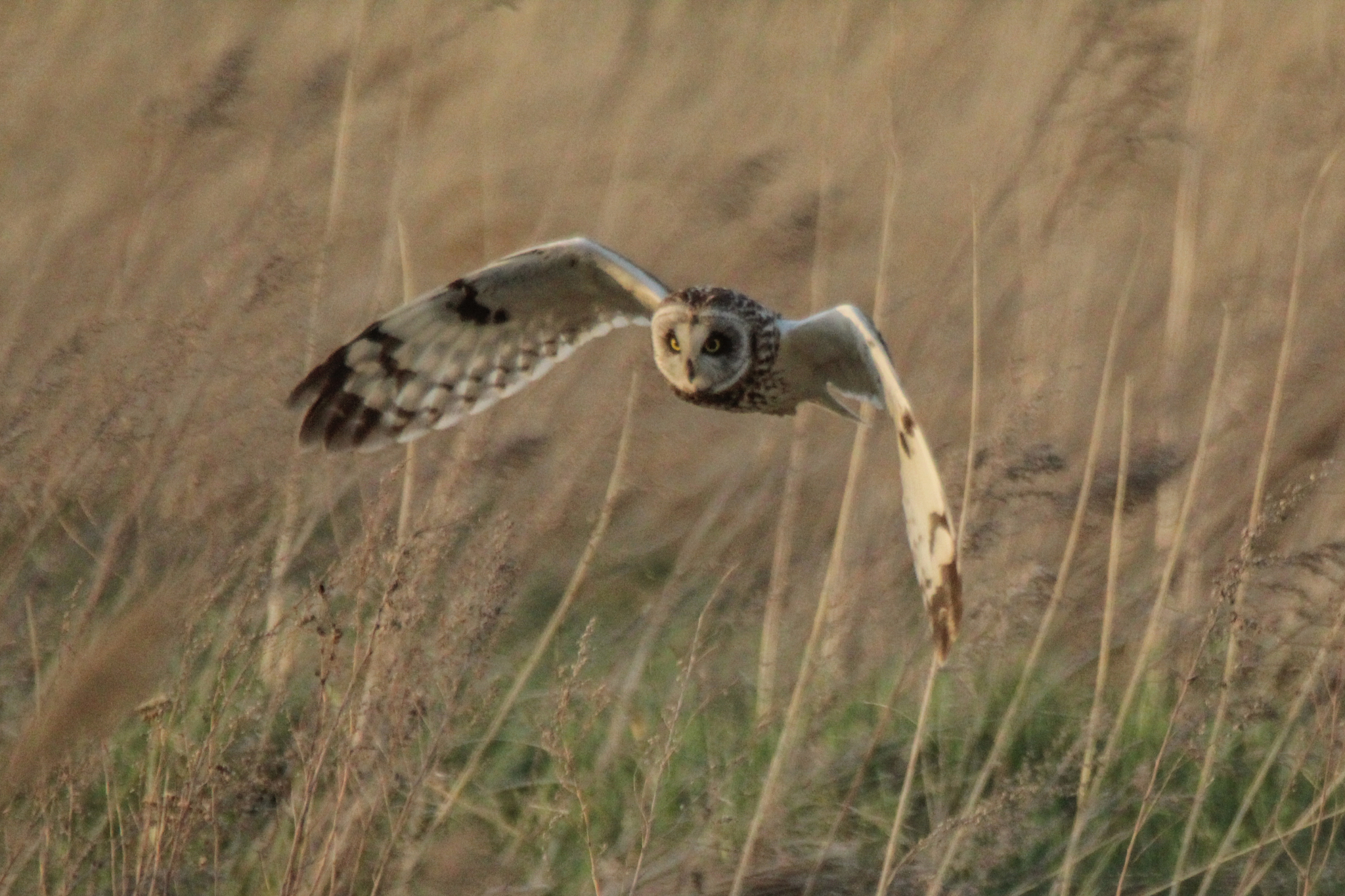
Short-eared Owl (Asio flammeus) Short-eared Owl
Northern Saw-whet Owl (Aegolius acadicus) Northern Saw-whet Owl

Media

Loading…

In short

The Short-eared Owl and Northern Saw-whet Owl are both small owls, but they differ in habitat preference and appearance. The Short-eared Owl is more likely to be seen in open areas, while the Northern Saw-whet Owl prefers dense forests. Key differences include the Short-eared Owl's larger size and distinctive facial disc.

Identification tips

  1. Size and Shape: Look for the larger size and longer wings of the Short-eared Owl. 2. Facial Disc: Note the distinct dark eye patches on the Short-eared Owl. 3. Habitat: Consider the environment; open fields suggest Short-eared, dense forests suggest Saw-whet. 4. Behavior: Daytime activity and low flight indicate Short-eared Owl. 5. Vocalization: Listen for the Northern Saw-whet Owl's tooting call.

Size

The Short-eared Owl is larger, with a wingspan of about 85-110 cm, compared to the Northern Saw-whet Owl's 42-56 cm.

Plumage

The Short-eared Owl has a pale facial disc with dark eye patches, giving it a 'staring' appearance, and its body is streaked with brown. The Northern Saw-whet Owl has a more rounded head with a white facial disc and brown streaks on the chest.

Behaviour

Short-eared Owls are often seen flying low over open fields during the day, while Northern Saw-whet Owls are nocturnal and more secretive, often roosting in dense foliage.

Habitat

Short-eared Owls inhabit open areas like grasslands and marshes, whereas Northern Saw-whet Owls are found in dense coniferous and mixed forests.

Voice

The Northern Saw-whet Owl is known for its repetitive tooting call, especially during the breeding season. The Short-eared Owl is generally quieter, with occasional barking calls.

Submit a better description

Use the same sections as the comparison. Your text is published immediately.

The Short-eared Owl and Northern Saw-whet Owl are both small owls, but they differ in habitat preference and appearance. The Short-eared Owl is more likely to be seen in open areas, while the Northern Saw-whet Owl prefers dense forests. Key differences include the Short-eared Owl's larger size and distinctive facial disc.

  1. Size and Shape: Look for the larger size and longer wings of the Short-eared Owl. 2. Facial Disc: Note the distinct dark eye patches on the Short-eared Owl. 3. Habitat: Consider the environment; open fields suggest Short-eared, dense forests suggest Saw-whet. 4. Behavior: Daytime activity and low flight indicate Short-eared Owl. 5. Vocalization: Listen for the Northern Saw-whet Owl's tooting call.

The Short-eared Owl is larger, with a wingspan of about 85-110 cm, compared to the Northern Saw-whet Owl's 42-56 cm.

The Short-eared Owl has a pale facial disc with dark eye patches, giving it a 'staring' appearance, and its body is streaked with brown. The Northern Saw-whet Owl has a more rounded head with a white facial disc and brown streaks on the chest.

Short-eared Owls are often seen flying low over open fields during the day, while Northern Saw-whet Owls are nocturnal and more secretive, often roosting in dense foliage.

Short-eared Owls inhabit open areas like grasslands and marshes, whereas Northern Saw-whet Owls are found in dense coniferous and mixed forests.

The Northern Saw-whet Owl is known for its repetitive tooting call, especially during the breeding season. The Short-eared Owl is generally quieter, with occasional barking calls.

Discard your changes?

You have unsaved edits. If you leave now, those changes will be lost.

Short-eared Owl · Northern Saw-whet Owl · My Tricky Birds