Birdr

Siberian Crane vs Sandhill Crane

Leucogeranus leucogeranus versus Antigone canadensis

Play a quiz with Siberian Crane and Sandhill Crane

Siberian Crane (Leucogeranus leucogeranus) Siberian Crane
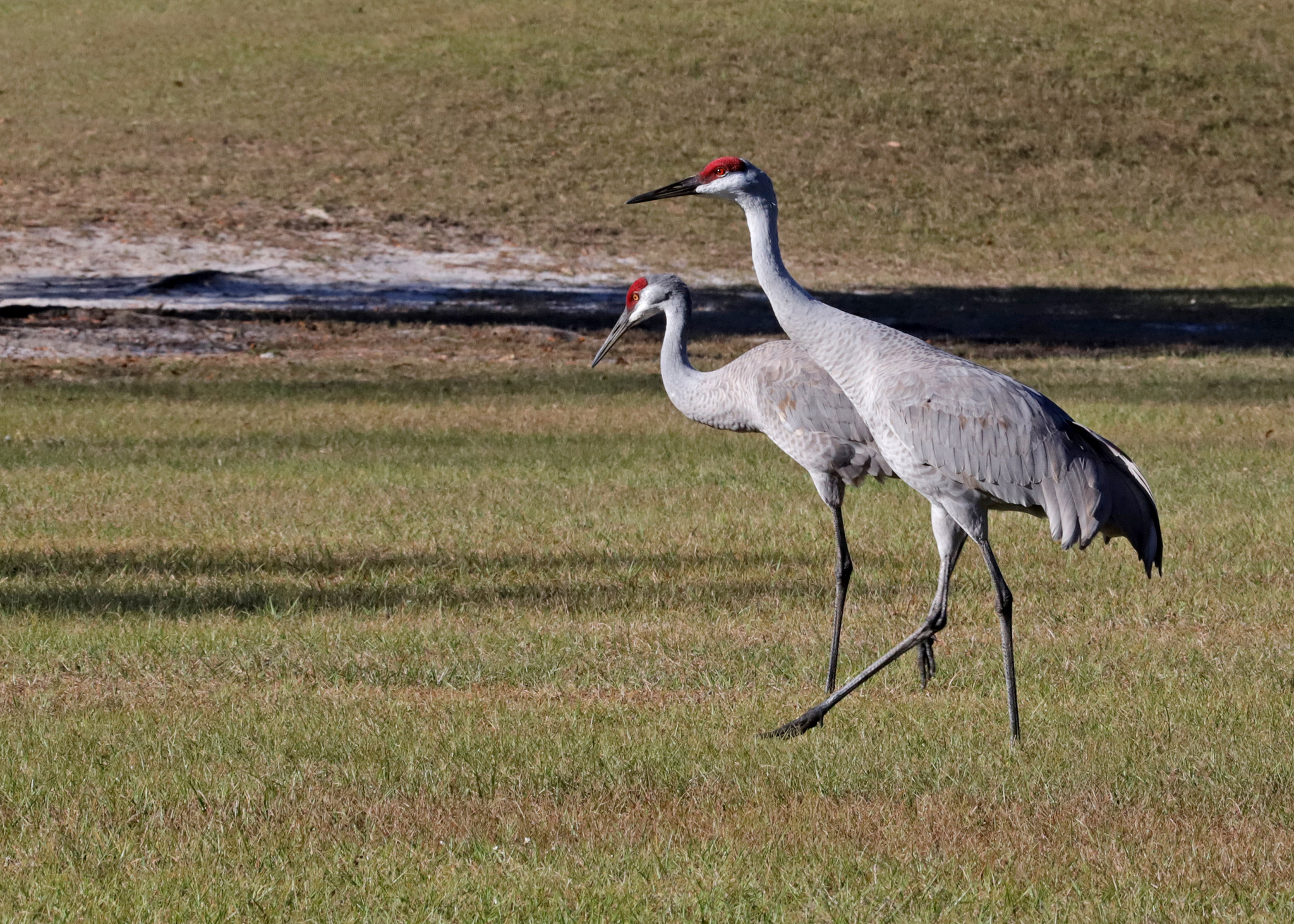
Sandhill Crane (Antigone canadensis) Sandhill Crane

Media

Loading…

In short

The Siberian Crane is a strikingly white bird with a red face, while the Sandhill Crane is predominantly gray with a red crown. These cranes differ significantly in plumage and are unlikely to be confused when seen well. However, their similar size and shape can cause confusion at a distance.

Identification tips

  1. Plumage: Look for the Siberian Crane's all-white body and red face versus the Sandhill Crane's gray body and red crown. 2. Group Size: Note that Sandhill Cranes are often in larger flocks. 3. Vocalization: Listen for the distinct calls; the Siberian Crane's call is more flute-like. 4. Habitat: Consider the habitat; Siberian Cranes are more restricted to wetlands.

Size

Both species are large cranes, but the Siberian Crane is slightly larger and more robust compared to the Sandhill Crane.

Plumage

The Siberian Crane is entirely white with a red face patch, whereas the Sandhill Crane is mostly gray with a red crown and a white cheek patch. Juvenile Sandhill Cranes can appear more brownish.

Behaviour

Both species exhibit similar crane-like behaviors, such as dancing and trumpeting. However, the Siberian Crane is more solitary or found in smaller groups compared to the often large flocks of Sandhill Cranes.

Habitat

Siberian Cranes prefer wetlands and marshes in their breeding and wintering grounds, while Sandhill Cranes are more adaptable, found in a variety of habitats including grasslands, marshes, and agricultural fields.

Voice

The Siberian Crane has a high-pitched, flute-like call, while the Sandhill Crane's call is a loud, rolling 'kar-r-r-r-o-o-o'.

Submit a better description

Use the same sections as the comparison. Your text is published immediately.

The Siberian Crane is a strikingly white bird with a red face, while the Sandhill Crane is predominantly gray with a red crown. These cranes differ significantly in plumage and are unlikely to be confused when seen well. However, their similar size and shape can cause confusion at a distance.

  1. Plumage: Look for the Siberian Crane's all-white body and red face versus the Sandhill Crane's gray body and red crown. 2. Group Size: Note that Sandhill Cranes are often in larger flocks. 3. Vocalization: Listen for the distinct calls; the Siberian Crane's call is more flute-like. 4. Habitat: Consider the habitat; Siberian Cranes are more restricted to wetlands.

Both species are large cranes, but the Siberian Crane is slightly larger and more robust compared to the Sandhill Crane.

The Siberian Crane is entirely white with a red face patch, whereas the Sandhill Crane is mostly gray with a red crown and a white cheek patch. Juvenile Sandhill Cranes can appear more brownish.

Both species exhibit similar crane-like behaviors, such as dancing and trumpeting. However, the Siberian Crane is more solitary or found in smaller groups compared to the often large flocks of Sandhill Cranes.

Siberian Cranes prefer wetlands and marshes in their breeding and wintering grounds, while Sandhill Cranes are more adaptable, found in a variety of habitats including grasslands, marshes, and agricultural fields.

The Siberian Crane has a high-pitched, flute-like call, while the Sandhill Crane's call is a loud, rolling 'kar-r-r-r-o-o-o'.

Discard your changes?

You have unsaved edits. If you leave now, those changes will be lost.

Siberian Crane · Sandhill Crane · My Tricky Birds