
Siberian Jay vs Spotted Nutcracker
Perisoreus infaustus versus Nucifraga caryocatactes
Play a quiz with Siberian Jay and Spotted Nutcracker
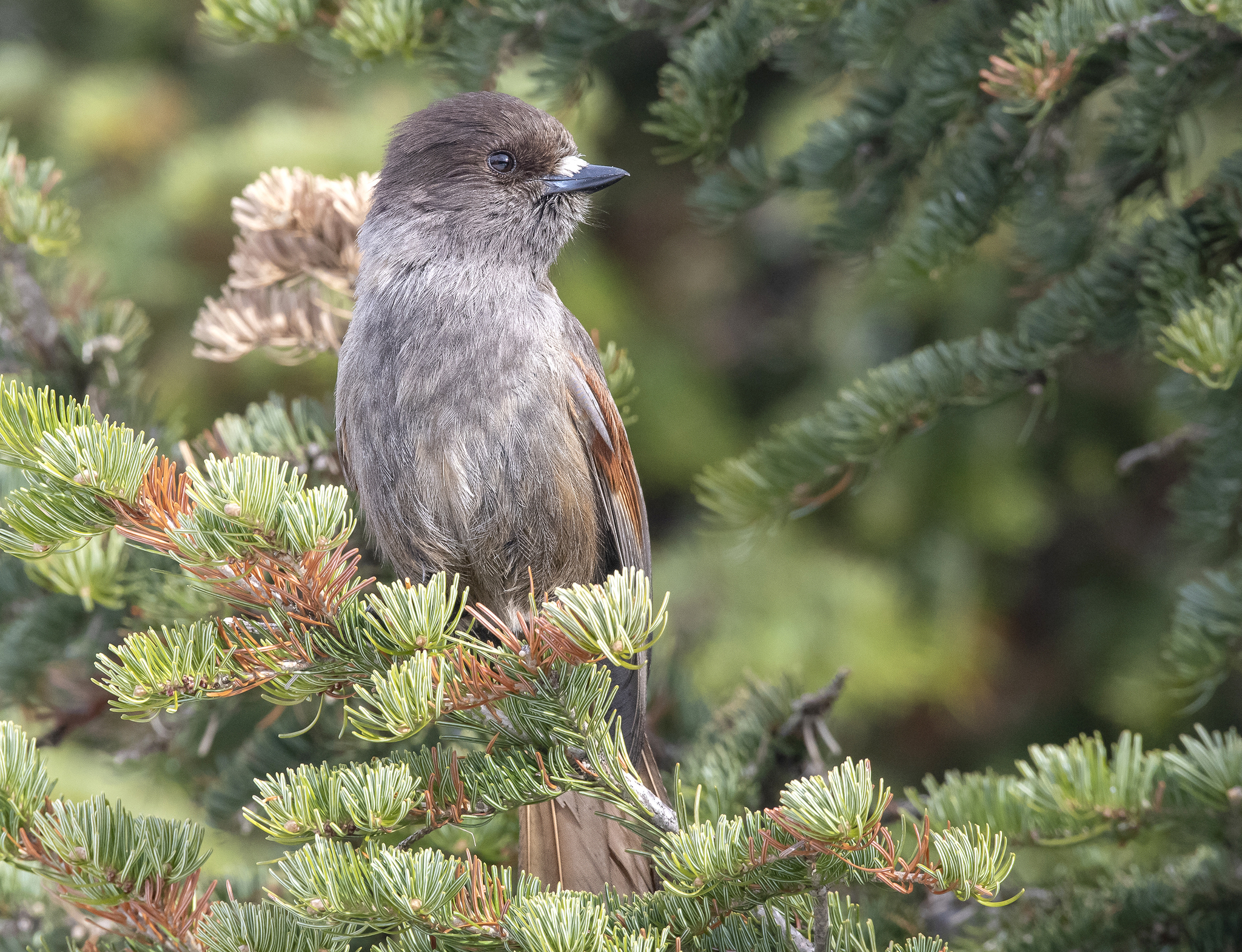 Siberian Jay
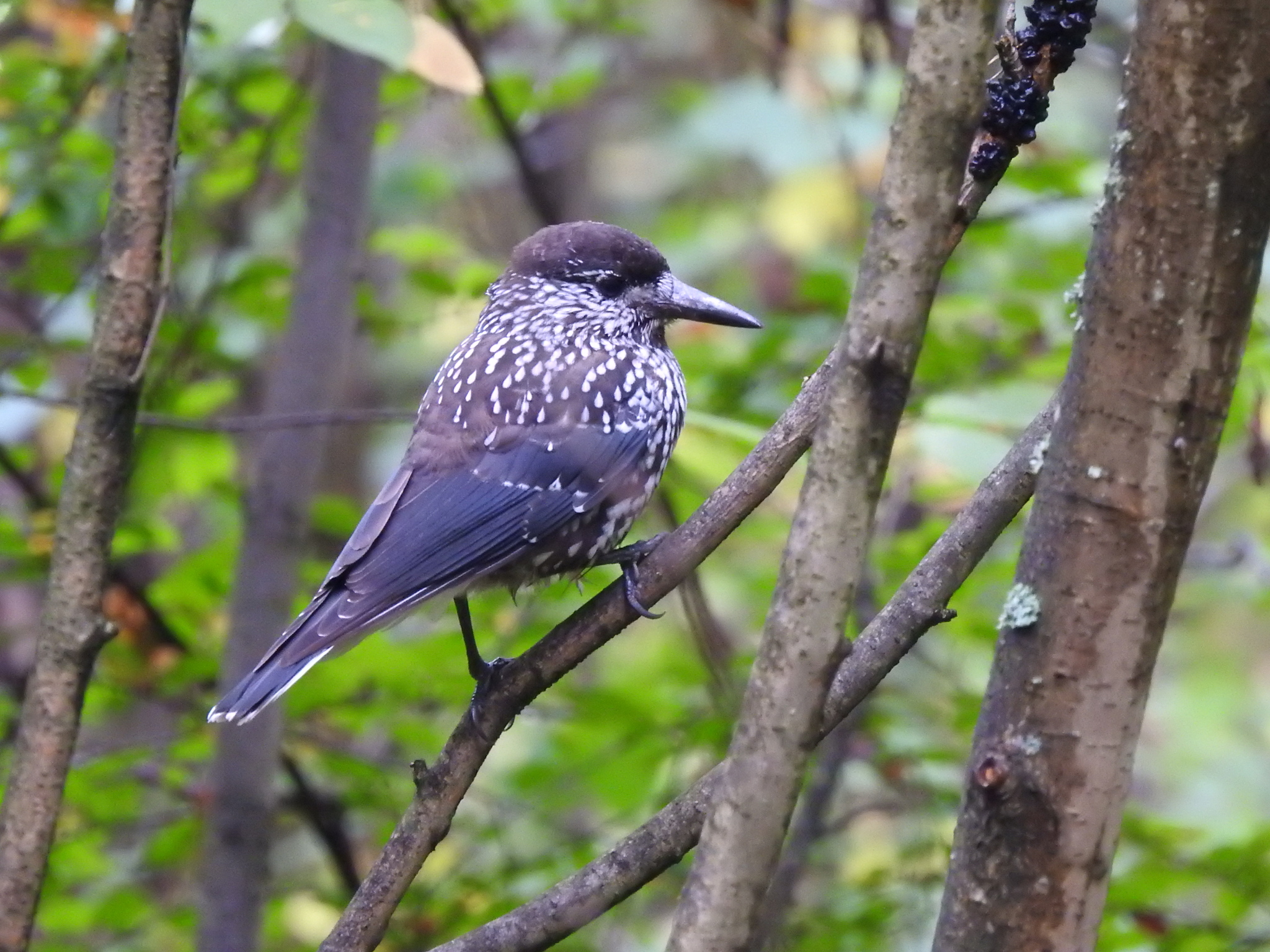 Spotted Nutcracker
In short
The Siberian Jay and Spotted Nutcracker are both members of the Corvidae family but can be distinguished by their structure and plumage. The Siberian Jay is smaller with a more rounded appearance and lacks the bold white spotting of the Spotted Nutcracker. Listen for differences in calls, as they can be helpful in distinguishing these species.
Identification tips
- Size and Structure: Note the smaller, rounder body of the Siberian Jay versus the larger, more robust Spotted Nutcracker.
- Plumage: Look for the uniform brownish-grey of the Siberian Jay compared to the spotted pattern of the Nutcracker.
- Behavior: Observe group dynamics; Siberian Jays are often in small groups, while Nutcrackers are more solitary.
- Vocalizations: Listen for soft, melodious calls of the Siberian Jay versus the harsh calls of the Nutcracker.
- Habitat: Consider the density of the forest; Siberian Jays prefer denser, older forests.
Size
The Siberian Jay is smaller and more compact compared to the larger, more robust Spotted Nutcracker.
Plumage
Siberian Jays have a more uniform, soft brownish-grey plumage with rusty undertones on the wings and tail, while Spotted Nutcrackers have a distinctive pattern with bold white spots on dark brown plumage.
Behaviour
Siberian Jays are often seen in pairs or small family groups and can be quite secretive, while Spotted Nutcrackers are more solitary and conspicuous, often seen foraging on the ground or in trees.
Habitat
Both species inhabit coniferous forests, but the Siberian Jay is more closely associated with dense, old-growth forests, whereas the Spotted Nutcracker can also be found in more open areas with scattered trees.
Voice
Siberian Jays have a variety of soft, melodious calls, whereas Spotted Nutcrackers produce harsh, grating calls. Listening for these differences can aid identification.