Birdr

Smith's Longspur vs Baird's Sparrow

Calcarius pictus versus Centronyx bairdii

Play a quiz with Smith's Longspur and Baird's Sparrow

Smith's Longspur (Calcarius pictus) Smith's Longspur
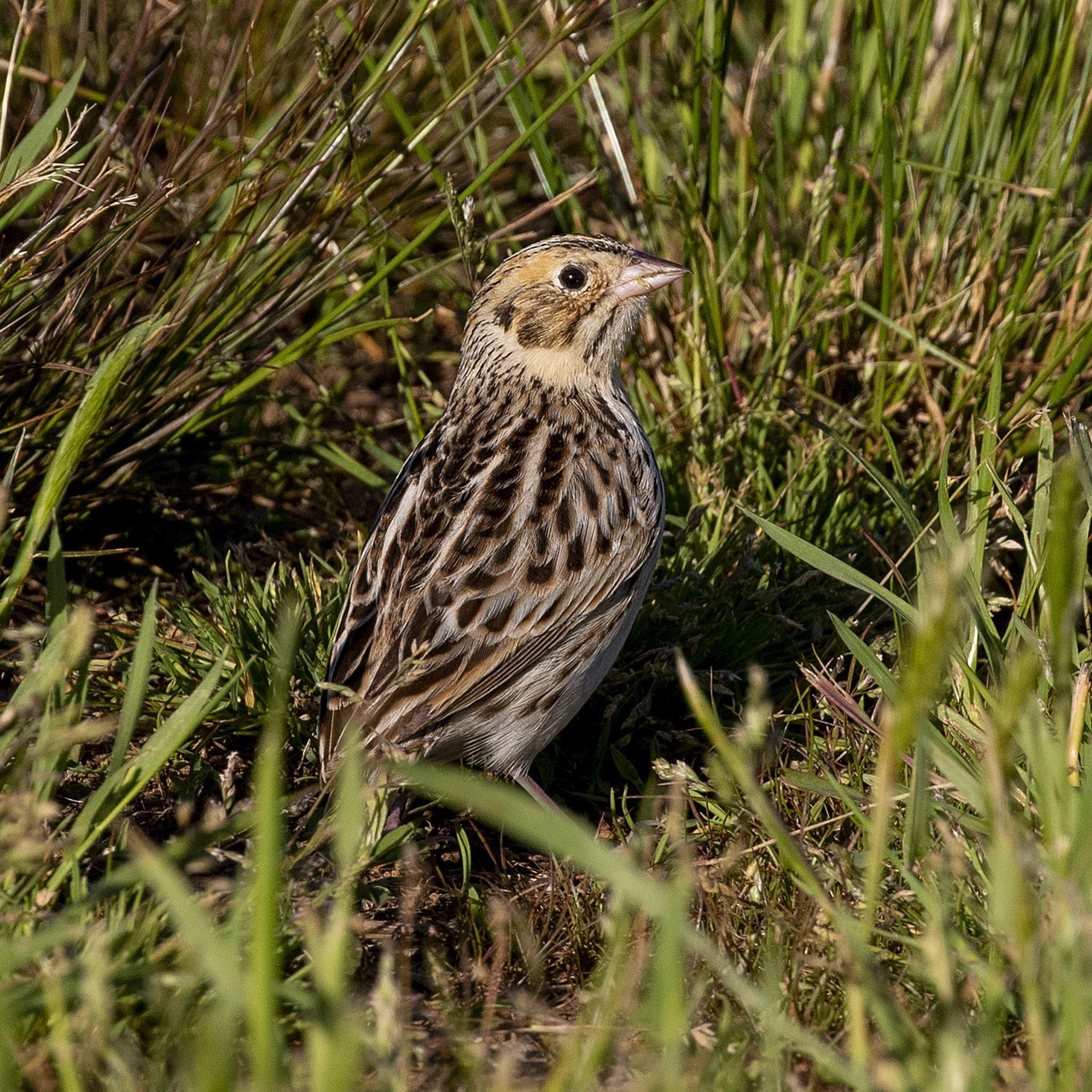
Baird's Sparrow (Centronyx bairdii) Baird's Sparrow

Media

Loading…

In short

Smith's Longspur and Baird's Sparrow can be differentiated primarily by their structure and plumage. Smith's Longspur has a more robust bill and distinctive wing markings, while Baird's Sparrow features a more delicate appearance with a prominent facial pattern. Both species inhabit grasslands but have different behavioral traits.

Identification tips

Look for Smith's Longspur's bold wing pattern and robust bill. In contrast, note Baird's Sparrow's delicate facial markings and lack of strong wing patterns. Consider the habitat and behavior: Smith's Longspur is more likely in northern prairies and in flocks, while Baird's Sparrow is solitary in drier grasslands.

Size

Smith's Longspur is slightly larger and more robust than Baird's Sparrow.

Plumage

Smith's Longspur has a striking wing pattern with white edges on the tail and a buffy breast with streaks. Baird's Sparrow displays a more intricate facial pattern with a buffy face and dark crown stripes, lacking the strong wing markings of the longspur.

Behaviour

Smith's Longspur is known for its promiscuous mating behavior and often seen in flocks, while Baird's Sparrow tends to be more solitary and elusive.

Habitat

Both species prefer open grasslands, but Smith's Longspur is more associated with northern prairies, while Baird's Sparrow can be found in drier grasslands influenced by fire and grazing.

Voice

Smith's Longspur has a distinctive, musical song, while Baird's Sparrow's song is more subdued and less musical.

Submit a better description

Use the same sections as the comparison. Your text is published immediately.

Smith's Longspur and Baird's Sparrow can be differentiated primarily by their structure and plumage. Smith's Longspur has a more robust bill and distinctive wing markings, while Baird's Sparrow features a more delicate appearance with a prominent facial pattern. Both species inhabit grasslands but have different behavioral traits.

Look for Smith's Longspur's bold wing pattern and robust bill. In contrast, note Baird's Sparrow's delicate facial markings and lack of strong wing patterns. Consider the habitat and behavior: Smith's Longspur is more likely in northern prairies and in flocks, while Baird's Sparrow is solitary in drier grasslands.

Smith's Longspur is slightly larger and more robust than Baird's Sparrow.

Smith's Longspur has a striking wing pattern with white edges on the tail and a buffy breast with streaks. Baird's Sparrow displays a more intricate facial pattern with a buffy face and dark crown stripes, lacking the strong wing markings of the longspur.

Smith's Longspur is known for its promiscuous mating behavior and often seen in flocks, while Baird's Sparrow tends to be more solitary and elusive.

Both species prefer open grasslands, but Smith's Longspur is more associated with northern prairies, while Baird's Sparrow can be found in drier grasslands influenced by fire and grazing.

Smith's Longspur has a distinctive, musical song, while Baird's Sparrow's song is more subdued and less musical.

Discard your changes?

You have unsaved edits. If you leave now, those changes will be lost.

Smith's Longspur · Baird's Sparrow · My Tricky Birds