
Solitary Sandpiper vs Townsend's Warbler
Tringa solitaria versus Setophaga townsendi
Play a quiz with Solitary Sandpiper and Townsend's Warbler
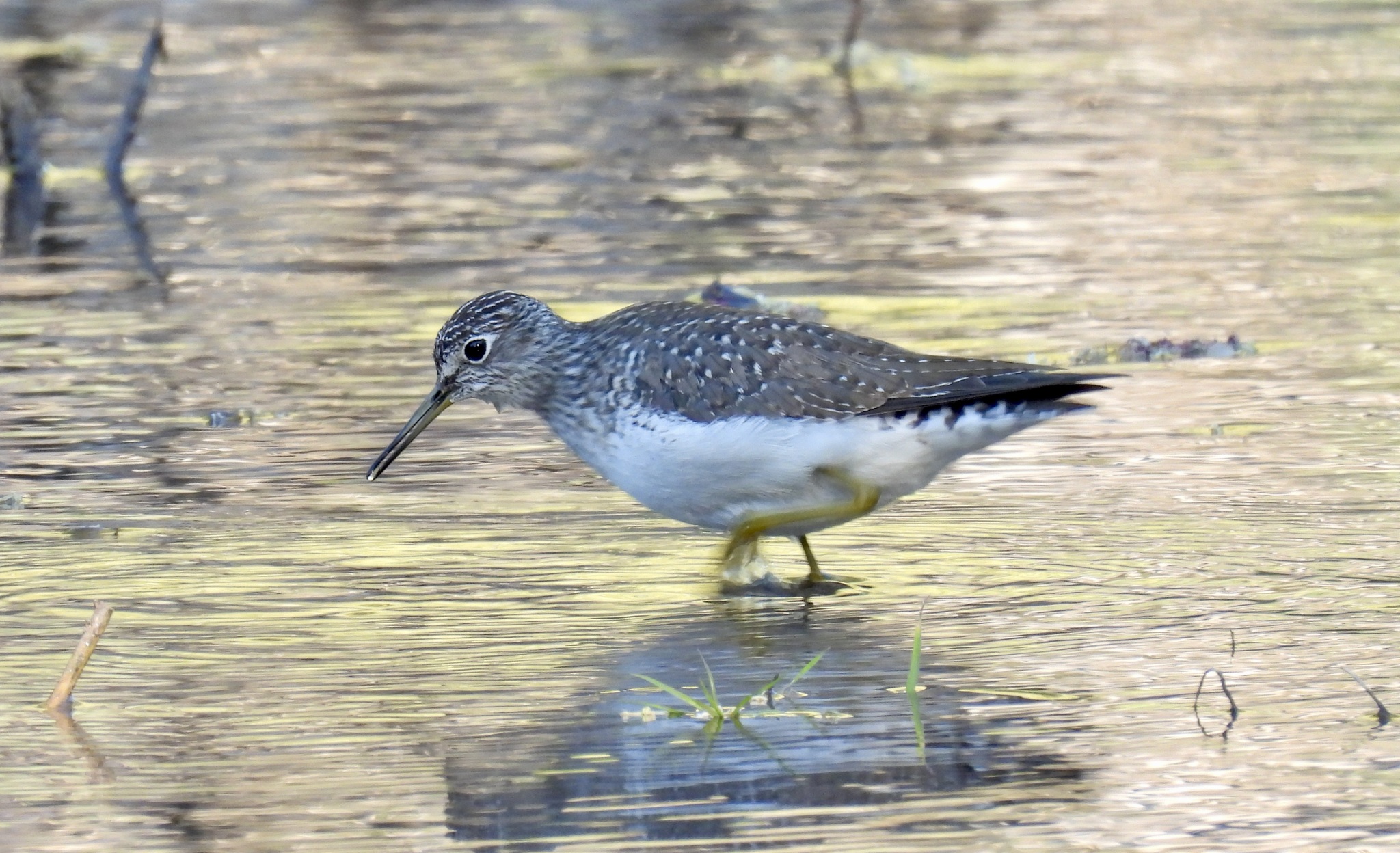 Solitary Sandpiper
 Townsend's Warbler
In short
The Solitary Sandpiper and Townsend's Warbler are easily distinguished by their habitat preferences and physical appearance. The Solitary Sandpiper is a shorebird typically found near water, while Townsend's Warbler is a small songbird often seen in forested areas. Key differences include the sandpiper's longer legs and bill compared to the warbler's more compact body and short bill.
Identification tips
- Habitat: Solitary Sandpipers are found near water; Townsend's Warblers are in forests.
- Size and Shape: Look for the sandpiper's longer legs and bill.
- Plumage: Note the sandpiper's white eye-ring vs. the warbler's black and yellow face.
- Behavior: Solitary Sandpipers forage alone; Townsend's Warblers join mixed flocks.
- Vocalization: Listen for the sandpiper's whistle vs. the warbler's buzzy notes.
Size
The Solitary Sandpiper is larger, with a more elongated body and longer legs, compared to the smaller, more compact Townsend's Warbler.
Plumage
Solitary Sandpipers have a mottled brown and white plumage with a distinctive white eye-ring. Townsend's Warblers are more colorful, with a striking black and yellow face pattern and olive-green upperparts.
Behaviour
Solitary Sandpipers are often seen alone or in small groups, foraging along the edges of water bodies. Townsend's Warblers are more likely to be found in mixed-species flocks, foraging in trees.
Habitat
Solitary Sandpipers prefer wetland habitats, including marshes and ponds. Townsend's Warblers are typically found in coniferous forests, especially during breeding season.
Voice
The Solitary Sandpiper's call is a high-pitched, clear whistle, while Townsend's Warbler has a series of buzzy, high-pitched notes. These vocalizations are quite distinct from each other.