
Stone-curlew vs Black-necked Stilt
Burhinus oedicnemus versus Himantopus mexicanus
Play a quiz with Stone-curlew and Black-necked Stilt
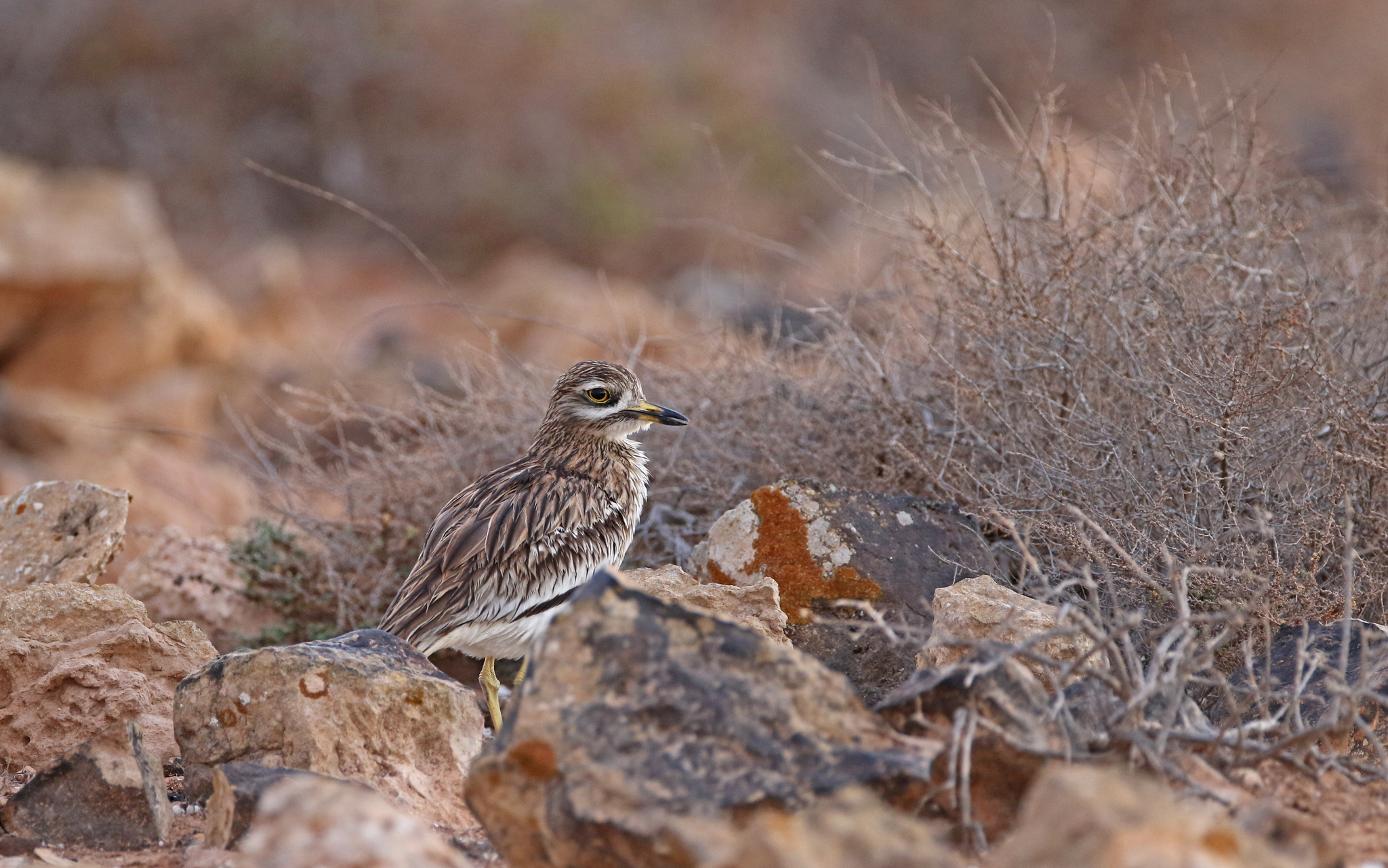 Stone-curlew
 Black-necked Stilt
In short
The Stone-curlew and the Black-necked Stilt are distinct in both structure and habitat preferences. The Stone-curlew is a terrestrial bird with cryptic plumage suited for dry, open landscapes, while the Black-necked Stilt is a wader with striking black and white plumage, often found in wetlands. These differences are key for identification in the field.
Identification tips
1. Habitat: Look for Stone-curlews in dry, open areas and Black-necked Stilts in wetlands. 2. Plumage: Note the cryptic brown of Stone-curlews versus the stark black and white of Black-necked Stilts. 3. Behavior: Observe the time of activity; Stone-curlews are more nocturnal. 4. Vocalization: Listen for the Stone-curlew's wailing call at night and the Stilt's sharp 'kek' during the day.
Size
The Stone-curlew is larger and more robust than the Black-necked Stilt, which is more slender and has longer legs.
Plumage
Stone-curlews have mottled brown and buff plumage, providing camouflage in dry habitats. In contrast, Black-necked Stilts have a striking black and white pattern, with a black back and wings, white underparts, and a distinctive black neck and head.
Behaviour
Stone-curlews are primarily nocturnal and often remain still during the day, relying on camouflage. Black-necked Stilts are active during the day, often seen wading in shallow waters and exhibiting conspicuous antipredator behaviors.
Habitat
Stone-curlews prefer dry, open areas like grasslands and semi-deserts, while Black-necked Stilts are found in wetlands, including marshes and mudflats.
Voice
Stone-curlews have a haunting, wailing call often heard at night. Black-necked Stilts have a sharp, repetitive 'kek' call, typically heard during the day.