
Sulphur-breasted Bushshrike vs Black-and-white Mannikin
Chlorophoneus sulfureopectus versus Spermestes bicolor
Play a quiz with Sulphur-breasted Bushshrike and Black-and-white Mannikin
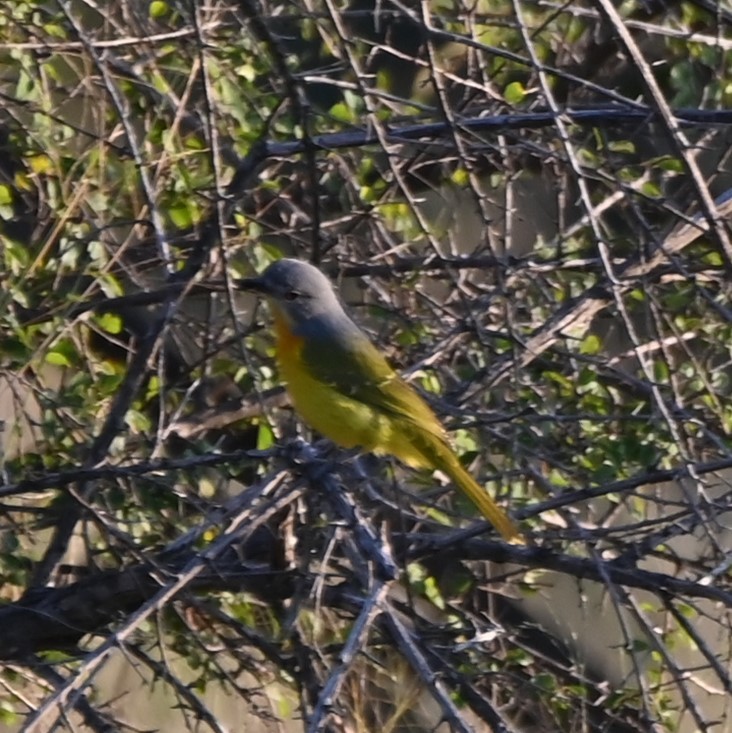 Sulphur-breasted Bushshrike
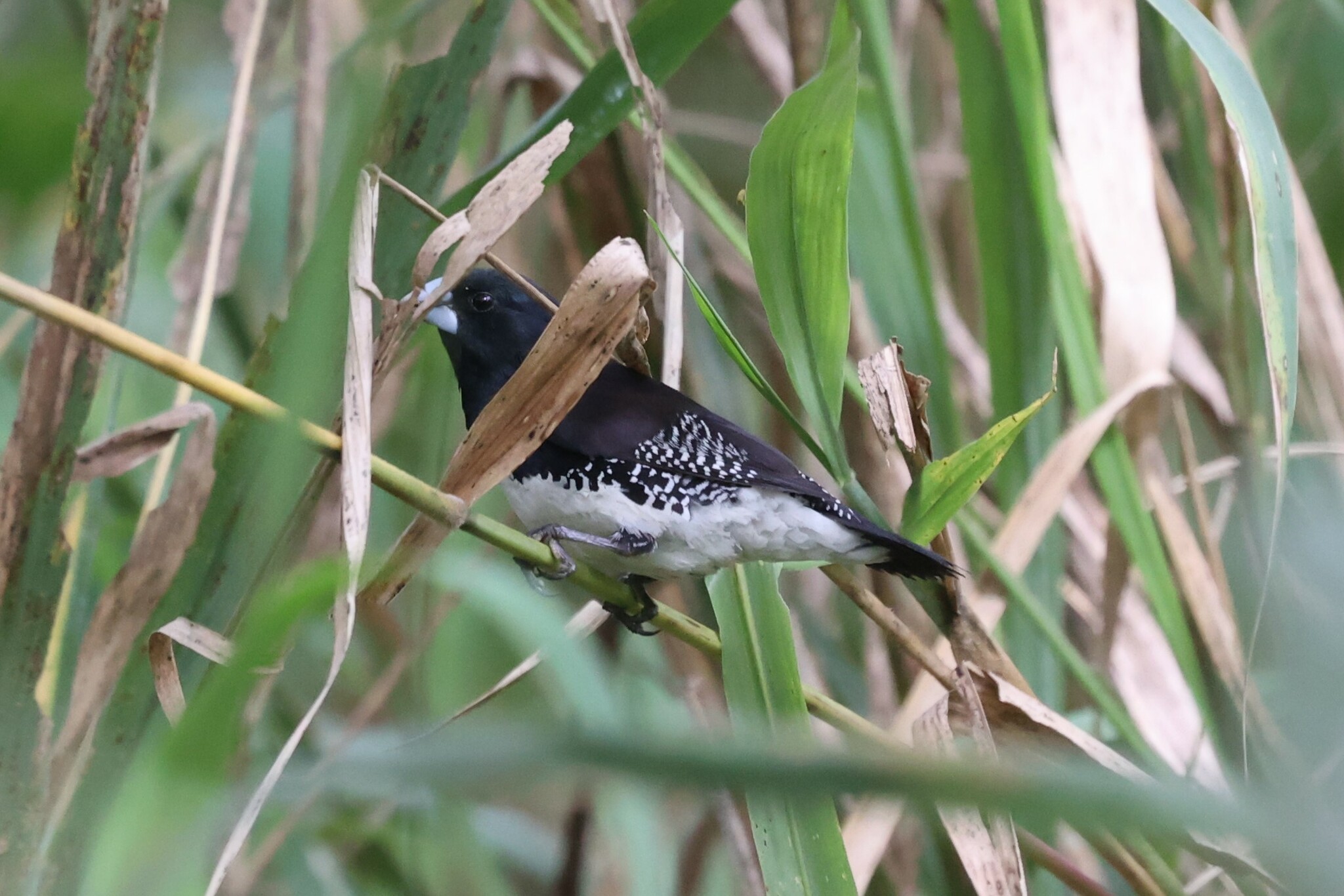 Black-and-white Mannikin
In short
The Sulphur-breasted Bushshrike and Black-and-white Mannikin are distinct in both appearance and behavior. The bushshrike is known for its vibrant yellow underparts and greenish upperparts, while the mannikin is characterized by its striking black and white plumage. Observing their behavior and preferred habitats can also aid in identification.
Identification tips
Look for the yellow underparts and black mask of the bushshrike versus the black and white plumage of the mannikin. Consider size and habitat: bushshrikes are larger and found in wooded areas, while mannikins are smaller and prefer open grasslands. Observe behavior: solitary or paired bushshrikes contrast with flocking mannikins.
Size
The Sulphur-breasted Bushshrike is generally larger and more robust than the small, compact Black-and-white Mannikin.
Plumage
The Sulphur-breasted Bushshrike has bright yellow underparts and olive-green upperparts, with a distinct black mask. In contrast, the Black-and-white Mannikin features a stark black and white pattern, with a black head and upperparts and white underparts.
Behaviour
Bushshrikes are often seen alone or in pairs, moving through dense foliage, while mannikins are more social, frequently observed in flocks, often feeding on grass seeds.
Habitat
Sulphur-breasted Bushshrikes prefer dense woodland and forest edges, whereas Black-and-white Mannikins are commonly found in open grasslands and savannas.
Voice
The Sulphur-breasted Bushshrike has a melodious and varied song, while the Black-and-white Mannikin produces simple, repetitive calls. However, vocalizations may be challenging to use as a primary identification tool without prior experience.
Sulphur-breasted Bushshrike · Black-and-white Mannikin · My Tricky Birds