
Summer Tanager vs Painted Bunting
Piranga rubra versus Passerina ciris
Play a quiz with Summer Tanager and Painted Bunting
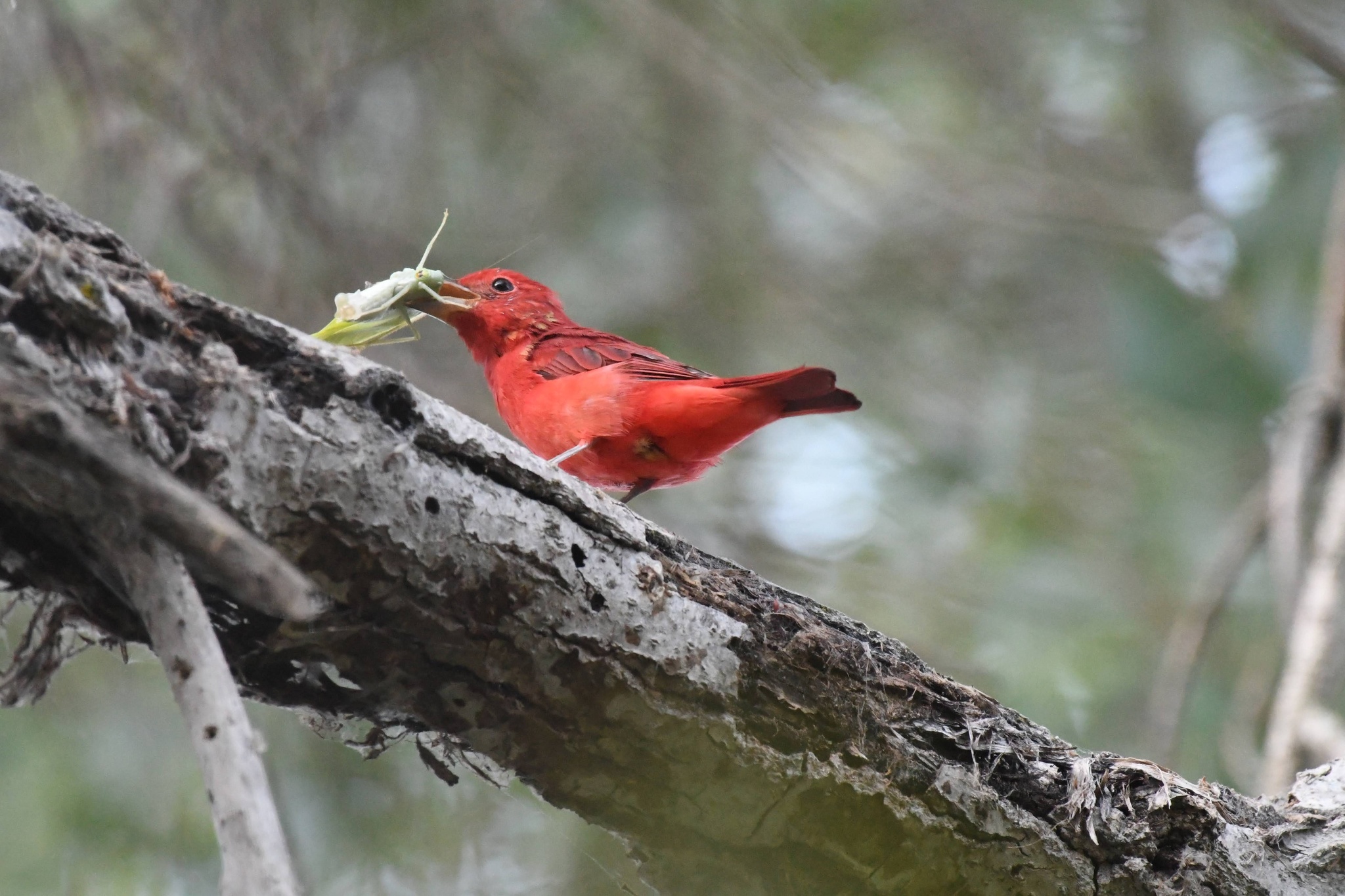 Summer Tanager
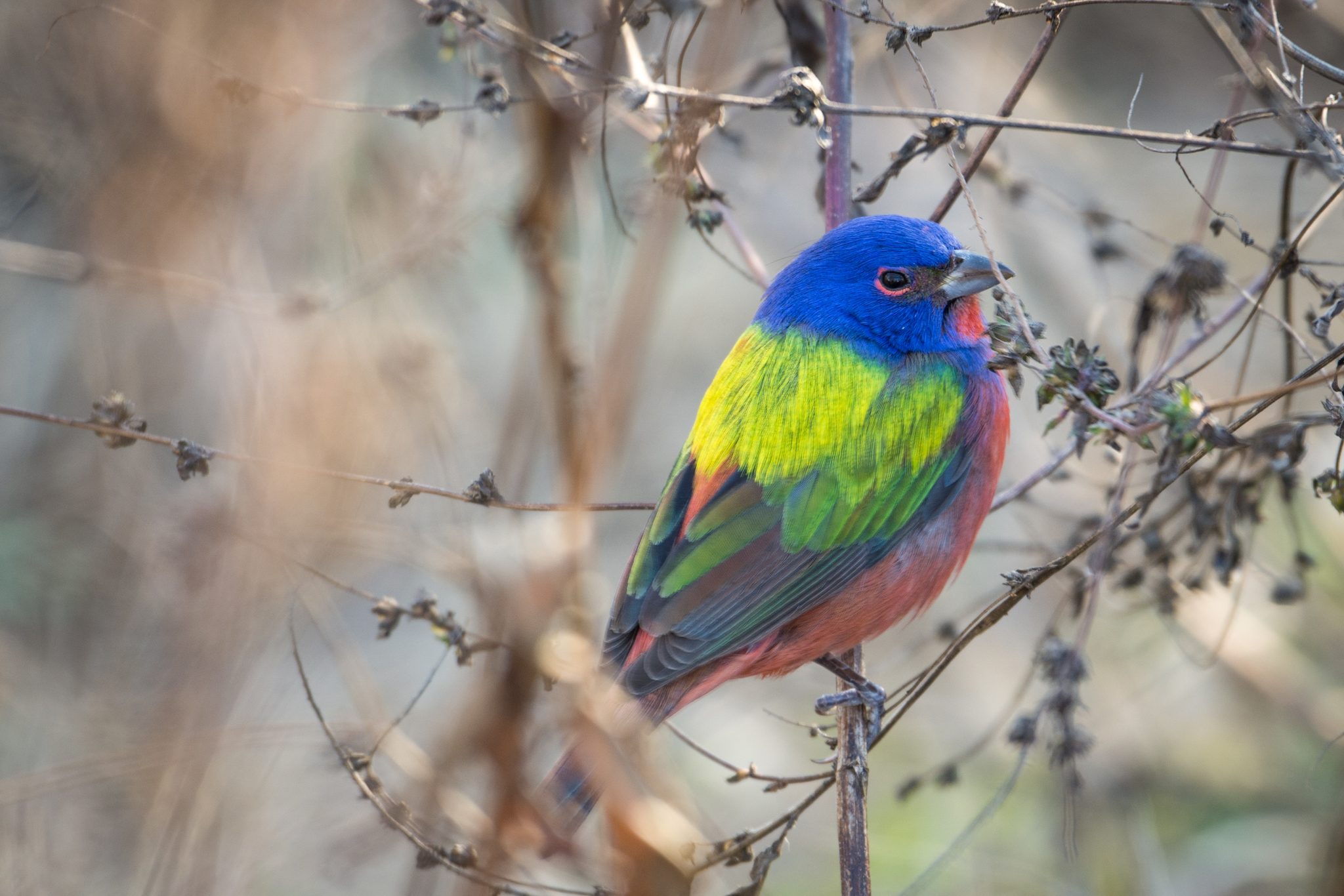 Painted Bunting
In short
The Summer Tanager and Painted Bunting can be distinguished by their plumage and habitat preferences. The Summer Tanager is typically red in males and yellowish in females, while the Painted Bunting is known for its vibrant, multicolored plumage in males and greenish tones in females. Both species inhabit different environments, with the Summer Tanager favoring open deciduous forests and the Painted Bunting preferring woodland edges and thickets.
Identification tips
- Plumage: Look for the uniform red of male Summer Tanagers versus the multicolored male Painted Bunting. 2. Habitat: Note the habitat; Summer Tanagers are more likely in open forests, while Painted Buntings are in thickets. 3. Vocalization: Listen for the song differences; Summer Tanagers have a richer song. 4. Size and Shape: Observe the slightly larger and more robust shape of the Summer Tanager compared to the Painted Bunting.
Size
Both species are similar in size, but the Summer Tanager is slightly larger and more robust compared to the more delicate Painted Bunting.
Plumage
Male Summer Tanagers are uniformly red, while male Painted Buntings are strikingly multicolored with blue, green, and red. Female Summer Tanagers are yellowish, whereas female Painted Buntings are greenish, which can be confusing at a distance.
Behaviour
Both species are often seen foraging for insects and fruits, but the Summer Tanager is particularly noted for its consumption of bees and wasps.
Habitat
Summer Tanagers are found in open deciduous forests or pine-oak forests, often near gaps and edges. Painted Buntings prefer swampy thickets and woodland edges, especially in the eastern United States.
Voice
The songs of these species differ, with the Summer Tanager having a rich, melodious song, while the Painted Bunting's song is more rapid and high-pitched.