
Temminck's Lark vs Greater Short-toed Lark
Eremophila bilopha versus Calandrella brachydactyla
Play a quiz with Temminck's Lark and Greater Short-toed Lark
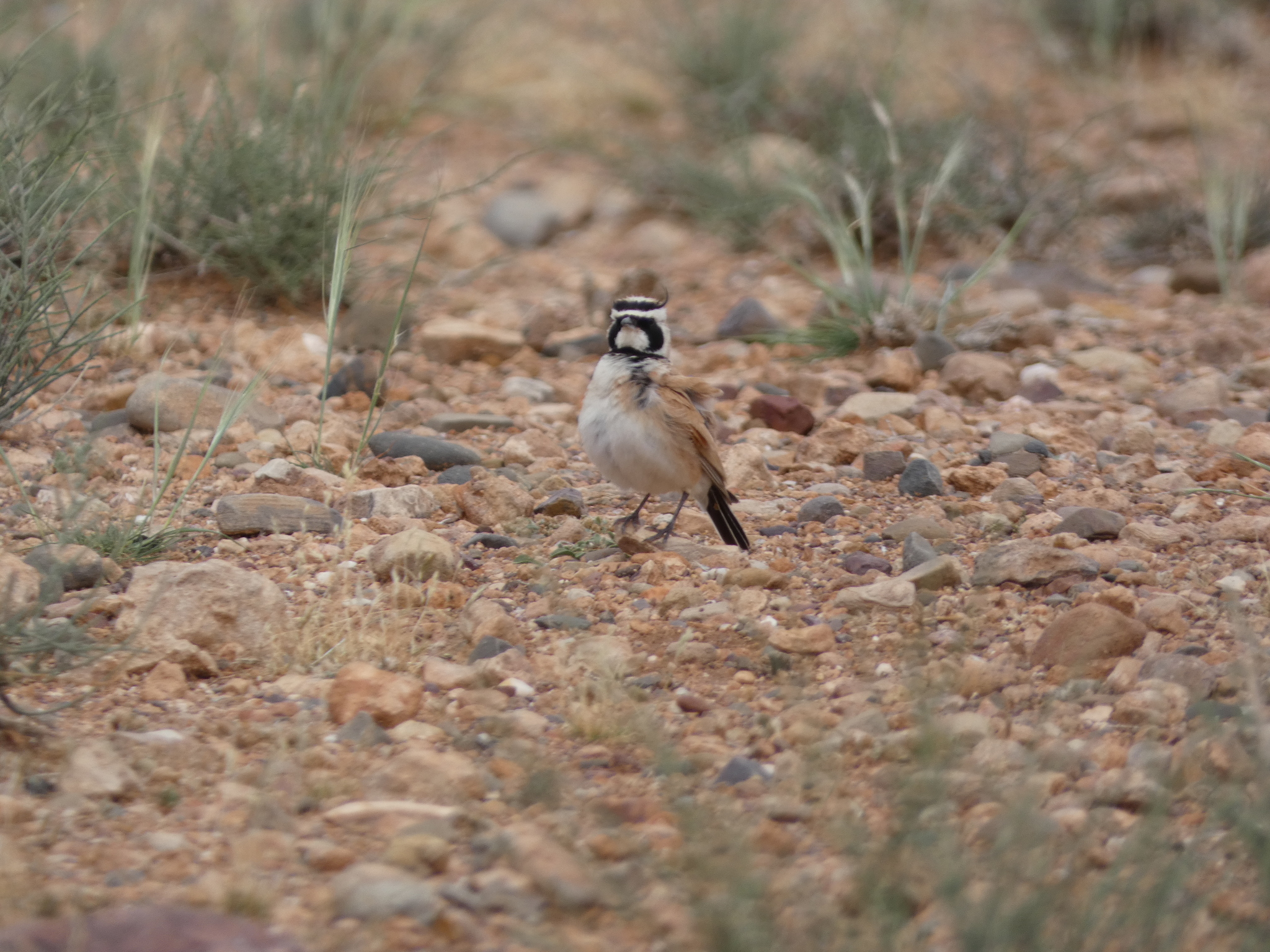 Temminck's Lark
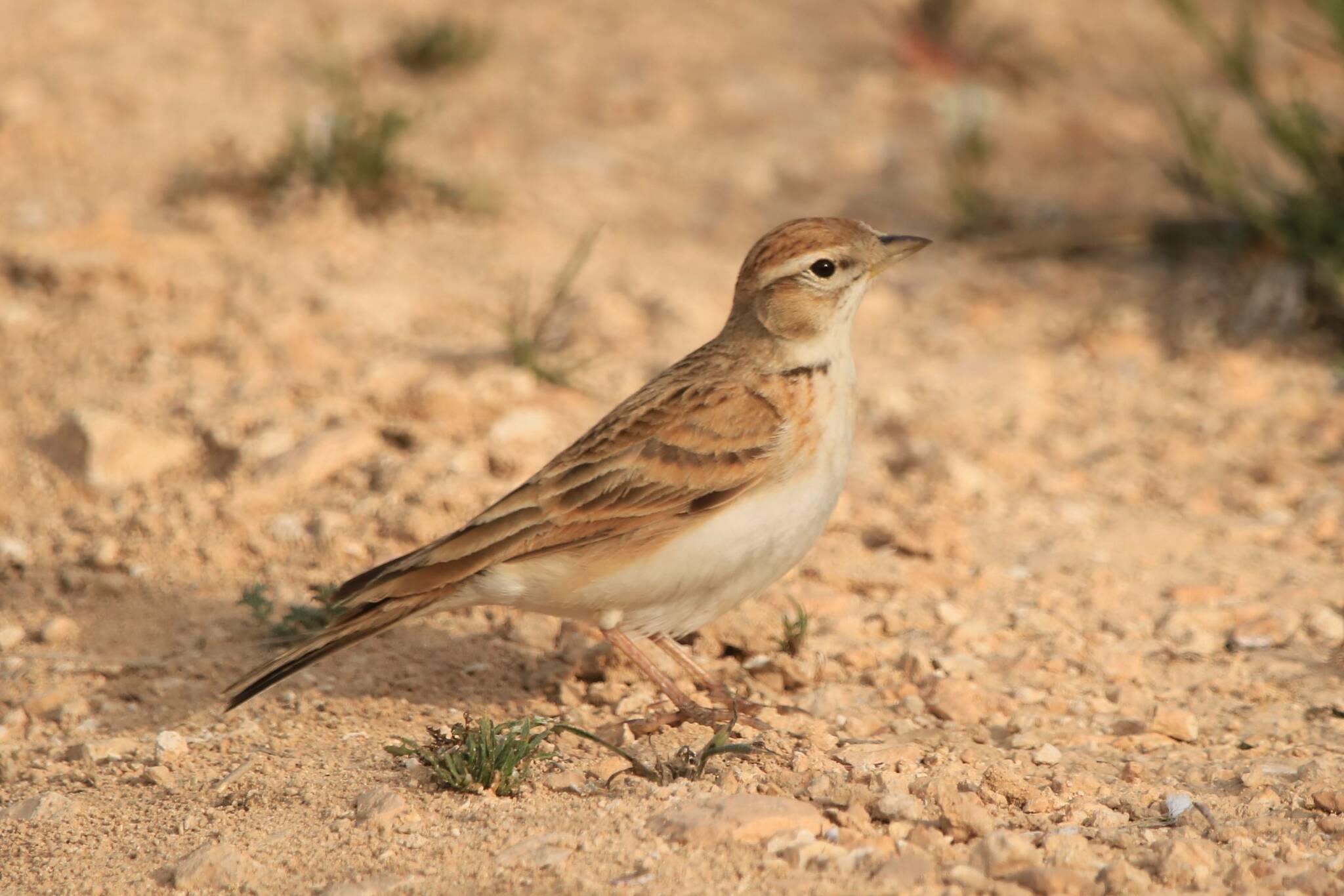 Greater Short-toed Lark
In short
Temminck's Lark and the Greater Short-toed Lark can be tricky to differentiate, but the distinctive black breast patches of Temminck's Lark are a reliable field mark. Both species share a similar structure, but Temminck's Lark often appears slightly more robust with a more prominent head pattern.
Identification tips
- Look for black breast patches on Temminck's Lark.
- Check for a pronounced head pattern with a black and white facial mask on Temminck's Lark.
- Observe the habitat: rocky areas suggest Temminck's Lark, while open, sandy areas suggest Greater Short-toed Lark.
- Listen for song differences: Greater Short-toed Lark has a more varied song, often in flight.
Size
Both species are similar in size, but Temminck's Lark may appear slightly bulkier due to its more robust build.
Plumage
Temminck's Lark features black breast patches and a more pronounced head pattern with a black and white facial mask, while the Greater Short-toed Lark has a more uniform and less contrasting plumage. The Greater Short-toed Lark has a more subtle and streaked appearance overall.
Behaviour
Both species exhibit similar ground-feeding behavior, but Temminck's Lark may be more likely to be seen in pairs or small groups, while Greater Short-toed Larks often form larger flocks.
Habitat
Temminck's Lark prefers rocky and arid environments, while the Greater Short-toed Lark is more commonly found in open, sandy or grassy habitats.
Voice
Both species have similar calls, but the Greater Short-toed Lark's song is more varied and complex, often delivered in flight.