Birdr

Turkestan Short-toed Lark vs Meadow Pipit

Alaudala heinei versus Anthus pratensis

Play a quiz with Turkestan Short-toed Lark and Meadow Pipit
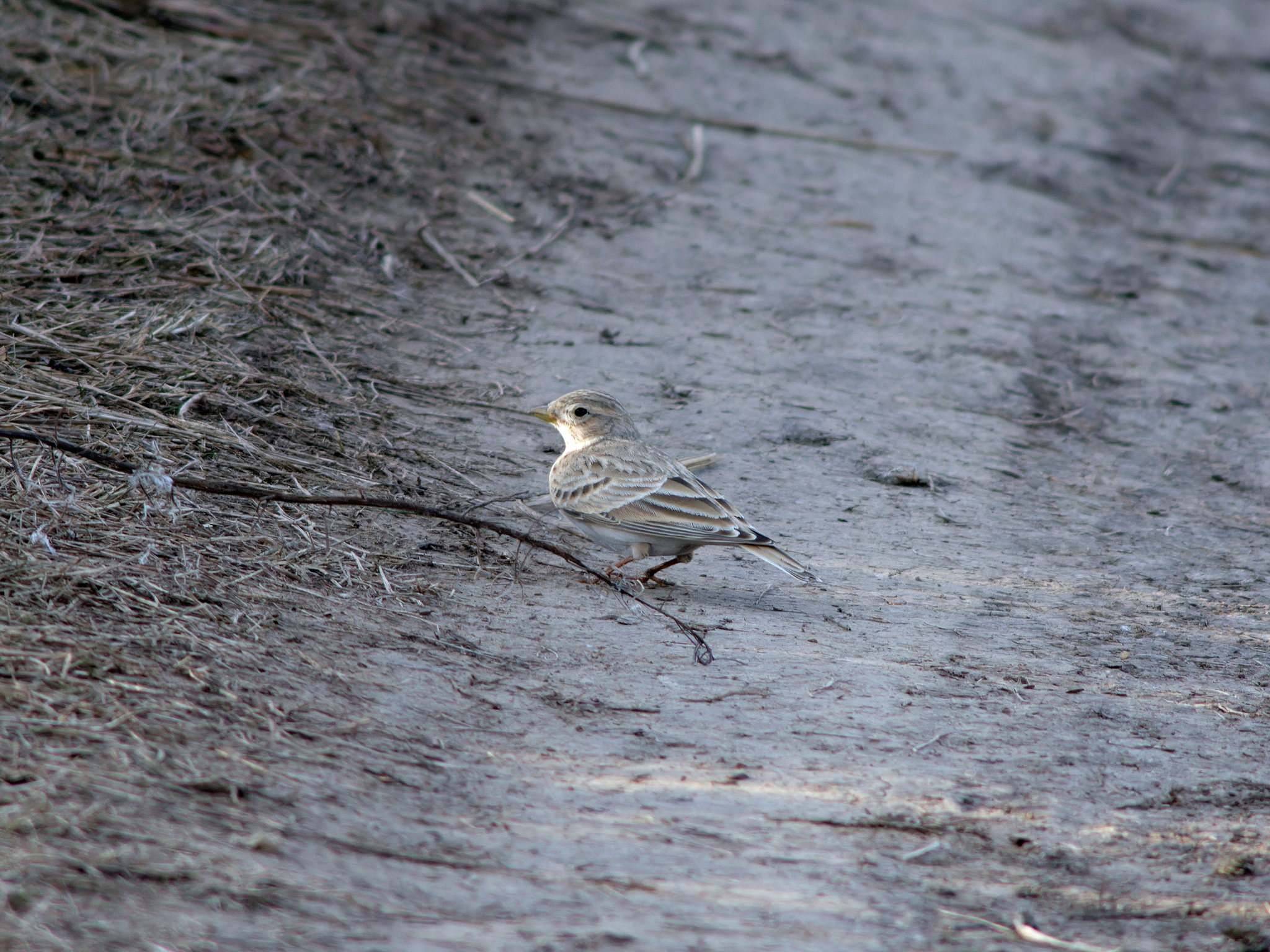
Turkestan Short-toed Lark (Alaudala heinei) Turkestan Short-toed Lark
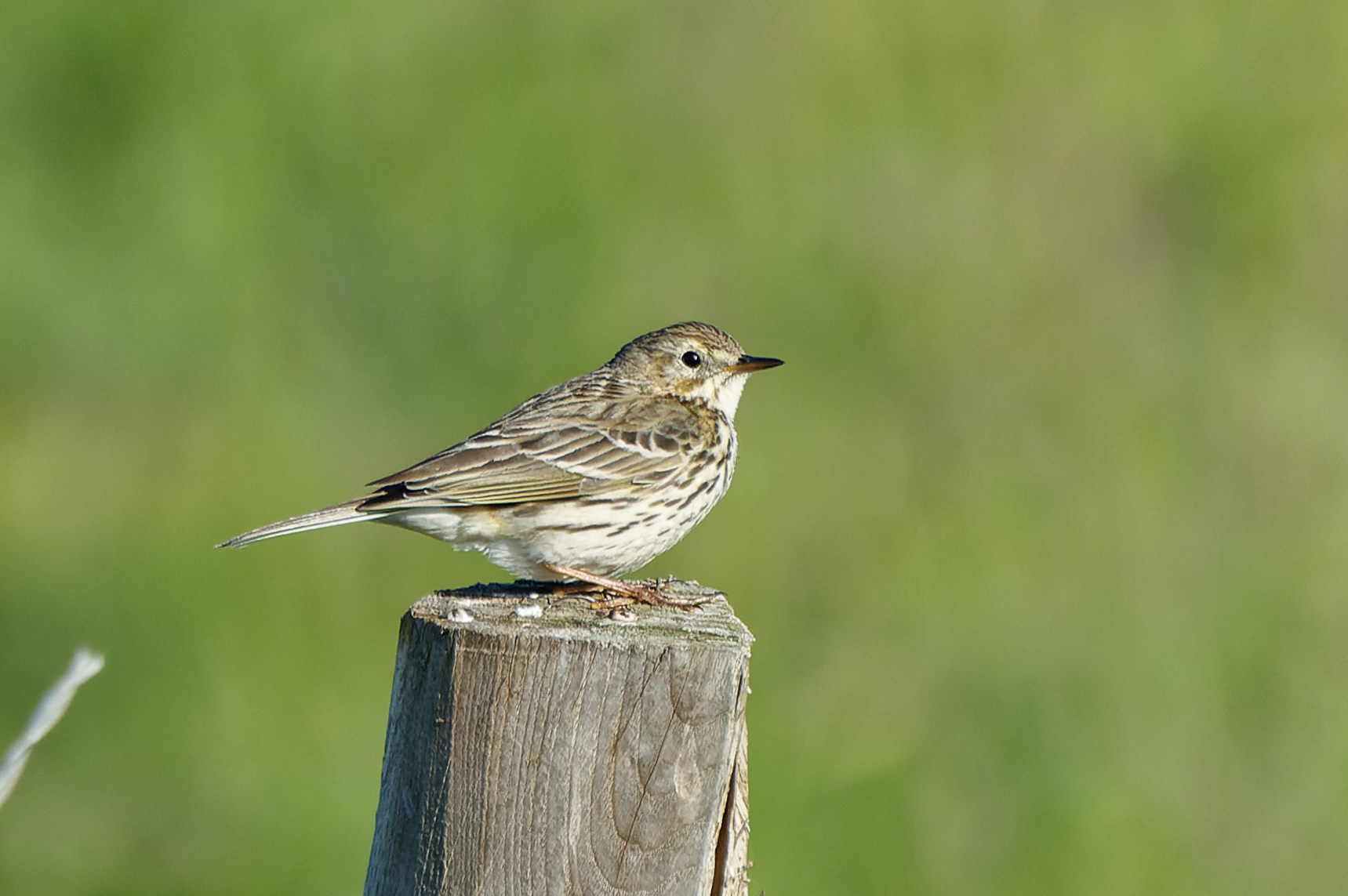
Meadow Pipit (Anthus pratensis) Meadow Pipit

Media

Loading…

In short

The Turkestan Short-toed Lark and Meadow Pipit are often confused due to their similar size and streaked appearance. However, the lark has a shorter bill and lacks the Meadow Pipit's distinctive streaked underparts and long hind claw. Vocalizations and habitat preferences also differ significantly.

Identification tips

  1. Bill shape: Turkestan Short-toed Lark has a shorter, stubbier bill compared to the slender bill of the Meadow Pipit. 2. Underparts streaking: Meadow Pipit shows prominent streaking on the flanks and underparts, unlike the Turkestan Short-toed Lark. 3. Hind claw: Meadow Pipit has a notably long hind claw, which is not a feature of the lark. 4. Vocalizations: Listen for the Meadow Pipit's complex aerial song and high-pitched calls. 5. Habitat: Consider the habitat; larks are more likely in open, saline areas, while pipits prefer grassy fields.

Size

Both species are similar in size, around 14.5–15 cm in length.

Plumage

Turkestan Short-toed Lark has a more uniform, sandy-brown plumage with less distinct streaking compared to the Meadow Pipit, which has broad brownish-black streaks on its upperparts and flanks. The Meadow Pipit also features a pale eyering and a narrow blackish malar stripe.

Behaviour

The Meadow Pipit often performs aerial song displays, while the Turkestan Short-toed Lark is more likely to be seen foraging on the ground.

Habitat

Turkestan Short-toed Lark is found in open, often saline habitats, while the Meadow Pipit prefers grassy fields and meadows.

Voice

Meadow Pipit has a complex aerial song with a series of notes, including 'tsip' and 'tchip', and a high-pitched squeak call. The Turkestan Short-toed Lark's vocalizations are less documented but are generally simpler.

Submit a better description

Use the same sections as the comparison. Your text is published immediately.

The Turkestan Short-toed Lark and Meadow Pipit are often confused due to their similar size and streaked appearance. However, the lark has a shorter bill and lacks the Meadow Pipit's distinctive streaked underparts and long hind claw. Vocalizations and habitat preferences also differ significantly.

  1. Bill shape: Turkestan Short-toed Lark has a shorter, stubbier bill compared to the slender bill of the Meadow Pipit. 2. Underparts streaking: Meadow Pipit shows prominent streaking on the flanks and underparts, unlike the Turkestan Short-toed Lark. 3. Hind claw: Meadow Pipit has a notably long hind claw, which is not a feature of the lark. 4. Vocalizations: Listen for the Meadow Pipit's complex aerial song and high-pitched calls. 5. Habitat: Consider the habitat; larks are more likely in open, saline areas, while pipits prefer grassy fields.

Both species are similar in size, around 14.5–15 cm in length.

Turkestan Short-toed Lark has a more uniform, sandy-brown plumage with less distinct streaking compared to the Meadow Pipit, which has broad brownish-black streaks on its upperparts and flanks. The Meadow Pipit also features a pale eyering and a narrow blackish malar stripe.

The Meadow Pipit often performs aerial song displays, while the Turkestan Short-toed Lark is more likely to be seen foraging on the ground.

Turkestan Short-toed Lark is found in open, often saline habitats, while the Meadow Pipit prefers grassy fields and meadows.

Meadow Pipit has a complex aerial song with a series of notes, including 'tsip' and 'tchip', and a high-pitched squeak call. The Turkestan Short-toed Lark's vocalizations are less documented but are generally simpler.

Discard your changes?

You have unsaved edits. If you leave now, those changes will be lost.

Turkestan Short-toed Lark · Meadow Pipit · My Tricky Birds