
Two-barred Crossbill vs European Goldfinch
Loxia leucoptera versus Carduelis carduelis
Play a quiz with Two-barred Crossbill and European Goldfinch
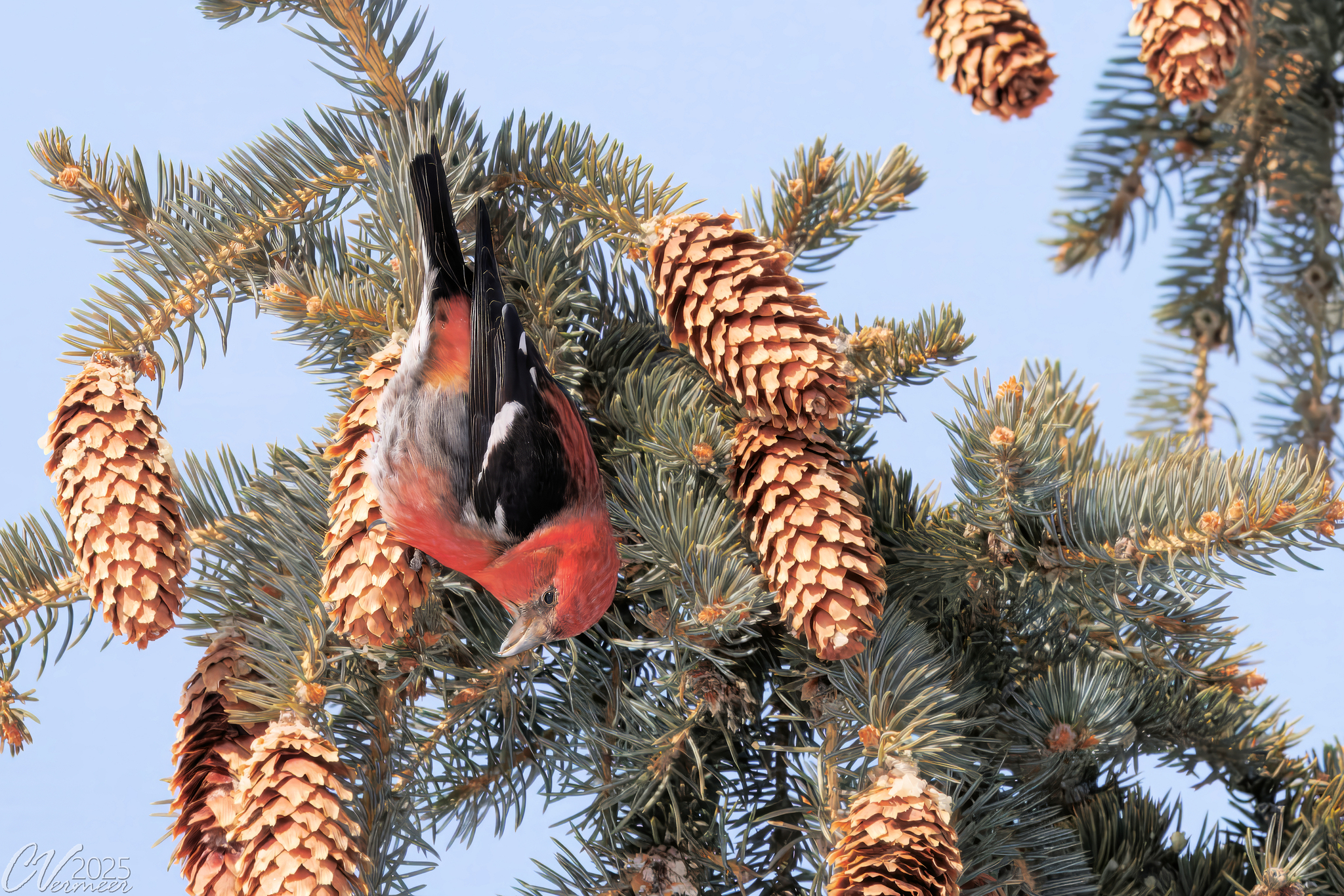 Two-barred Crossbill
 European Goldfinch
In short
The Two-barred Crossbill and European Goldfinch are both finches but differ significantly in appearance and behavior. The Two-barred Crossbill is noted for its crossed bill and white wingbars, while the European Goldfinch features a distinctive red face and gold wingbar. Both species are gregarious, but their feeding habits and habitats differ.
Identification tips
- Look for the crossed bill and white wingbars on the Two-barred Crossbill. 2. Identify the European Goldfinch by its red face and gold wingbar. 3. Consider habitat: coniferous forests for Crossbills, varied but not dense forests for Goldfinches. 4. Observe behavior: Crossbills are nomadic and focused on conifer seeds, while Goldfinches are often seen in mixed flocks.
Size
Both species are similar in size, but the Two-barred Crossbill is slightly bulkier due to its specialized bill structure.
Plumage
The Two-barred Crossbill has a crossed bill and prominent white wingbars, whereas the European Goldfinch is recognized by its red face, black-and-white head pattern, and gold wingbar. Juvenile Goldfinches lack the red face and have a buffish-brown head.
Behaviour
Two-barred Crossbills are nomadic, often moving in large flocks to exploit conifer seeds. European Goldfinches are also gregarious but typically form monospecific flocks and may forage with other finch species.
Habitat
Two-barred Crossbills are found in coniferous forests, while European Goldfinches occupy a variety of habitats but avoid dense forests and treeless areas.
Voice
The vocalizations of these species are distinct, but specific differences are not detailed in the sources.