
Two-barred Crossbill vs Lawrence's Goldfinch
Loxia leucoptera versus Spinus lawrencei
Play a quiz with Two-barred Crossbill and Lawrence's Goldfinch
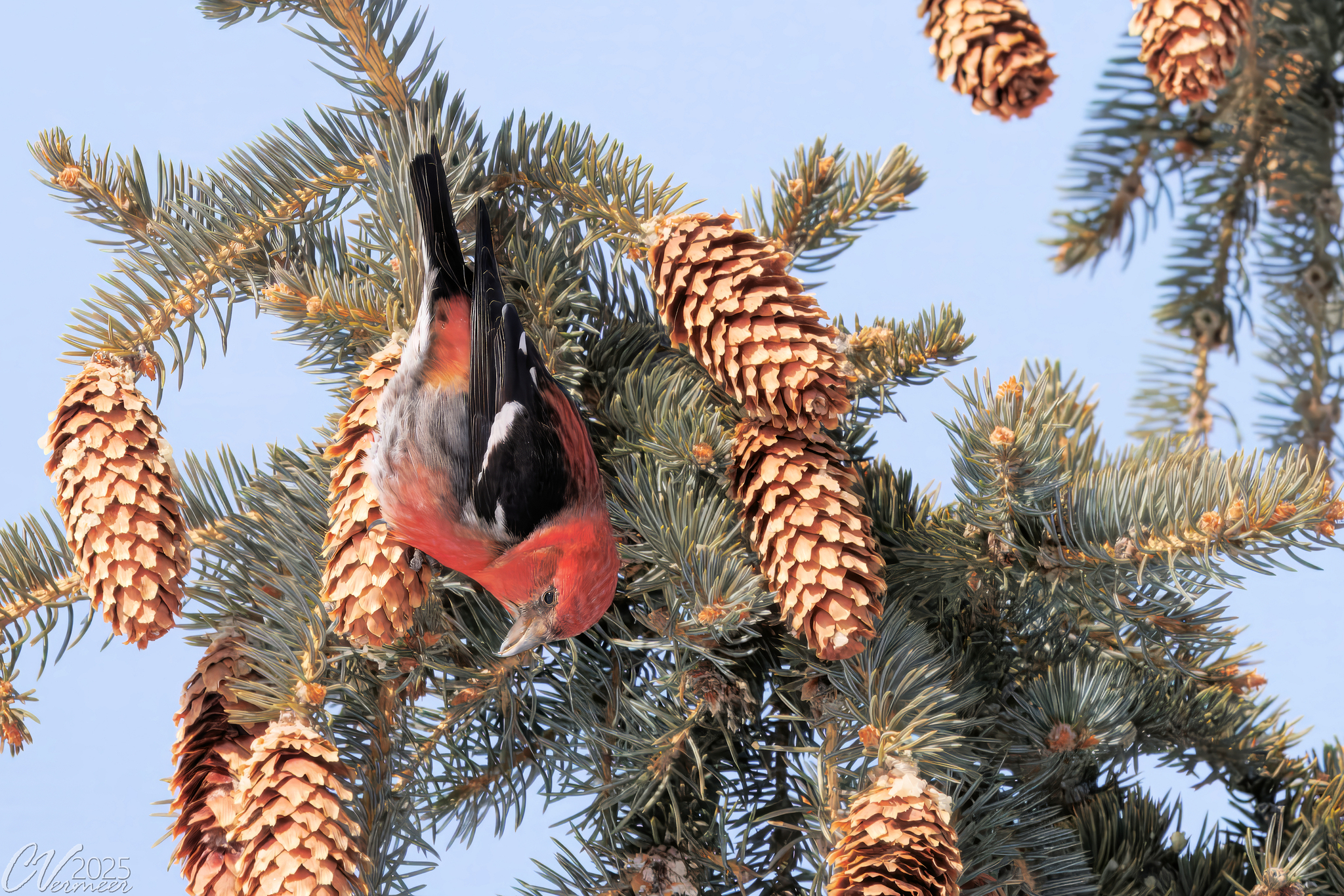 Two-barred Crossbill
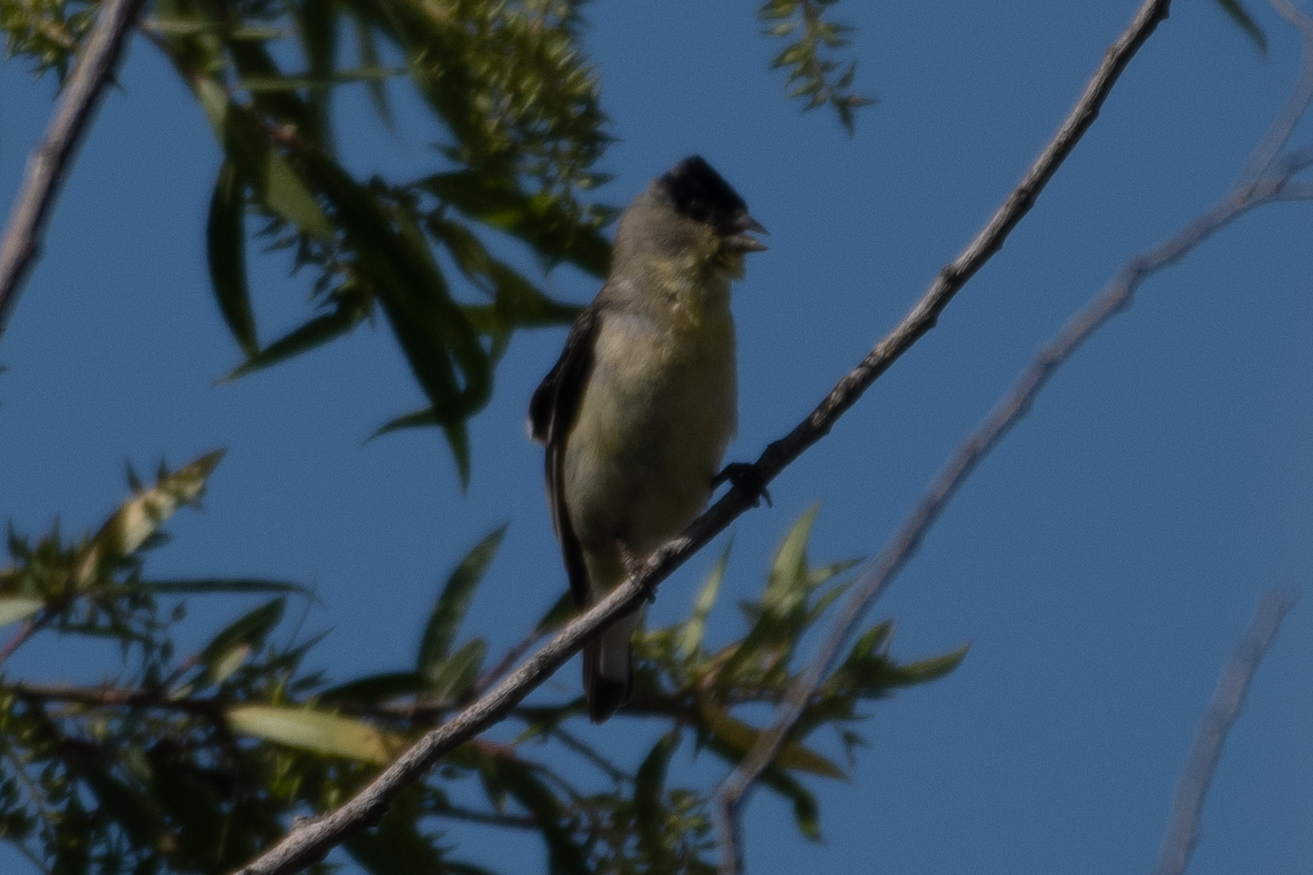 Lawrence's Goldfinch
In short
The Two-barred Crossbill and Lawrence's Goldfinch are distinct in both structure and behavior. The Two-barred Crossbill has a unique crossed bill adapted for extracting conifer seeds, while Lawrence's Goldfinch is more erratic in movement and has a more typical finch bill suited for a varied diet. Their habitats and plumage also differ significantly.
Identification tips
1. Bill Shape: Look for the distinctive crossed bill of the Two-barred Crossbill, adapted for conifer seeds.
2. Wing Bars: Two-barred Crossbill has two prominent white wing bars; Lawrence's Goldfinch lacks these.
3. Plumage: Male Lawrence's Goldfinch has a bright yellow breast and back, which becomes more pronounced with feather wear.
4. Behavior: Observe flocking behavior and habitat—Two-barred Crossbills are often in coniferous forests, while Lawrence's Goldfinch is found in arid woodlands.
5. Movement Patterns: Note the erratic movements of Lawrence's Goldfinch, which may appear in large numbers one year and be absent the next.
Size
Both species are small finches, but the Two-barred Crossbill appears bulkier due to its specialized bill and coniferous habitat adaptations.
Plumage
The Two-barred Crossbill is notable for its two white wing bars, which are absent in Lawrence's Goldfinch. Lawrence's Goldfinch males have a distinctive yellow breast and back, which becomes more pronounced with feather wear, while females are duller.
Behaviour
Two-barred Crossbills are nomadic, often forming large flocks to exploit conifer seed crops. Lawrence's Goldfinch is more erratic, showing little site fidelity and moving unpredictably between seasons.
Habitat
Two-barred Crossbills are found in coniferous forests, while Lawrence's Goldfinch prefers arid woodlands in California and northern Baja California.
Voice
Vocalizations are not a primary distinguishing feature, but Lawrence's Goldfinch has a distinctive song during the breeding season.
Two-barred Crossbill · Lawrence's Goldfinch · My Tricky Birds