
Vinous-throated Parrotbill vs Common Waxbill
Suthora webbiana versus Estrilda astrild
Play a quiz with Vinous-throated Parrotbill and Common Waxbill
 Vinous-throated Parrotbill
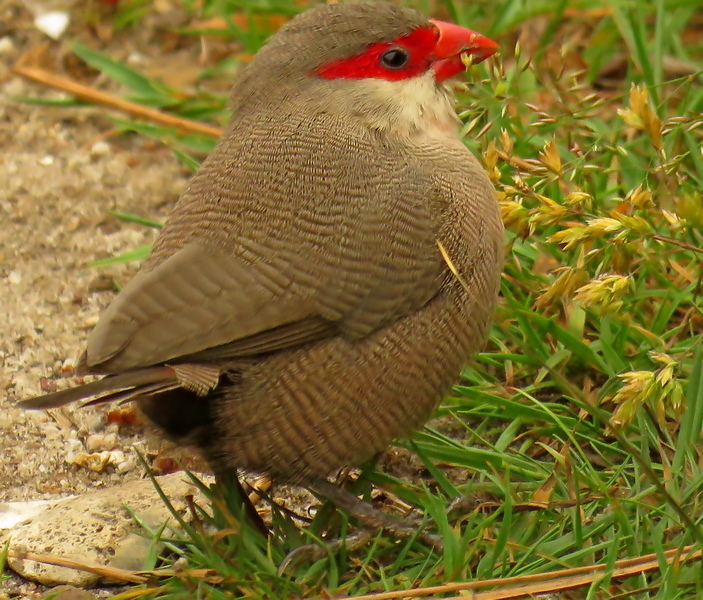 Common Waxbill
In short
The Vinous-throated Parrotbill and the Common Waxbill are small passerines that can be distinguished by their bill shape and plumage patterns. The parrotbill has a stout, curved bill, while the waxbill has a slender, conical bill. Plumage differences include the parrotbill's vinous throat and the waxbill's distinctive red eye-stripe.
Identification tips
- Bill Shape: Look for the stout, curved bill of the parrotbill versus the slender, conical bill of the waxbill. 2. Throat Color: Note the vinous throat of the parrotbill. 3. Eye-stripe: Check for the red eye-stripe of the waxbill. 4. Habitat: Consider the habitat; parrotbills are in denser vegetation, waxbills in open areas. 5. Vocalizations: Listen for the high-pitched calls of the parrotbill compared to the softer calls of the waxbill.
Size
Both species are small, but the Vinous-throated Parrotbill is generally bulkier than the slender Common Waxbill.
Plumage
The Vinous-throated Parrotbill has a vinous or reddish throat and a more uniform brownish body, whereas the Common Waxbill is characterized by a grayish body with a striking red eye-stripe and a fawn-colored breast.
Behaviour
Both species are social and often found in flocks, but the Vinous-throated Parrotbill is more likely to be seen foraging in dense vegetation, while the Common Waxbill often feeds on grass seeds in open areas.
Habitat
Vinous-throated Parrotbills prefer dense undergrowth and scrub, while Common Waxbills are often found in open grasslands and gardens.
Voice
The Vinous-throated Parrotbill's calls are described as high-pitched and twittering, whereas the Common Waxbill has softer, more musical calls.
Vinous-throated Parrotbill · Common Waxbill · My Tricky Birds