Birdr

Virginia Rail vs Least Tern

Rallus limicola versus Sternula antillarum

Play a quiz with Virginia Rail and Least Tern
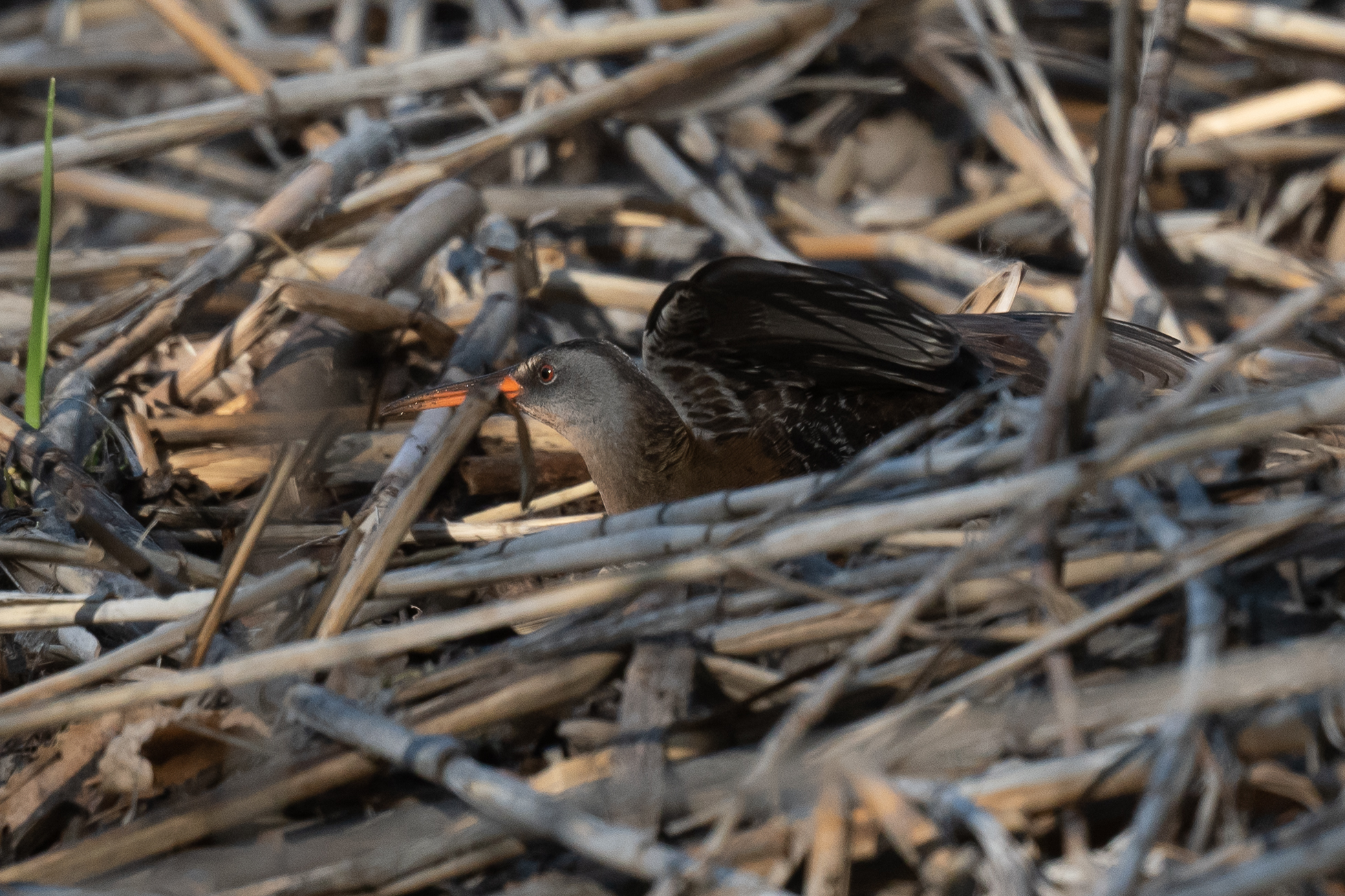
Virginia Rail (Rallus limicola) Virginia Rail
Least Tern (Sternula antillarum) Least Tern

Media

Loading…

In short

The Virginia Rail and Least Tern are distinct in both appearance and habitat preference. The Virginia Rail is a secretive marsh bird with a laterally compressed body, while the Least Tern is a small, agile seabird often seen along open beaches and rivers. Their behaviors and vocalizations are also adapted to their respective environments.

Identification tips

  1. Habitat: Look for Virginia Rails in dense marshes; Least Terns are found on open beaches. 2. Plumage: Virginia Rails have a reddish-brown body; Least Terns are pale gray with a black cap. 3. Behavior: Virginia Rails run through vegetation; Least Terns dive for fish. 4. Vocalization: Listen for grunting calls from Virginia Rails and sharp calls from Least Terns.

Size

The Virginia Rail is a medium-sized rail, whereas the Least Tern is the smallest North American tern.

Plumage

Virginia Rail has a gray face and reddish-brown body with a slightly decurved bill. The Least Tern is pale gray above with a white underside, black cap, and distinctive yellow bill.

Behaviour

Virginia Rails are elusive, often running through dense marsh vegetation. Least Terns are more conspicuous, engaging in aerial displays and diving for fish.

Habitat

Virginia Rails inhabit freshwater marshes with dense vegetation. Least Terns prefer open sandy beaches and river islands.

Voice

Virginia Rails have a series of grunting calls, while Least Terns produce high-pitched, sharp calls, especially during courtship.

Submit a better description

Use the same sections as the comparison. Your text is published immediately.

The Virginia Rail and Least Tern are distinct in both appearance and habitat preference. The Virginia Rail is a secretive marsh bird with a laterally compressed body, while the Least Tern is a small, agile seabird often seen along open beaches and rivers. Their behaviors and vocalizations are also adapted to their respective environments.

  1. Habitat: Look for Virginia Rails in dense marshes; Least Terns are found on open beaches. 2. Plumage: Virginia Rails have a reddish-brown body; Least Terns are pale gray with a black cap. 3. Behavior: Virginia Rails run through vegetation; Least Terns dive for fish. 4. Vocalization: Listen for grunting calls from Virginia Rails and sharp calls from Least Terns.

The Virginia Rail is a medium-sized rail, whereas the Least Tern is the smallest North American tern.

Virginia Rail has a gray face and reddish-brown body with a slightly decurved bill. The Least Tern is pale gray above with a white underside, black cap, and distinctive yellow bill.

Virginia Rails are elusive, often running through dense marsh vegetation. Least Terns are more conspicuous, engaging in aerial displays and diving for fish.

Virginia Rails inhabit freshwater marshes with dense vegetation. Least Terns prefer open sandy beaches and river islands.

Virginia Rails have a series of grunting calls, while Least Terns produce high-pitched, sharp calls, especially during courtship.

Discard your changes?

You have unsaved edits. If you leave now, those changes will be lost.

Virginia Rail · Least Tern · My Tricky Birds