
Birdr

Waller's Starling vs Abbott's Starling

Onychognathus walleri versus Arizelopsar femoralis

Play a quiz with Waller's Starling and Abbott's Starling
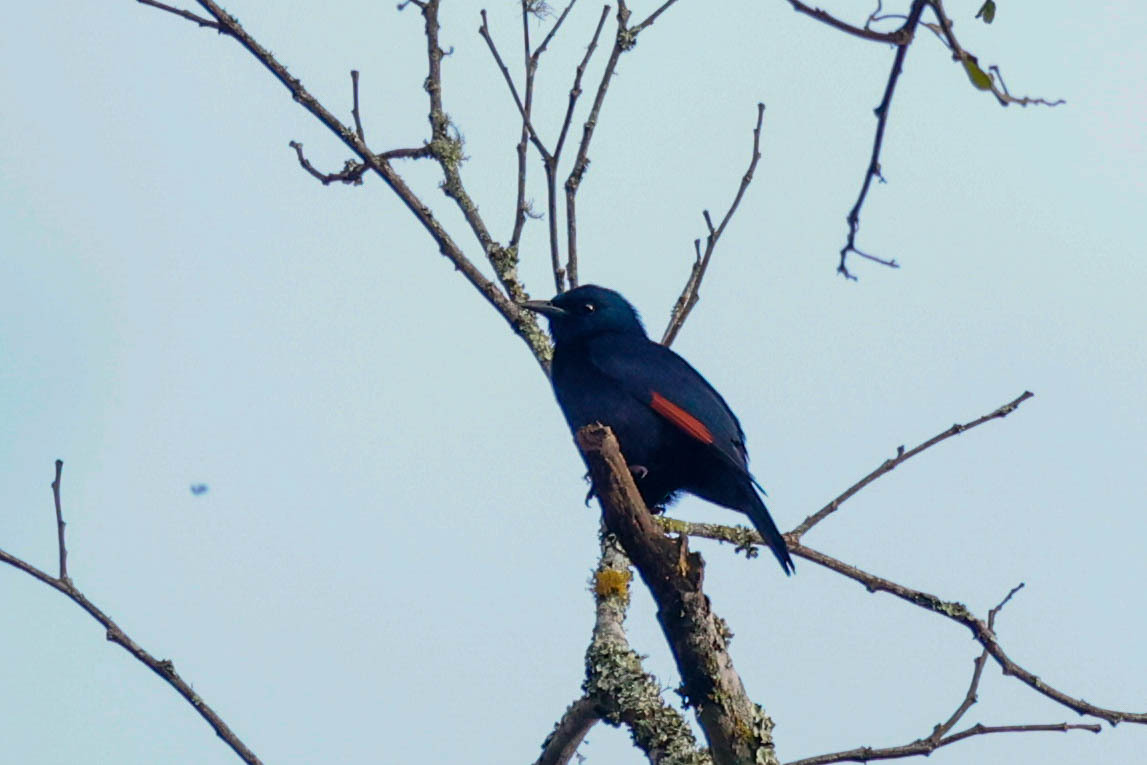
Waller's Starling (Onychognathus walleri) Waller's Starling
Abbott's Starling (Arizelopsar femoralis) Abbott's Starling

Media

Loading…

In short

Waller's Starling and Abbott's Starling can be distinguished primarily by their plumage and habitat preferences. Waller's Starling is more likely to be found in forested areas, while Abbott's Starling prefers open woodlands and montane forests. Both species have similar sizes and structure, making plumage and habitat the most reliable field marks.

Identification tips

  1. Habitat: Check the surrounding environment; Waller's is more forest-dependent. 2. Plumage sheen: Look for the purplish sheen in Waller's Starling. 3. Wing tone: Abbott's may appear slightly browner on the wings. 4. Group behavior: Both are often in small groups, so consider other individuals for confirmation.

Size

Both species are similar in size, typical of medium-sized starlings.

Plumage

Waller's Starling typically shows a glossy black plumage with a slight purplish sheen, while Abbott's Starling is more uniformly dark with less sheen. Abbott's may also have a slightly browner tone on the wings.

Behaviour

Both species exhibit typical starling behavior, often seen in small groups. There are no significant behavioral differences noted.

Habitat

Waller's Starling is usually found in forested areas, particularly montane forests. Abbott's Starling is more often seen in open woodlands and montane forests, sometimes at higher elevations.

Voice

Vocalizations are not well-documented for both species, but they are likely to have typical starling calls. Specific differences in calls are not noted.

Submit a better description

Use the same sections as the comparison. Your text is published immediately.

Waller's Starling and Abbott's Starling can be distinguished primarily by their plumage and habitat preferences. Waller's Starling is more likely to be found in forested areas, while Abbott's Starling prefers open woodlands and montane forests. Both species have similar sizes and structure, making plumage and habitat the most reliable field marks.

  1. Habitat: Check the surrounding environment; Waller's is more forest-dependent. 2. Plumage sheen: Look for the purplish sheen in Waller's Starling. 3. Wing tone: Abbott's may appear slightly browner on the wings. 4. Group behavior: Both are often in small groups, so consider other individuals for confirmation.

Both species are similar in size, typical of medium-sized starlings.

Waller's Starling typically shows a glossy black plumage with a slight purplish sheen, while Abbott's Starling is more uniformly dark with less sheen. Abbott's may also have a slightly browner tone on the wings.

Both species exhibit typical starling behavior, often seen in small groups. There are no significant behavioral differences noted.

Waller's Starling is usually found in forested areas, particularly montane forests. Abbott's Starling is more often seen in open woodlands and montane forests, sometimes at higher elevations.

Vocalizations are not well-documented for both species, but they are likely to have typical starling calls. Specific differences in calls are not noted.

Discard your changes?

You have unsaved edits. If you leave now, those changes will be lost.

Waller's Starling · Abbott's Starling · My Tricky Birds