
Western Black-eared Wheatear vs Black Wheatear
Oenanthe hispanica versus Oenanthe leucura
Play a quiz with Western Black-eared Wheatear and Black Wheatear
 Western Black-eared Wheatear
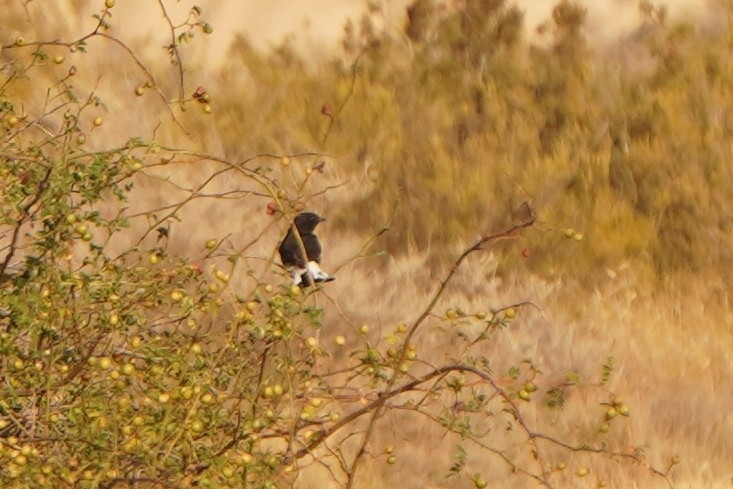 Black Wheatear
In short
The Western Black-eared Wheatear and the Black Wheatear are both members of the Old World Flycatchers and can be found in similar habitats, but they have distinct differences in plumage and behavior. The Western Black-eared Wheatear is more variable in appearance, while the Black Wheatear is consistently dark with a striking white rump and tail.
Identification tips
- Look for the white rump and tail of the Black Wheatear, which is a reliable field mark. 2. Observe the plumage variation in the Western Black-eared Wheatear, especially the presence of a black mask in males. 3. Consider the habitat; the Black Wheatear is more likely in rugged, rocky areas. 4. Note the overall dark appearance of the Black Wheatear compared to the more variable Western Black-eared Wheatear.
Size
Both species are similar in size, but the Black Wheatear may appear bulkier due to its more robust build.
Plumage
The Western Black-eared Wheatear shows significant variation, with males often having a black mask and ear coverts, contrasting with a pale throat and underparts. In contrast, the Black Wheatear is predominantly black with a distinctive white rump and tail, which is a key distinguishing feature.
Behaviour
Both species exhibit similar behaviors typical of wheatears, such as perching on rocks and making short flights to catch insects. However, the Black Wheatear is often seen in more rugged, rocky terrains.
Habitat
While both species can be found in open, rocky areas, the Black Wheatear is more closely associated with arid, mountainous regions, whereas the Western Black-eared Wheatear may also be found in more varied open habitats.
Voice
Vocalizations are not the most reliable distinguishing feature in the field, as both species have similar calls typical of wheatears.
Western Black-eared Wheatear · Black Wheatear · My Tricky Birds