
Western Bristlebird vs Spotted Pardalote
Dasyornis longirostris versus Pardalotus punctatus
Play a quiz with Western Bristlebird and Spotted Pardalote
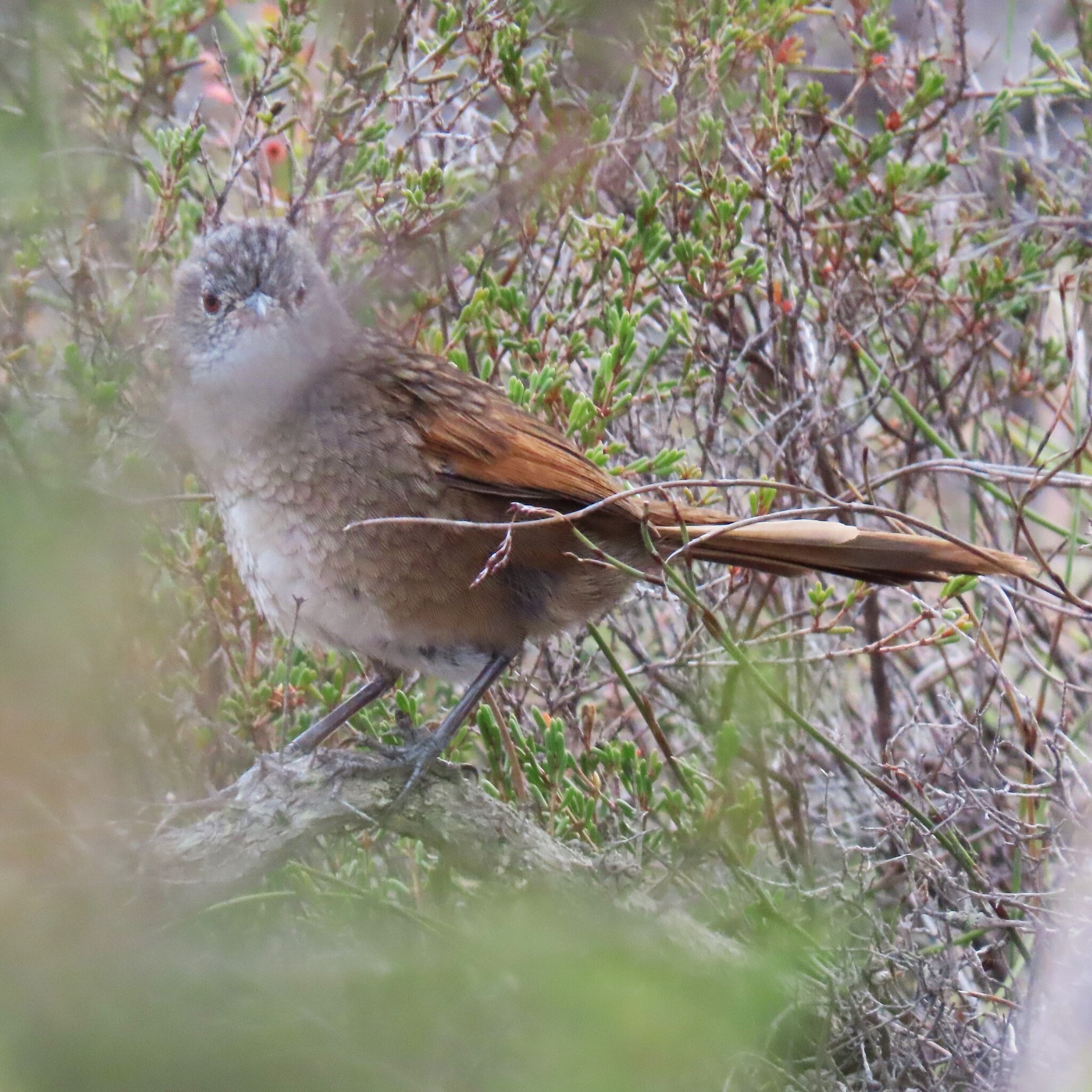 Western Bristlebird
 Spotted Pardalote
In short
The Western Bristlebird and Spotted Pardalote are distinct in appearance and behavior. The Western Bristlebird is a ground-dwelling bird with a more subdued plumage, while the Spotted Pardalote is a small, colorful canopy dweller. Their habitats and behaviors are quite different, aiding in identification.
Identification tips
- Check size and structure: Western Bristlebirds are larger and more elongated; Spotted Pardalotes are tiny and compact. 2. Observe plumage: Look for the Spotted Pardalote's bright spots and white eyebrow. 3. Watch behavior: Western Bristlebirds are ground-dwellers; Spotted Pardalotes stay in the canopy. 4. Consider habitat: Western Bristlebirds prefer dense ground cover; Spotted Pardalotes are in eucalypt trees. 5. Listen for calls: Western Bristlebirds have loud, repetitive calls; Spotted Pardalotes have soft, two-note whistles.
Size
The Western Bristlebird is larger, with a more elongated body compared to the tiny, compact Spotted Pardalote.
Plumage
The Western Bristlebird has a brownish, streaked plumage that blends with its ground habitat. In contrast, the Spotted Pardalote is strikingly colorful with bright spots on its head and back, and a distinctive white eyebrow.
Behaviour
Western Bristlebirds are often seen walking or running on the ground, while Spotted Pardalotes are more likely to be observed flitting through the canopy or perched on branches.
Habitat
Western Bristlebirds inhabit dense heathland and shrubland, preferring ground cover. Spotted Pardalotes are found in eucalypt forests and woodlands, often high in the trees.
Voice
The Western Bristlebird has a loud, repetitive call that can be heard from a distance, whereas the Spotted Pardalote's call is a soft, two-note whistle.