
Western Flycatcher vs Cuban Vireo
Empidonax difficilis versus Vireo gundlachii
Play a quiz with Western Flycatcher and Cuban Vireo
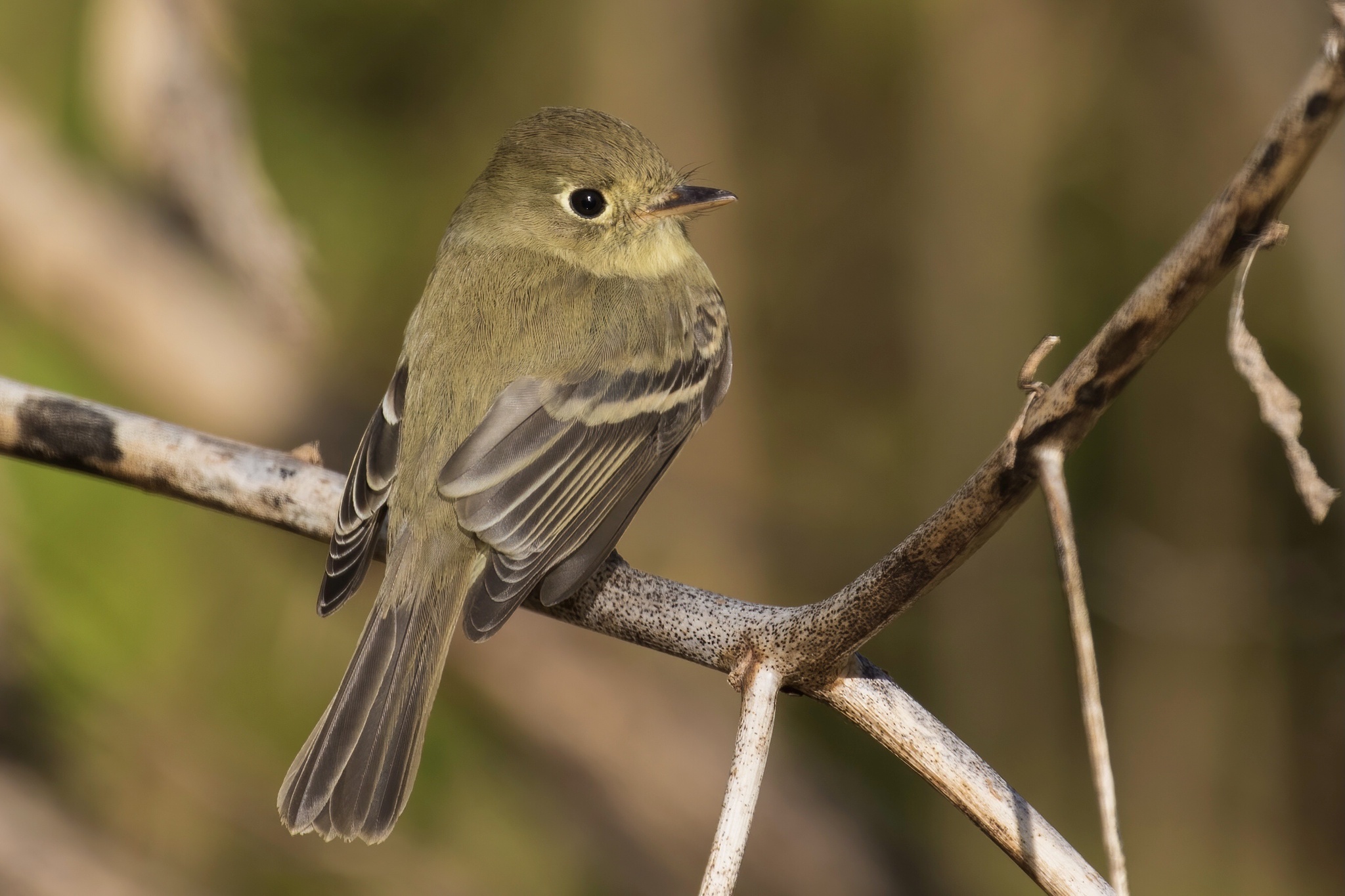 Western Flycatcher
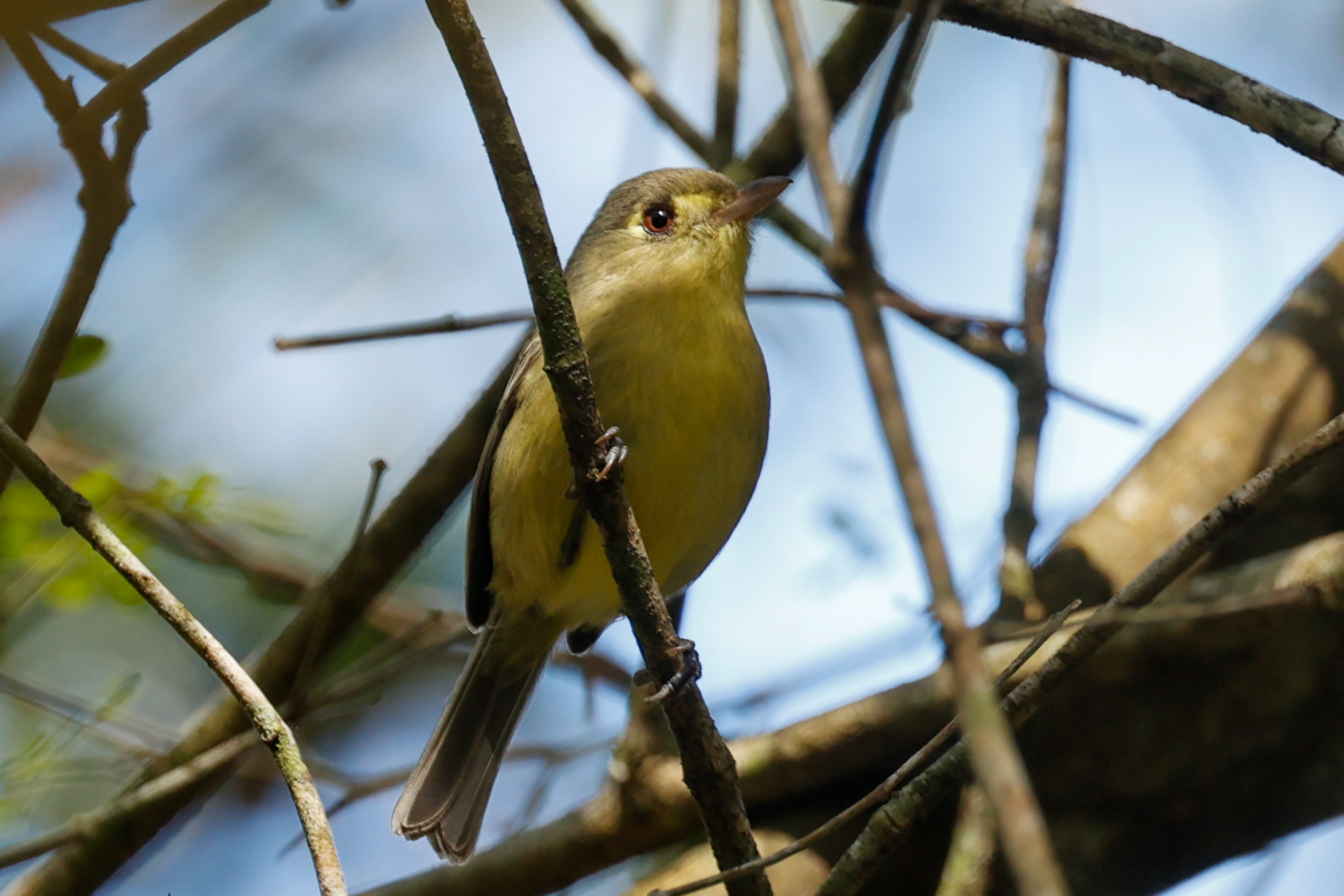 Cuban Vireo
In short
The Western Flycatcher and Cuban Vireo are distinct in both appearance and habitat. The Western Flycatcher, a member of the Empidonax group, is often found in cooler mountain ranges, while the Cuban Vireo is more common in lower elevation forested areas and bushy thickets. Key differences include the Western Flycatcher's subtle plumage and the Cuban Vireo's distinctive facial markings.
Identification tips
- Facial markings: Look for the Cuban Vireo's creamy lores and postocular crescent. 2. Plumage: Western Flycatchers have a more uniform olive-green appearance. 3. Habitat: Consider the environment; Western Flycatchers prefer cooler, mountainous areas, while Cuban Vireos are found in lower, forested regions. 4. Behavior: Note the foraging style; Western Flycatchers sally for insects, whereas Cuban Vireos forage through foliage.
Size
The Western Flycatcher is a small, compact flycatcher, while the Cuban Vireo is slightly larger with a more robust appearance.
Plumage
Western Flycatcher has a more uniform olive-green plumage with subtle wingbars and a faint eye-ring. In contrast, the Cuban Vireo features a large-eyed appearance, no eyestripe, one or two faint wingbars, creamy lores, and a postocular crescent.
Behaviour
Western Flycatchers are often seen sallying for insects, typical of flycatchers. Cuban Vireos are more likely to be seen foraging methodically through foliage.
Habitat
Western Flycatchers are found in cooler mountain ranges, while Cuban Vireos inhabit lower elevation forested areas and bushy thickets.
Voice
Vocalizations are not reliable for distinguishing Western Flycatchers due to variation, while Cuban Vireos have a typical vireo song, which is a series of short phrases.