
Western House Martin vs Black-tailed Waxbill
Delichon urbicum versus Glaucestrilda perreini
Play a quiz with Western House Martin and Black-tailed Waxbill
 Western House Martin
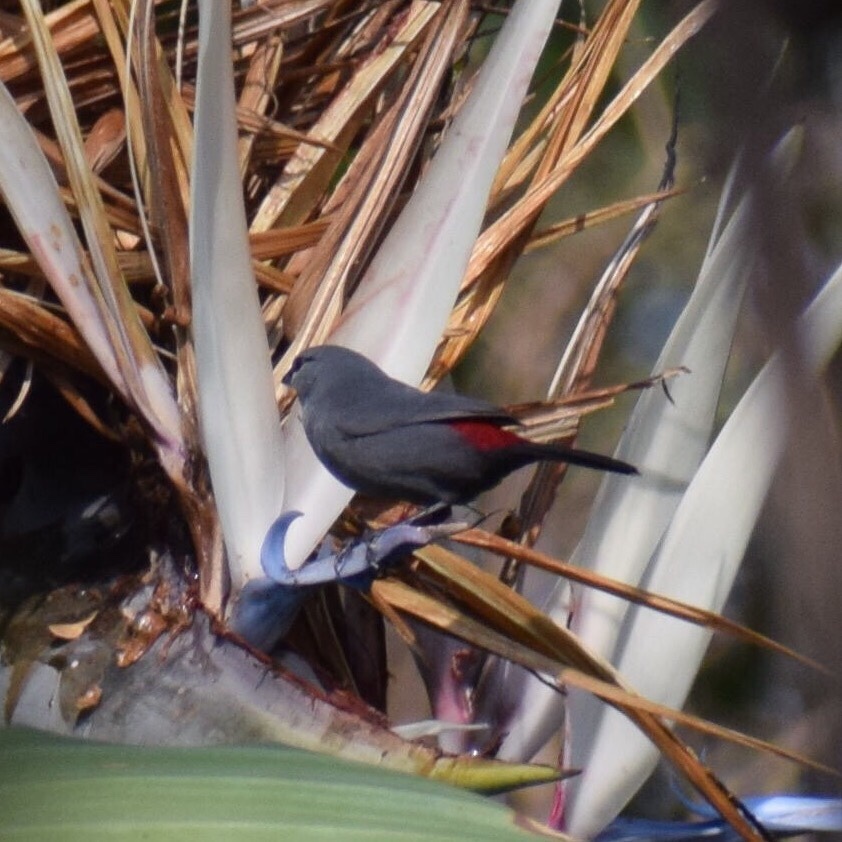 Black-tailed Waxbill
In short
The Western House Martin and Black-tailed Waxbill are easily distinguished by their habitats and plumage. The House Martin is a swallow with a white rump and glossy blue-black upperparts, while the Waxbill is a small finch with a distinctive black tail and red bill. These species do not typically overlap in range or habitat.
Identification tips
- Habitat: House Martins near human structures; Waxbills in grasslands.
- Plumage: Look for the House Martin's white rump versus the Waxbill's black tail.
- Behavior: House Martins in flight; Waxbills foraging on the ground.
- Vocalization: Listen for the House Martin's twittering versus the Waxbill's high-pitched calls.
Size
The Western House Martin is slightly larger and more streamlined than the Black-tailed Waxbill, which is more compact and finch-like.
Plumage
House Martins have glossy blue-black upperparts with a contrasting white rump and underparts. In contrast, Black-tailed Waxbills have greyish bodies with a striking black tail and a red bill.
Behaviour
House Martins are aerial foragers, often seen in flight catching insects. Black-tailed Waxbills are more often seen foraging on the ground or in low vegetation.
Habitat
House Martins are typically found in open areas near water and human settlements where they build mud nests. Black-tailed Waxbills prefer grasslands and savannas, often near water but not in urban areas.
Voice
House Martins have a soft, twittering song, while Black-tailed Waxbills produce a series of high-pitched calls. Their vocalizations are quite different.
Western House Martin · Black-tailed Waxbill · My Tricky Birds