
Western Wood-Pewee vs Hammond's Flycatcher
Contopus sordidulus versus Empidonax hammondii
Play a quiz with Western Wood-Pewee and Hammond's Flycatcher
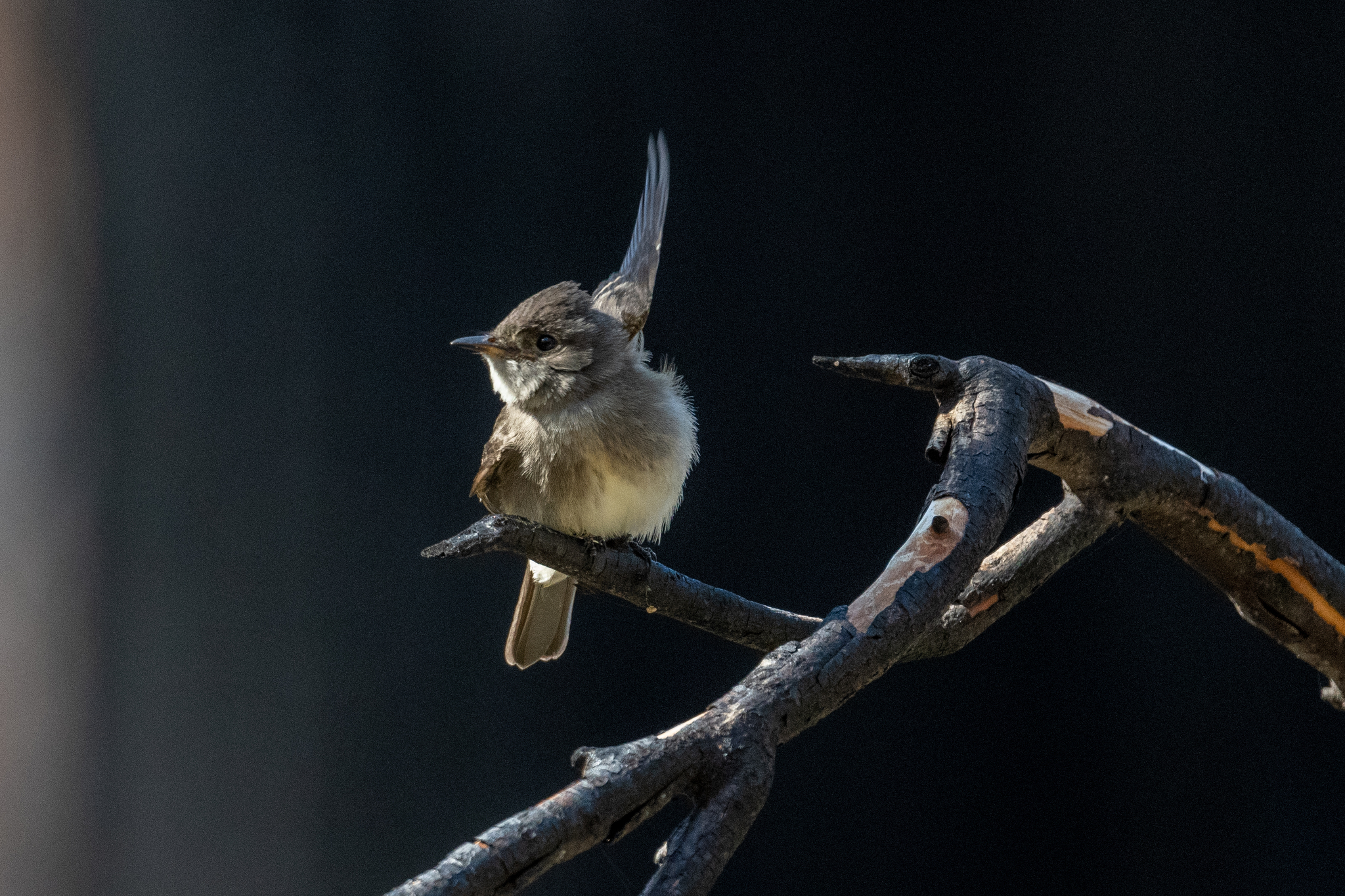 Western Wood-Pewee
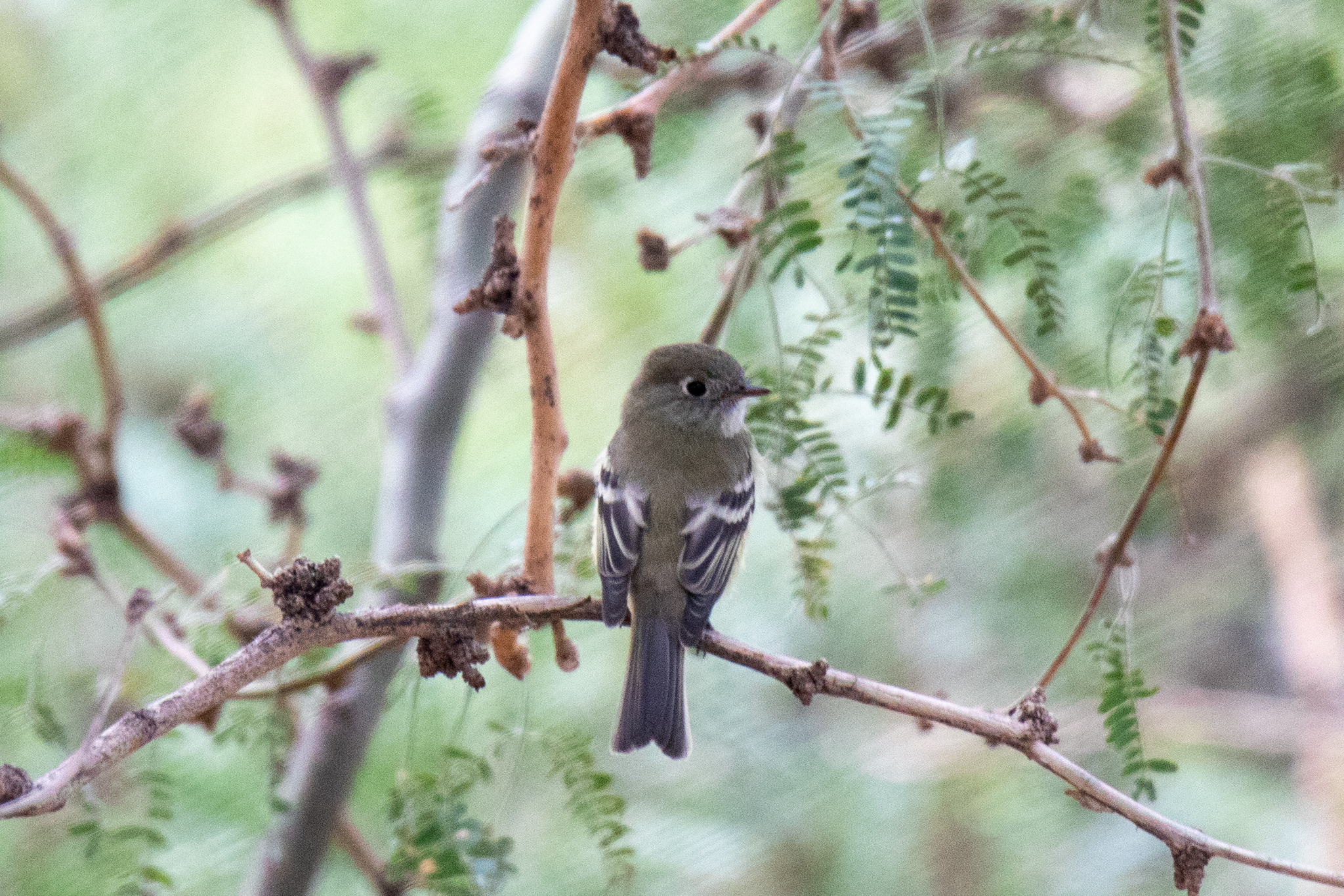 Hammond's Flycatcher
In short
Western Wood-Pewee and Hammond's Flycatcher can be challenging to differentiate due to their similar size and subtle plumage differences. The most reliable field mark is their vocalization, which is distinct between the two species. Observers should also consider habitat preferences and structural differences such as bill shape and primary projection.
Identification tips
- Listen for vocalizations: Western Wood-Pewee's 'pee-a-wee' versus Hammond's 'seewit'.
- Check habitat: Western Wood-Pewee in open woodlands; Hammond's in coniferous forests.
- Observe behavior: Western Wood-Pewee returns to perches; Hammond's forages more aerially.
- Look for structural differences: Hammond's may have a slightly shorter bill and longer primary projection.
- Note subtle plumage differences: Hammond's may appear greener with a more distinct eye-ring.
Size
Both species are similar in size, typical of small flycatchers, making size a less reliable differentiator.
Plumage
Western Wood-Pewee tends to have a more uniformly grayish-brown plumage, while Hammond's Flycatcher may show a slightly greener tint on the back and a more prominent eye-ring. However, these color differences can be subtle and affected by lighting conditions.
Behaviour
Western Wood-Pewee is a sit-and-wait predator, often returning to the same perch after sallying for insects. Hammond's Flycatcher is primarily an aerial forager but may also forage from leaf surfaces or the ground, especially early in the breeding season.
Habitat
Western Wood-Pewee is often found in open woodlands and riparian areas, while Hammond's Flycatcher prefers mature and old-growth coniferous forests. Habitat overlap can occur, but these preferences can guide identification.
Voice
Vocalizations are the most reliable way to distinguish these species. Western Wood-Pewee has a distinctive, burry 'pee-a-wee' call, while Hammond's Flycatcher has a softer, more musical 'seewit' call. Listening for these differences is crucial in areas of range overlap.