
White-crowned Parrot vs Slate-throated Gnatcatcher
Pionus senilis versus Polioptila schistaceigula
Play a quiz with White-crowned Parrot and Slate-throated Gnatcatcher
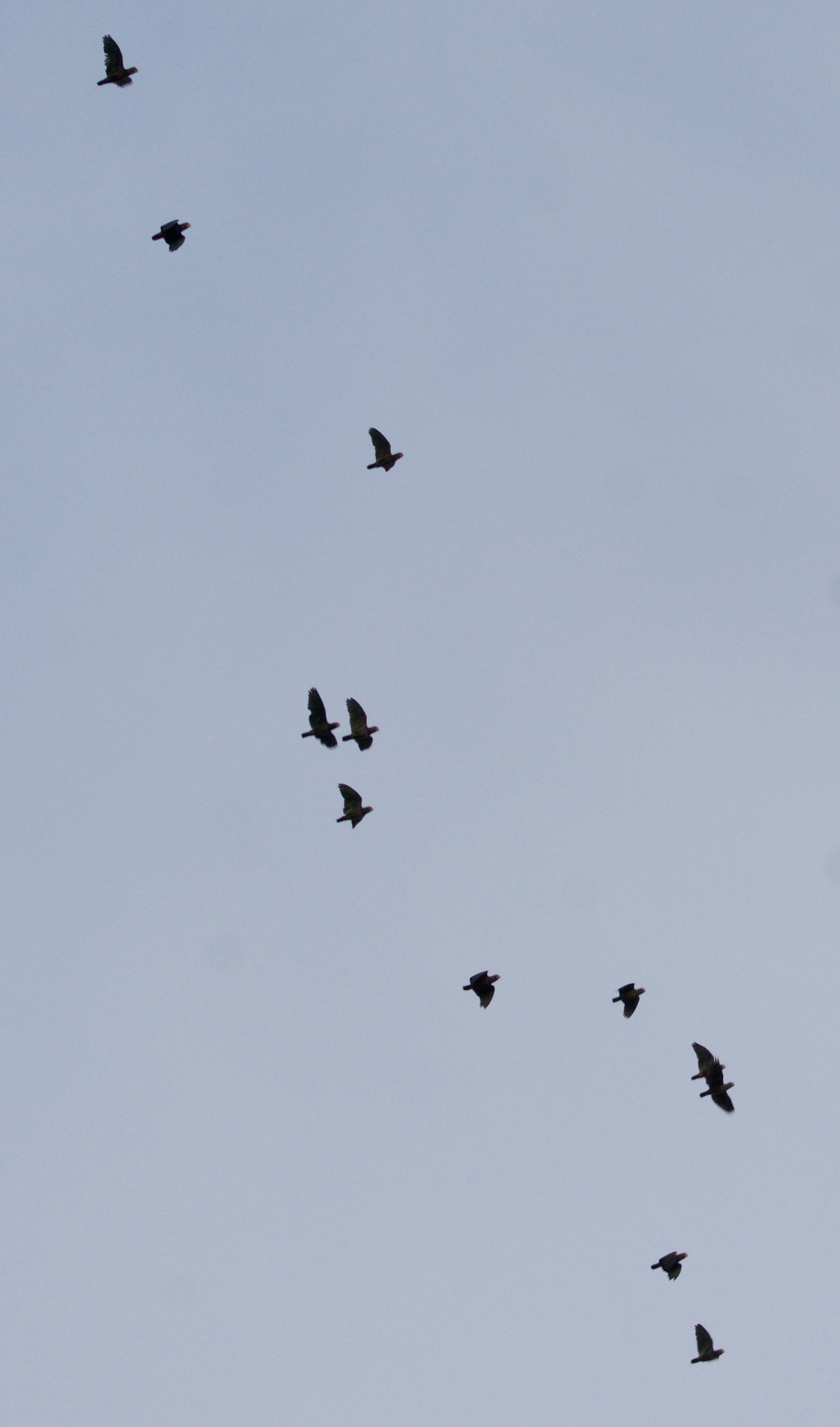 White-crowned Parrot
 Slate-throated Gnatcatcher
In short
The White-crowned Parrot and Slate-throated Gnatcatcher are easily distinguished by size and structure. The parrot is a medium-sized, stocky bird with a robust bill, while the gnatcatcher is small and slender with a fine bill. Their plumage and habitats also differ significantly.
Identification tips
Size and structure: Look for the parrot's robust build and strong bill versus the gnatcatcher's slender form and fine bill. Plumage: Note the white crown and colorful body of the parrot compared to the gnatcatcher's uniform gray and slate tones. Habitat: Consider the habitat; parrots in open areas and gnatcatchers in dense undergrowth. Vocalizations: Listen for the parrot's louder, varied calls versus the gnatcatcher's high-pitched, rapid notes.
Size
The White-crowned Parrot is much larger and bulkier compared to the small and delicate Slate-throated Gnatcatcher.
Plumage
The White-crowned Parrot has a distinctive white crown and green body with blue and red highlights, whereas the Slate-throated Gnatcatcher is predominantly gray with a slate-colored throat and lacks the bright colors of the parrot.
Behaviour
The parrot is often seen in flocks and can be noisy, while the gnatcatcher is more solitary or in small groups, actively foraging and flicking its tail.
Habitat
White-crowned Parrots are typically found in forested areas and clearings, while Slate-throated Gnatcatchers prefer dense undergrowth and forest edges.
Voice
The parrot has a variety of squawks and whistles, whereas the gnatcatcher's calls are high-pitched and thin, often described as a series of rapid notes.
White-crowned Parrot · Slate-throated Gnatcatcher · My Tricky Birds