
White-eared Barbet vs Black-faced Waxbill
Stactolaema leucotis versus Brunhilda erythronotos
Play a quiz with White-eared Barbet and Black-faced Waxbill
 White-eared Barbet
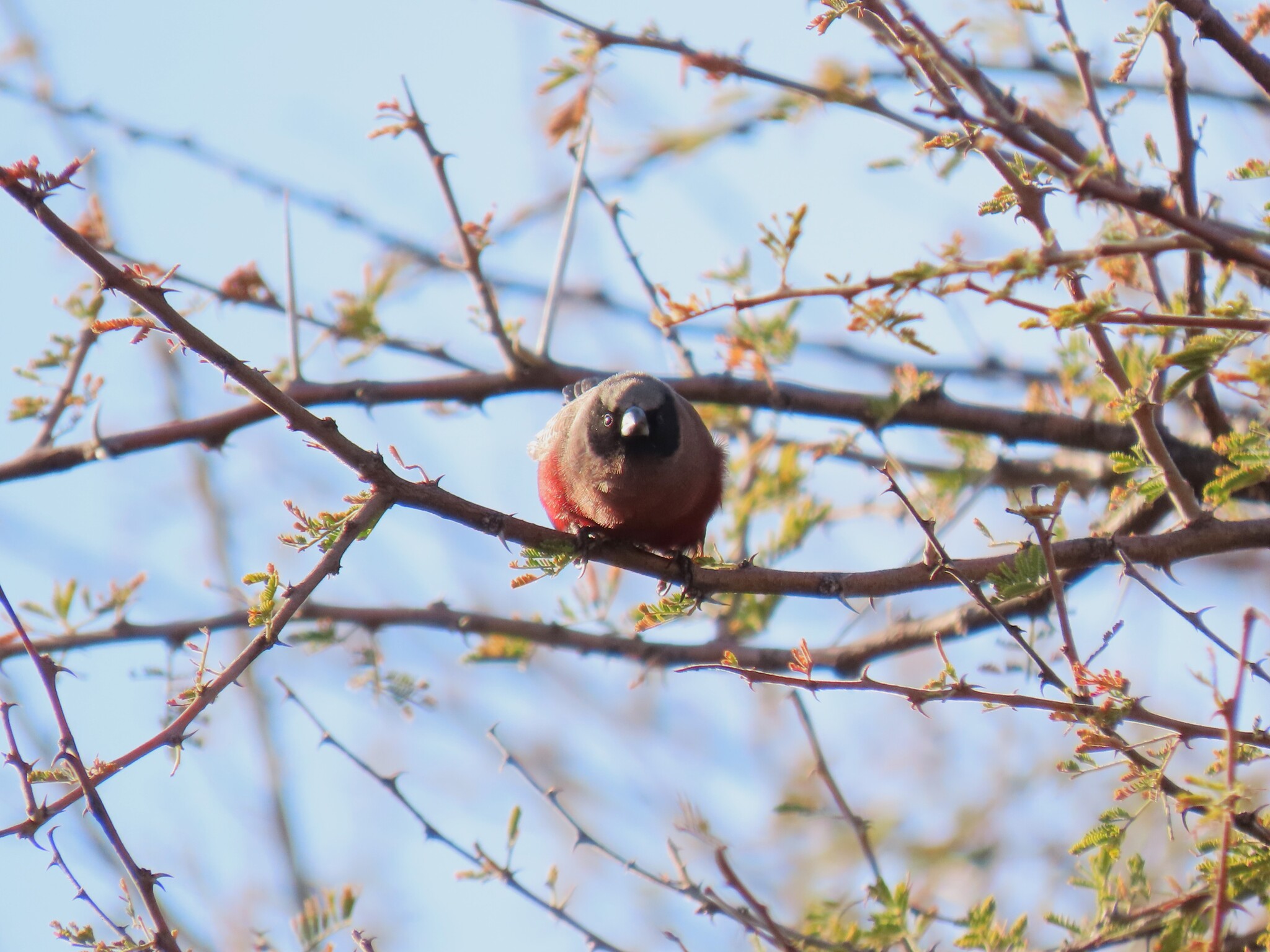 Black-faced Waxbill
In short
The White-eared Barbet and the Black-faced Waxbill differ significantly in appearance and habitat preference. The barbet is a stocky bird with a distinctive white ear patch, while the waxbill is slender with a striking black face and red flanks. These species are not closely related, with the barbet belonging to the Piciformes and the waxbill to the Passeriformes.
Identification tips
Look for the white ear patch on the White-eared Barbet, a key distinguishing feature. The Black-faced Waxbill's black face and red flanks are unmistakable. Note the habitat: barbets in forests, waxbills in open grasslands. Listen for the waxbill's distinctive calls if unsure.
Size
The White-eared Barbet is generally larger and more robust than the Black-faced Waxbill.
Plumage
The White-eared Barbet has a white ear patch and a generally more muted coloration compared to the Black-faced Waxbill, which features a black face, grey-brown upperparts, and red flanks.
Behaviour
White-eared Barbets are often seen alone or in pairs, while Black-faced Waxbills are more social, foraging in pairs or small groups.
Habitat
White-eared Barbets inhabit forested areas, whereas Black-faced Waxbills prefer open, grassy habitats.
Voice
The White-eared Barbet's calls are not well-documented here, while the Black-faced Waxbill has a high-pitched 'tip-tip' contact call and a whistled 'tee' song.