
White-faced Whistling-Duck vs Emperor Goose
Dendrocygna viduata versus Anser canagicus
Play a quiz with White-faced Whistling-Duck and Emperor Goose
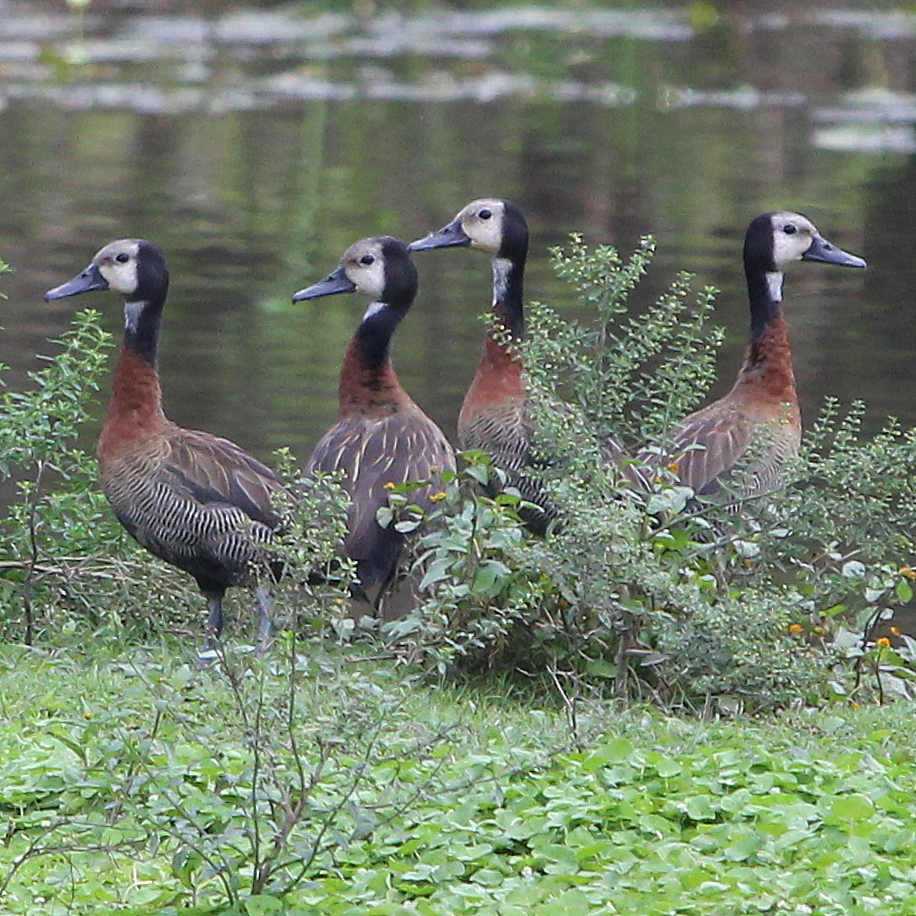 White-faced Whistling-Duck
 Emperor Goose
In short
The White-faced Whistling-Duck and Emperor Goose are distinct in both appearance and habitat. The White-faced Whistling-Duck is notable for its white face and long neck, while the Emperor Goose features a striking white head and short neck. These differences are visible at a distance, making identification straightforward with binoculars.
Identification tips
- Look for the white face and chestnut body of the White-faced Whistling-Duck. 2. Note the white head and scaly body pattern of the Emperor Goose. 3. Observe behavior: White-faced Whistling-Ducks are often in flocks, while Emperor Geese are more solitary. 4. Consider habitat: White-faced Whistling-Ducks in wetlands, Emperor Geese in coastal tundra. 5. Listen for calls: whistling for the duck, cackling for the goose.
Size
The White-faced Whistling-Duck is generally more slender with a longer neck compared to the stockier, shorter-necked Emperor Goose.
Plumage
The White-faced Whistling-Duck has a distinctive white face, dark crown, and chestnut body, whereas the Emperor Goose boasts a white head, dark body with a scaly pattern, and a contrasting white tail.
Behaviour
White-faced Whistling-Ducks are often seen in large flocks and are more likely to be found swimming or wading. Emperor Geese are more solitary or found in small groups, often grazing on land.
Habitat
White-faced Whistling-Ducks prefer freshwater wetlands in tropical and subtropical regions. In contrast, Emperor Geese are found in coastal tundra and marshes, primarily in Alaska and northeastern Russia.
Voice
White-faced Whistling-Ducks are known for their high-pitched whistling calls. Emperor Geese have a more guttural, cackling call.
White-faced Whistling-Duck · Emperor Goose · My Tricky Birds