
White-lined Tanager vs Silver-beaked Tanager
Tachyphonus rufus versus Ramphocelus carbo
Play a quiz with White-lined Tanager and Silver-beaked Tanager
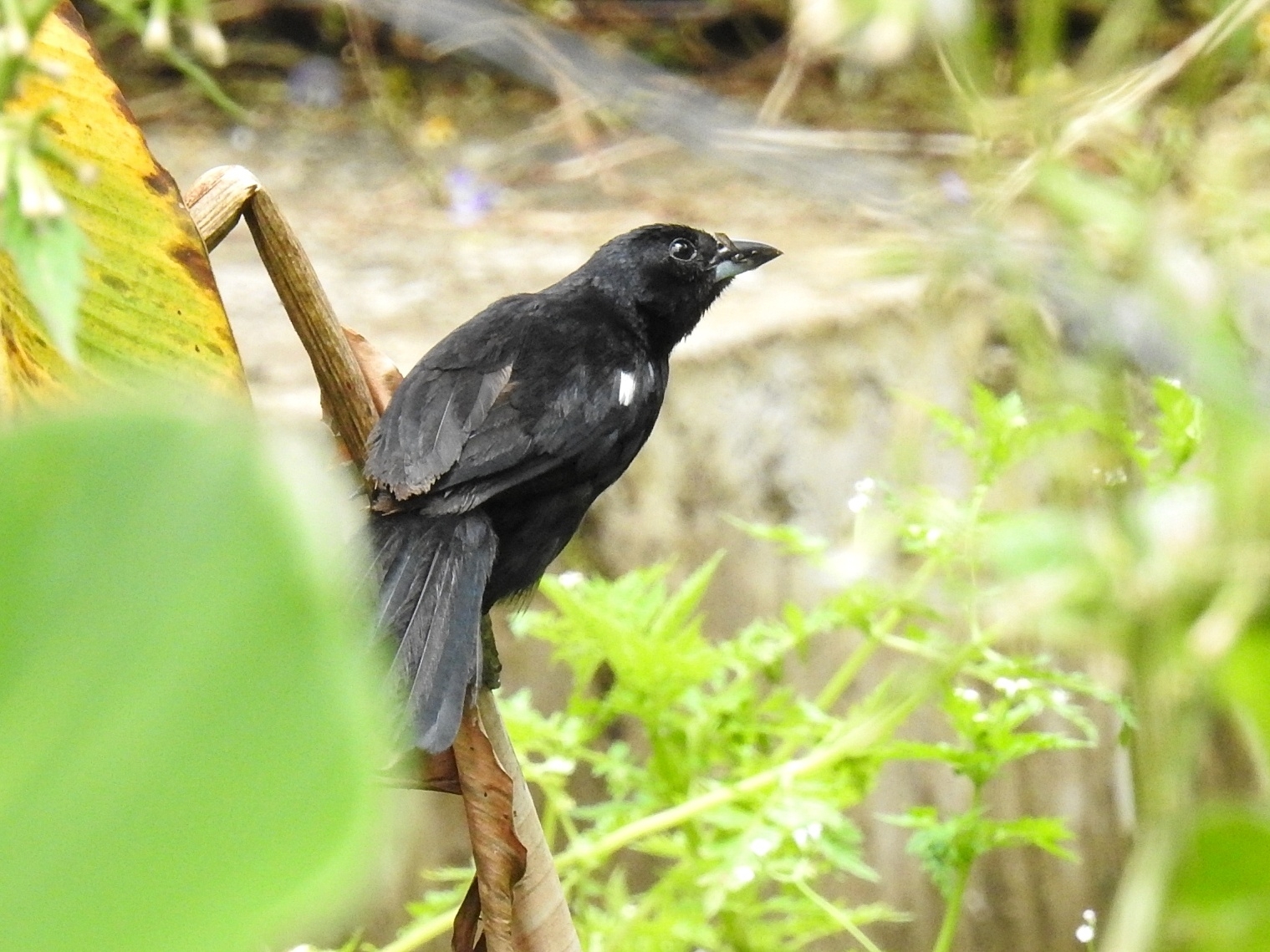 White-lined Tanager
 Silver-beaked Tanager
In short
The White-lined Tanager and Silver-beaked Tanager can be distinguished by their male plumage: the White-lined Tanager male has distinctive white underwing coverts visible in flight, while the Silver-beaked Tanager male has a striking silver beak and deep crimson body. Females of both species are less distinctive and more challenging to separate.
Identification tips
- Look for the white underwing coverts in male White-lined Tanagers during flight. 2. Note the silver beak and crimson body of male Silver-beaked Tanagers. 3. Consider habitat: White-lined Tanagers are often near water. 4. Listen for fast, sharp calls from White-lined Tanagers.
Size
Both species are similar in size, typical of medium-sized tanagers.
Plumage
Male White-lined Tanagers have black plumage with white underwing coverts visible in flight, while male Silver-beaked Tanagers are deep crimson with a prominent silver beak. Females of both species are generally brownish, making them harder to distinguish.
Behaviour
Both species are often found in pairs or small groups. White-lined Tanagers are more likely to be seen near water and in open forest edges.
Habitat
White-lined Tanagers prefer open forest edges and areas near water, while Silver-beaked Tanagers are more adaptable to various forested habitats.
Voice
Both species have calls, but the White-lined Tanager is noted for its fast, sharp calls, aligning with its genus name meaning 'fast speaking'.
White-lined Tanager · Silver-beaked Tanager · My Tricky Birds