Birdr

White-rumped Munia vs Common Waxbill

Lonchura striata versus Estrilda astrild

Play a quiz with White-rumped Munia and Common Waxbill

White-rumped Munia (Lonchura striata) White-rumped Munia
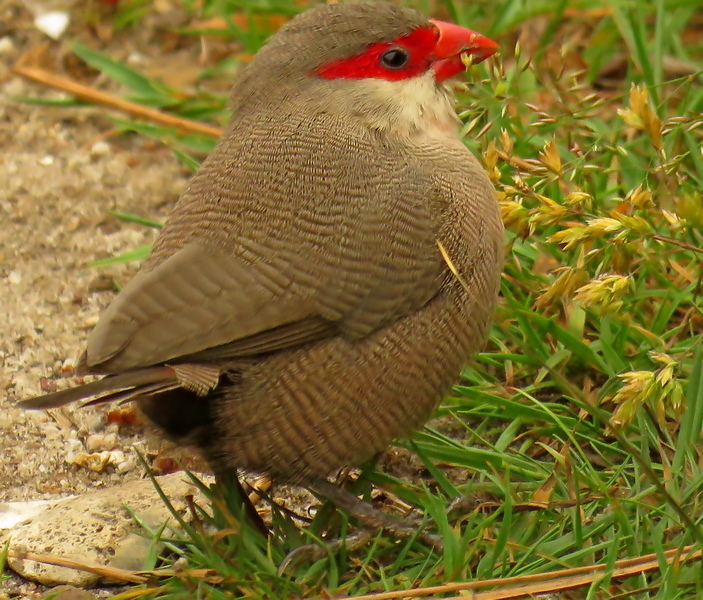
Common Waxbill (Estrilda astrild) Common Waxbill

Media

Loading…

In short

The White-rumped Munia and the Common Waxbill can be distinguished by their rump and facial patterns. The White-rumped Munia has a distinctive white rump and a more uniform brown body, while the Common Waxbill features a red bill and a striking red eye-stripe.

Identification tips

  1. Look for the white rump on the White-rumped Munia. 2. Check for the red eye-stripe and bill on the Common Waxbill. 3. Note habitat: Munias in wooded areas, Waxbills in grasslands. 4. Listen for the high-pitched call of the Waxbill.

Size

Both species are small, but the Common Waxbill is slightly more slender.

Plumage

The White-rumped Munia has a white rump and a generally brown plumage. In contrast, the Common Waxbill has a greyish body with a red eye-stripe and red bill.

Behaviour

Both species are social and often found in flocks, but the Common Waxbill is more likely to be seen in open grasslands.

Habitat

White-rumped Munias prefer more wooded areas and gardens, while Common Waxbills are often found in grasslands and wetlands.

Voice

The Common Waxbill has a distinctive high-pitched 'tsee' call, while the White-rumped Munia's call is softer and less distinctive.

Submit a better description

Use the same sections as the comparison. Your text is published immediately.

The White-rumped Munia and the Common Waxbill can be distinguished by their rump and facial patterns. The White-rumped Munia has a distinctive white rump and a more uniform brown body, while the Common Waxbill features a red bill and a striking red eye-stripe.

  1. Look for the white rump on the White-rumped Munia. 2. Check for the red eye-stripe and bill on the Common Waxbill. 3. Note habitat: Munias in wooded areas, Waxbills in grasslands. 4. Listen for the high-pitched call of the Waxbill.

Both species are small, but the Common Waxbill is slightly more slender.

The White-rumped Munia has a white rump and a generally brown plumage. In contrast, the Common Waxbill has a greyish body with a red eye-stripe and red bill.

Both species are social and often found in flocks, but the Common Waxbill is more likely to be seen in open grasslands.

White-rumped Munias prefer more wooded areas and gardens, while Common Waxbills are often found in grasslands and wetlands.

The Common Waxbill has a distinctive high-pitched 'tsee' call, while the White-rumped Munia's call is softer and less distinctive.

Discard your changes?

You have unsaved edits. If you leave now, those changes will be lost.

White-rumped Munia · Common Waxbill · My Tricky Birds