
White-rumped Shama vs Andaman Shama
Copsychus malabaricus versus Copsychus albiventris
Play a quiz with White-rumped Shama and Andaman Shama
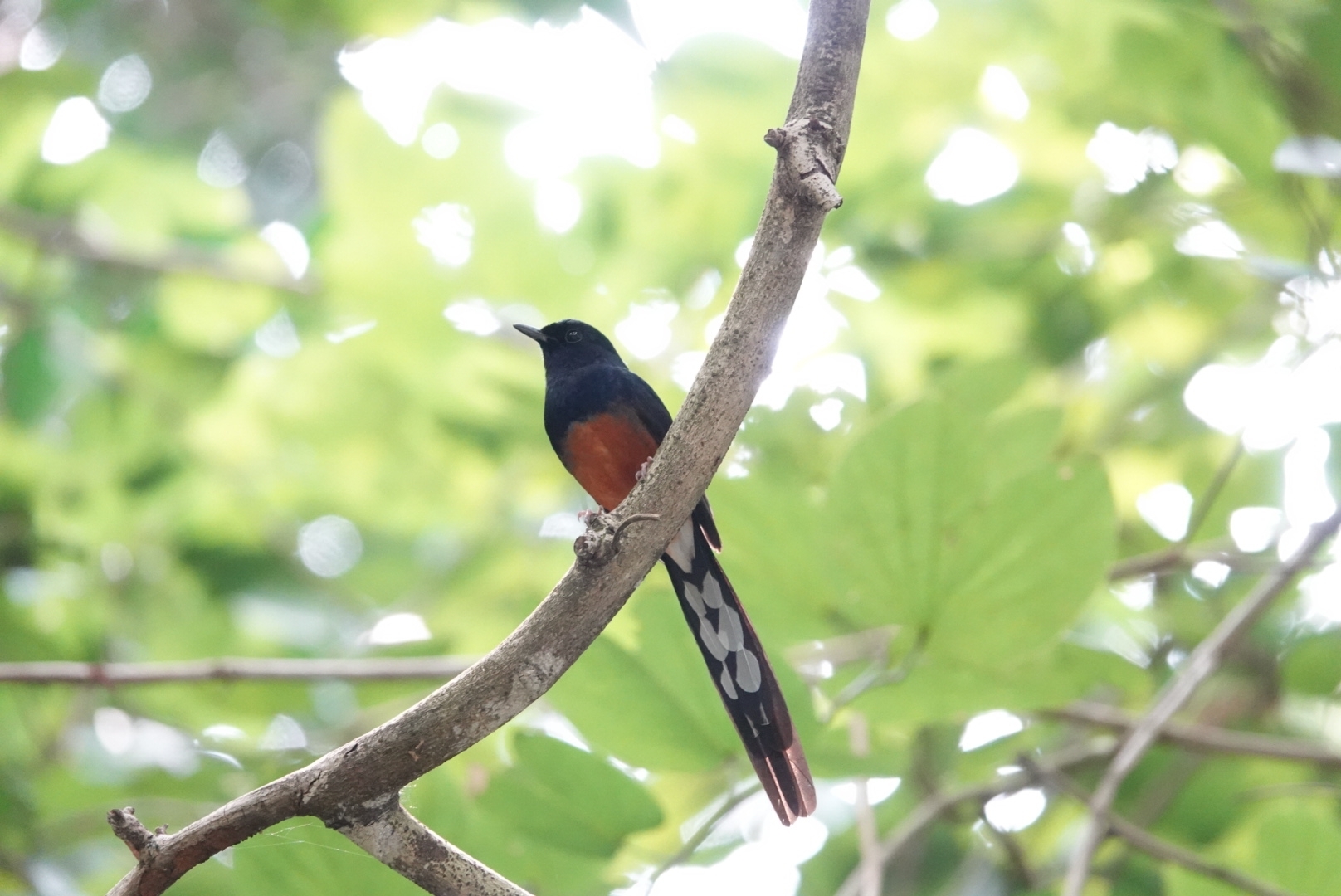 White-rumped Shama
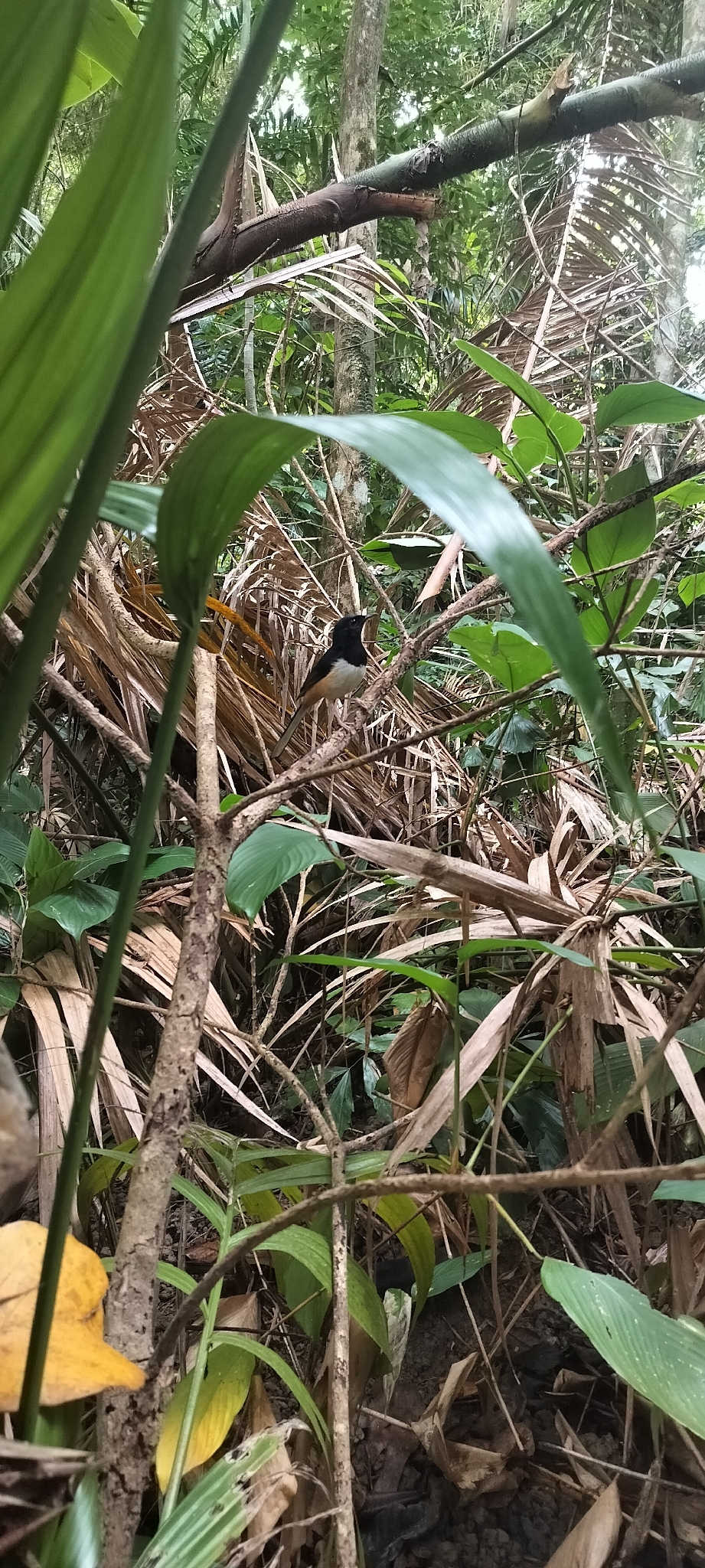 Andaman Shama
In short
The White-rumped Shama and Andaman Shama are closely related and can be challenging to distinguish. The most reliable field mark is the white rump of the White-rumped Shama, which contrasts with the darker body. Both species have melodious songs, but the White-rumped Shama is known for its mimicry.
Identification tips
- Look for the white rump on the White-rumped Shama.
- Note the uniform dark plumage of the Andaman Shama.
- Listen for mimicry in the White-rumped Shama's song.
- Observe habitat: White-rumped Shama is often in dense undergrowth.
Size
Both species are similar in size, typical of the Old World Flycatchers.
Plumage
The White-rumped Shama has a distinctive white rump, which is a key differentiator. The Andaman Shama generally lacks this feature, presenting a more uniform dark plumage.
Behaviour
Both species are known for their melodious singing and can be observed in dense undergrowth. The White-rumped Shama is particularly noted for its mimicry.
Habitat
The White-rumped Shama is found in a variety of habitats, including native and introduced forests, agricultural land, and suburban areas. The Andaman Shama's habitat preferences are less documented but are likely similar.
Voice
Both species have clear, melodious songs. The White-rumped Shama is noted for its ability to mimic other species, which can complicate aural identification.