
White-throated Needletail vs Eastern Bristlebird
Hirundapus caudacutus versus Dasyornis brachypterus
Play a quiz with White-throated Needletail and Eastern Bristlebird
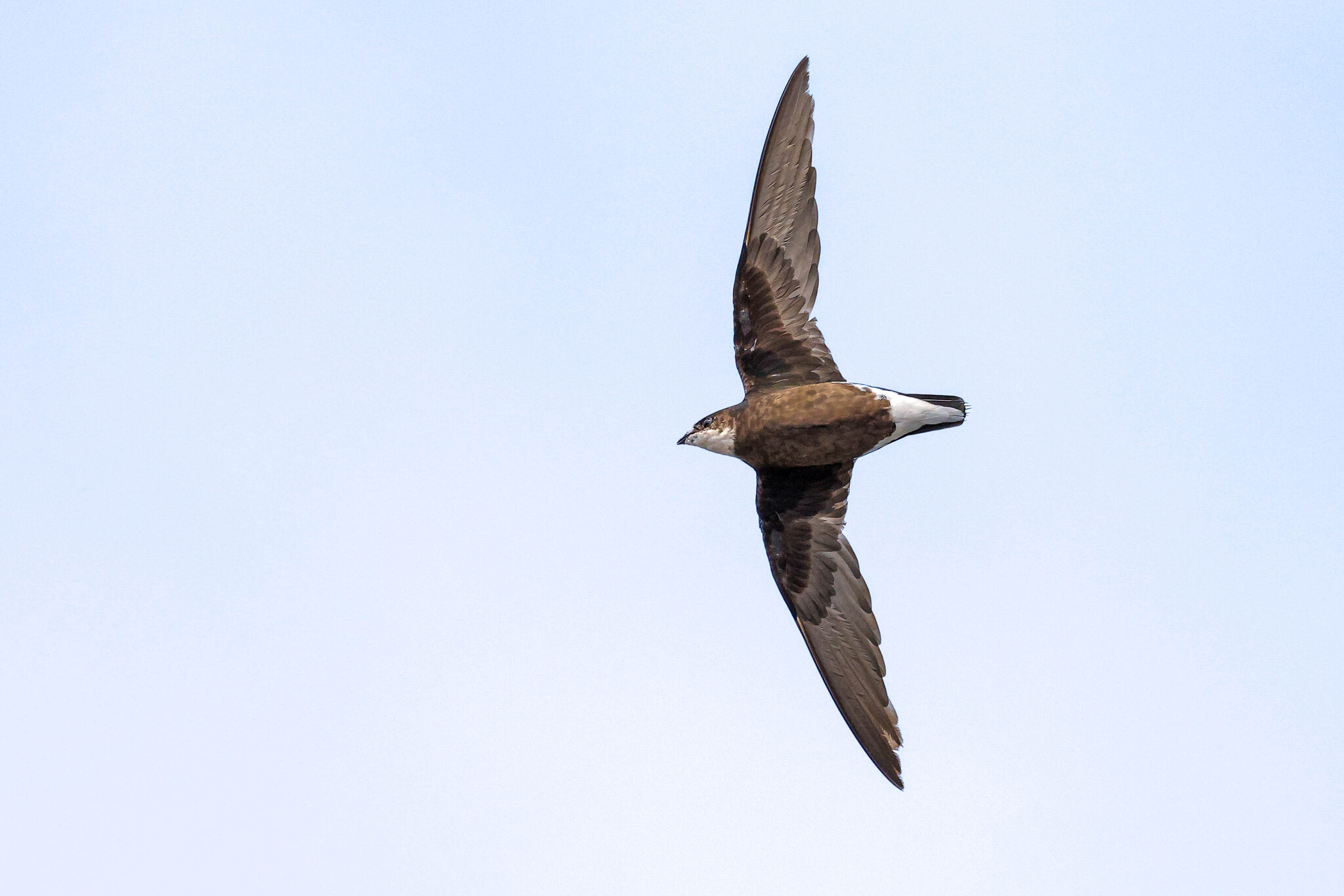 White-throated Needletail
 Eastern Bristlebird
In short
The White-throated Needletail is a swift with a streamlined body and dark glossy plumage, while the Eastern Bristlebird is a ground-dwelling songbird with a more subdued appearance. These species are not closely related and differ significantly in both structure and behavior.
Identification tips
Look for the swift, powerful flight of the White-throated Needletail and its glossy plumage. In contrast, the Eastern Bristlebird is more likely to be seen foraging on the ground in dense vegetation. The needletail's white throat is a key feature, while the bristlebird's brownish, non-glossy plumage helps it blend into its habitat.
Size
The White-throated Needletail is larger and more robust compared to the smaller, more compact Eastern Bristlebird.
Plumage
The White-throated Needletail has dark glossy blue upperparts and a white throat, whereas the Eastern Bristlebird has a more muted brownish plumage with no glossy sheen.
Behaviour
White-throated Needletails are fast-flying aerial birds, while Eastern Bristlebirds are terrestrial and often seen skulking in dense vegetation.
Habitat
White-throated Needletails are typically seen in open skies, often over forests or open areas, whereas Eastern Bristlebirds inhabit dense, shrubby undergrowth in coastal and sub-coastal regions.
Voice
The Eastern Bristlebird is known for its distinctive calls, while the White-throated Needletail is generally silent.
White-throated Needletail · Eastern Bristlebird · My Tricky Birds