Birdr

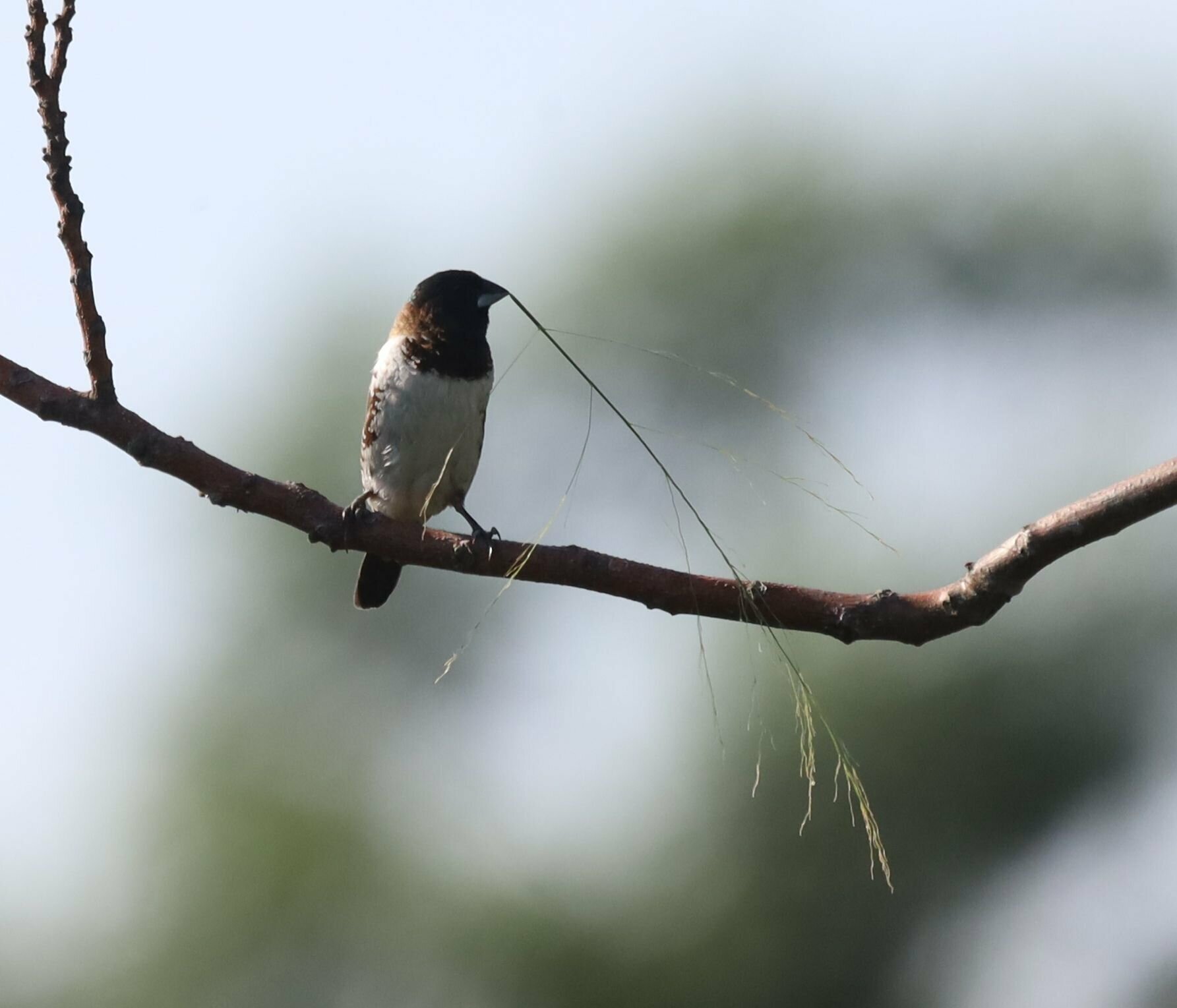
White-winged Widowbird vs Bronze Mannikin

Euplectes albonotatus versus Spermestes cucullata

Play a quiz with White-winged Widowbird and Bronze Mannikin
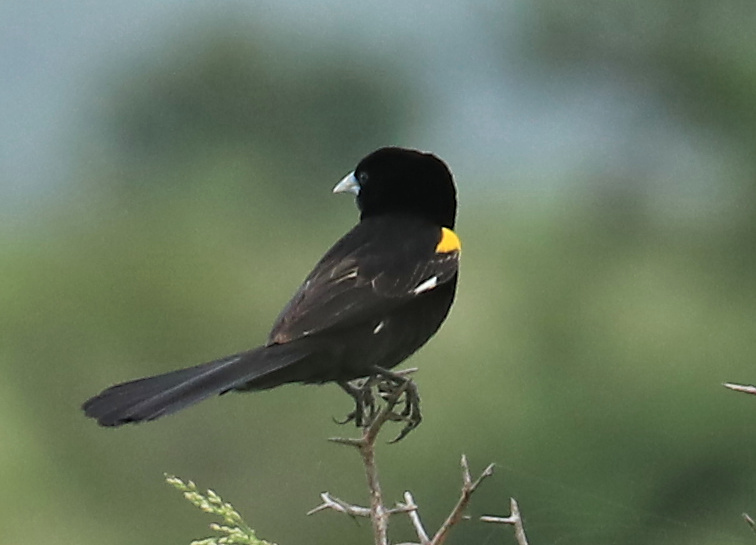
White-winged Widowbird (Euplectes albonotatus) White-winged Widowbird
Bronze Mannikin (Spermestes cucullata) Bronze Mannikin

Media

Loading…

In short

The White-winged Widowbird and the Bronze Mannikin are distinct in both size and plumage. The Widowbird is larger with striking white wing patches, while the Mannikin is smaller and more uniformly colored. These differences are most apparent when the birds are in flight or perched in open areas.

Identification tips

1. Look for the size difference: Widowbirds are noticeably larger. 2. Check for white wing patches on the Widowbird, especially in flight. 3. Observe behavior: Widowbirds display with distinctive flight patterns, while Mannikins are often in flocks. 4. Consider habitat: Widowbirds in open areas, Mannikins in wooded or garden settings. 5. Listen for vocal differences if visible cues are unclear.

Size

The White-winged Widowbird is larger than the Bronze Mannikin, which is a small, compact bird.

Plumage

The White-winged Widowbird has prominent white wing patches, especially visible in flight, and a black body during breeding season. The Bronze Mannikin has a more uniform appearance with a brownish body and lacks the distinctive white wing markings.

Behaviour

White-winged Widowbirds are often seen displaying in flight with exaggerated wing movements, while Bronze Mannikins are more likely to be seen in flocks feeding on the ground.

Habitat

White-winged Widowbirds are typically found in grasslands and open savannas, whereas Bronze Mannikins prefer more wooded areas and gardens.

Voice

The vocalizations of the two species are different, with the Widowbird having a more varied and complex song compared to the simpler calls of the Mannikin.

Submit a better description

Use the same sections as the comparison. Your text is published immediately.

The White-winged Widowbird and the Bronze Mannikin are distinct in both size and plumage. The Widowbird is larger with striking white wing patches, while the Mannikin is smaller and more uniformly colored. These differences are most apparent when the birds are in flight or perched in open areas.

1. Look for the size difference: Widowbirds are noticeably larger. 2. Check for white wing patches on the Widowbird, especially in flight. 3. Observe behavior: Widowbirds display with distinctive flight patterns, while Mannikins are often in flocks. 4. Consider habitat: Widowbirds in open areas, Mannikins in wooded or garden settings. 5. Listen for vocal differences if visible cues are unclear.

The White-winged Widowbird is larger than the Bronze Mannikin, which is a small, compact bird.

The White-winged Widowbird has prominent white wing patches, especially visible in flight, and a black body during breeding season. The Bronze Mannikin has a more uniform appearance with a brownish body and lacks the distinctive white wing markings.

White-winged Widowbirds are often seen displaying in flight with exaggerated wing movements, while Bronze Mannikins are more likely to be seen in flocks feeding on the ground.

White-winged Widowbirds are typically found in grasslands and open savannas, whereas Bronze Mannikins prefer more wooded areas and gardens.

The vocalizations of the two species are different, with the Widowbird having a more varied and complex song compared to the simpler calls of the Mannikin.

Discard your changes?

You have unsaved edits. If you leave now, those changes will be lost.

White-winged Widowbird · Bronze Mannikin · My Tricky Birds