
Wood Duck vs White-headed Duck
Aix sponsa versus Oxyura leucocephala
Play a quiz with Wood Duck and White-headed Duck
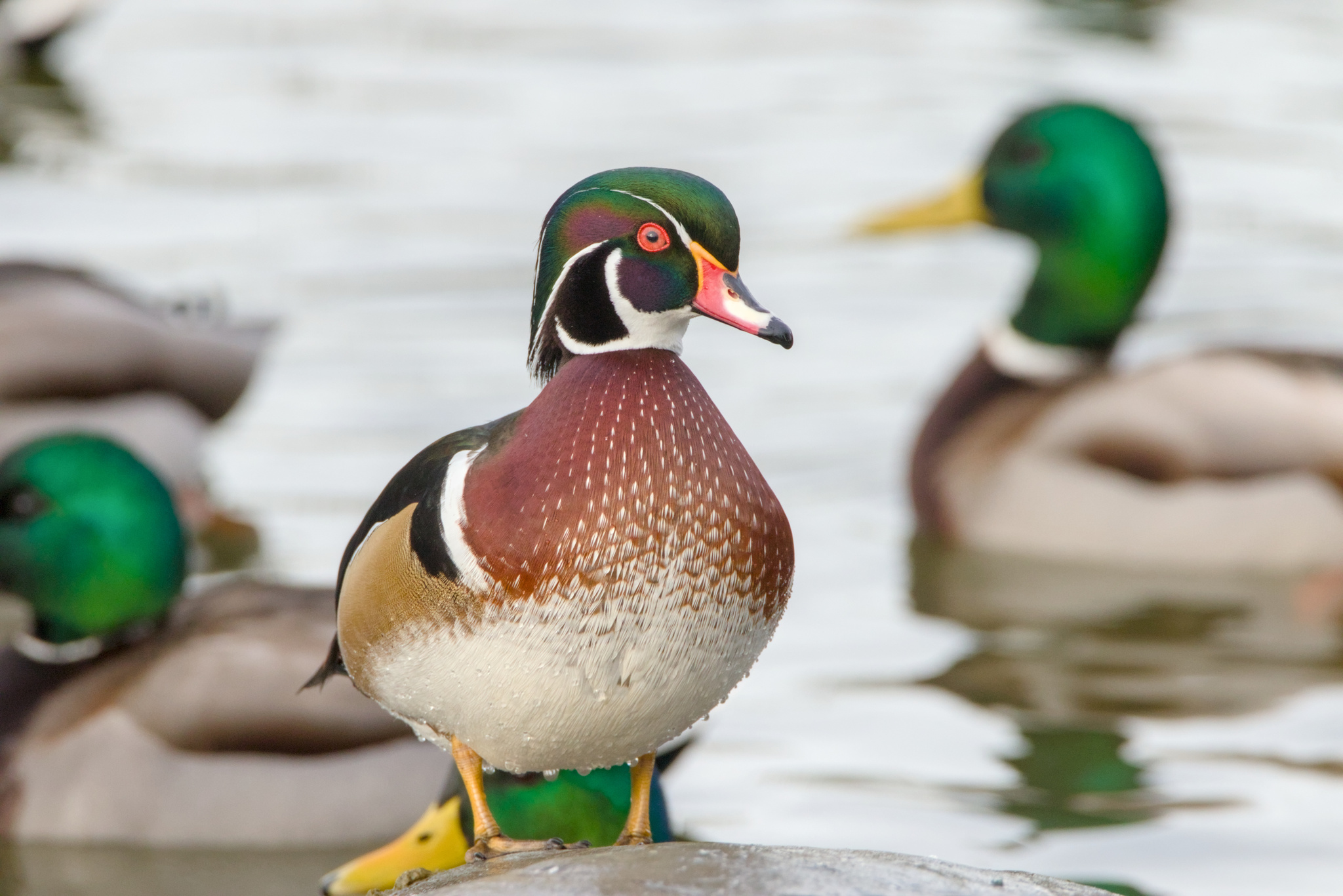 Wood Duck
 White-headed Duck
In short
The Wood Duck and White-headed Duck are distinct in appearance and habitat preference. The Wood Duck is a colorful, tree-nesting species found in North American wooded swamps, while the White-headed Duck is a more subdued, aquatic species found in Eurasian wetlands.
Identification tips
Look for the Wood Duck's iridescent plumage and tree-perching behavior in wooded areas. The White-headed Duck is best identified by its white head and blue bill in open water habitats. Note the habitat and behavior differences: arboreal vs. aquatic.
Size
Both species are medium-sized ducks, but the White-headed Duck has a more compact, robust body compared to the more slender Wood Duck.
Plumage
The male Wood Duck is striking with iridescent green and purple head, white throat with finger-like extensions, and chestnut breast. The female is gray-brown with a white eye-ring. The White-headed Duck male has a distinctive white head with a blue bill, while the female is more subdued with a brownish head and less pronounced bill coloration.
Behaviour
Wood Ducks are more arboreal, often seen perching in trees, while White-headed Ducks are highly aquatic, rarely leaving the water. The White-headed Duck is a diving species, whereas the Wood Duck is more of a dabbling duck.
Habitat
Wood Ducks prefer wooded swamps and freshwater marshes, often nesting in tree cavities. White-headed Ducks inhabit a variety of wetlands, including brackish and saline lakes, often in open water.
Voice
Wood Ducks have a distinctive rising whistle, while the White-headed Duck's vocalizations are less documented and not a primary identification feature.